The new monthly log series begins, launched with full ceremony.
Why I Started Writing Monthly Logs
Two months ago, I realized it was time once again for that annual ritual: the year-end review I always want to write and never quite manage to write.
Ever since I started this blog in 2019, every December has brought the same thought: maybe this is the year I finally write a proper year-end recap. But then, through admirable self-restraint, it never gets past the stage of I should.
Most years feel too ordinary to justify the effort. Even if something memorable happened along the way, by the time the year is ending it has usually already blurred into a vague impression, if it survived at all.
And if I force myself to write anyway, I can already picture the result: a few bland lines that don’t really say anything.
But 2023 was different.
Leaving China and moving to Japan with my cat was, at least so far, a genuine turning point in my life.
And precisely because so much happened, it felt impossible to begin. There was too much to say, which meant I couldn’t figure out how to say any of it.
Commercial break: a post that took 2 months to finish,
defeating procrastination: Notes on Bringing My Cat to Japan
Too little, and there is nothing to write. Too much, and I freeze up anyway.
Year-end reviews are hard. I genuinely respect the people who manage to publish one every single year.
By late December, it was obvious my 2023 year-end review was hopeless (I didn’t even create the file).
Strategic retreat: start preparing the 2024 year-end review.
Saving up an entire year’s worth of experiences until December, then trying to sort through them and compress everything into one post, is obviously hard.
So I thought: why not break it down and write one monthly log at a time?
Then by the end of the year, I can just line up January through December and call that the annual review.
How I Record Monthly Logs
Once I decided to do monthly logs, the next question was: how?
Content
When I read other people’s year-end posts, they usually cover some combination of work, study, travel, emotional state, and plans for the future.
So I copied that basic shape and divided each month into Input, Thoughts, and Output.
On top of that, I added a Travel section for things that clearly don’t belong anywhere else, and a final Misc bucket for whatever remains.
Structure
Once the categories were decided, the structure mostly followed on its own.
For now this is the format. If it turns out to be awkward, I’ll revise it later.
-
Input
Reading: professional books / novels / good articles, all count.
Anime: new shows / old shows, TV / movies.
Others: movies, TV dramas, etc. -
Random thoughts
Maybe I’ll write down some thoughts.
But pure “thinking out loud” is rare. Most thoughts are triggered by something I watched/read, so they’ll likely go into the reading/anime/movie notes. -
Output
Maybe blog posts. But I’m not that productive; some months might have nothing.
(Looks like monthly logs can be used as filler.) -
Travel
If I went somewhere, I’ll write it down. If not, skip. -
Misc
Everything that doesn’t fit above.
Publish Time
The plan is to start on the first weekend after the month ends, then publish whenever I finish.
As expected, the very first monthly log is already late. Great start.
Alright. Everything’s ready. The first monthly log, let’s go.
Input
Reading
计算机是怎样跑起来的, 程序是怎样跑起来的, 网络是怎样连接的
I first saw these three books recommended on Twitter:
https://twitter.com/FeiFeiJin_Y/status/1673881207086678017
Andy Stewart @manateelazycat
When it comes to computer books, you should buy the ones written by Japanese authors. They explain steps in great detail, and they explain the principles thoroughly, so you actually understand why.
Unlike many computer books: not enough detail (easy to lose track), and too much showing off (not deep). You finish the book and still feel lost.
Being able to explain a principle in plain language is a craft.
FeiFei🌈 @FeiFeiJin_Y
Exactly. When reading technical books, even translated Japanese editions can be enlightening. For example: “How Computers Work”, “How Programs Run”, and “How Networks Connect”.
Over December and January, I read 网络是怎样连接的 first, then 计算机是怎样跑起来的, and finally 程序是怎样跑起来的.
They are all slim, approachable books, and they really do deserve the recommendation.
-
网络是怎样连接的
A networking primer. It starts with the moment you click a URL in the browser, then walks through switches, routers, modems, access networks, backbone networks, servers, and the rest of the chain.
It works very well as a beginner-friendly overview, and it cleared up several concepts that had always felt vague to me.
For example:
DNS resolution happens on the browser side, which is why proxy tools can hijack it to avoid DNS poisoning.
Multi-mode vs single-mode fiber: single-mode is thinner, loses less, costs more; multi-mode is cheaper and more distorted, but fine for short distances.
The IP header records the final destination; the MAC header records the next hop.
TCP/IP transmission is basically: split data into small packets, then wrap them layer by layer from application to physical (adding headers), then send. -
计算机是怎样跑起来的
This book and the next one (程序是怎样跑起来的) are by the same author.
The author published程序是怎样跑起来的first, but some readers found it hard to follow, so计算机是怎样跑起来的was written as a kind of companion volume.
It doesn’t go especially deep, but it is impressively clear and, more importantly, fun to read. You can feel how skilled the author is as a popularizer.
As an introduction to how computers work, it is excellent. The part I enjoyed most was the section where the author walks the reader through assembling a tiny computer from circuit diagrams step by step.
What stuck with me most is the ending, where the author asks:What does a “successful computer system” look like?A successful computer system is one that fully meets the customer’s needs. What customers expect is an IT solution enabled by computers, not the computer technology itself. A system that meets needs and runs stably is exactly what customers want.
With this as the standard, it’s easy to judge whether a computer system is a success or a failure.
If the introduced system truly serves the customer, it’s a success. If it fails, then no matter how advanced the technology is or how pretty the UI looks, it can still be rejected with “manual work is more convenient”, and end up unused. -
程序是怎样跑起来的
The assembly part was the most interesting. I got a better feel for how loops and branches actually work.
(I didn’t take notes after finishing it, so I’ve forgotten most of the content… this is all I can squeeze out now.)
Anime
-
Currently watching
- Brave Bang Bravern
The biggest surprise this season. Episode 1 starts as a serious war story and then suddenly turns into a super-robot mecha show. It’s pure fun. The ED is gay, and extra gay. Recommended. - Ragna Crimson
I started it last season. This season’s OP/ED don’t hit as hard as last season’s, and the budget doesn’t look as strong.
The highlight is the protagonist and the antagonists: both smart and strong, fighting back and forth. The plot is solid. - Metallic Rouge
Feels like the script wasted Bones’ production. I might drop it. - The Wrong Way to Use Healing Magic
Decent production. A brain-off isekai. - The Unwanted Undead Adventurer
Average production. The plot isn’t too dumb. Watchable. - Solo Leveling
Well-funded. Watch for the action animation; don’t expect much from the plot.
- Brave Bang Bravern
-
Want to watch, but haven’t
- SYNDUALITY Noir (Part 2)
Mecha show. I finished Part 1.
The female characters feel like a mashup of Rei Ayanami + Vivy + Macross F’s diva.
It’s Disney-exclusive, and finding sources is annoying, so I still haven’t started Part 2. - The Apothecary Diaries
Heard it’s good. - Undead Unluck
Watched three episodes. The pink-haired girl is having a rough time.tears - Delicious in Dungeon
Heard it’s really fun. - Sasaki and Peeps
The novel seems popular. - Frieren: Beyond Journey’s End
Super hyped. I watched the first four episodes and it’s really good.Somehow I feel like good works require me to sit up straight and mentally prepare before watching… which results in me procrastinating and never clicking play.
- SYNDUALITY Noir (Part 2)
-
Finished / rewatched
- The Tatami Galaxy
Rewatched it. Good, fun works don’t age.
- The Tatami Galaxy
Others
Recent TV shows / movies I watched. I’ll try to avoid spoilers.
-
LA LA LAND
“La La Land”. The ending is incredible. Every time I think of this film, there’s a lingering bitterness.
Not a happy ending, but a realistic one, which makes it hit harder. -
東京ラブストーリー (2021)
Tokyo Love Story (2021).
The older version is probably the classic, but I gave up after a few seconds because the image quality wastoo retro.
I wanted to watch this because theSaekano Moviehas a neta at the end referencing the Tokyo Love Story theme.
But after finishing the new version I still didn’t hear the song. I checked and realized the neta was referencing the old version’s theme. Oops.
Still, the new version is good. It starts off pretty fun, but once it enters the “battle royale” relationship arc, it gets less fun.
The ending is full of regret too.
After finishing, I wanted to show the male lead an internationally recognized friendly gesture 🖕 -
ゴジラ-1.0/C
Godzilla Minus One got a black-and-white cut. Reviews online said “this feels right”, so I got curious and watched it.
The setup in the first half was a bit long and made me sleepy.
But once the main theme kicks in, it’s hard not to get excited.
In the end it’s still a crowd-pleasing ending: find the monster’s weakness and sink it in one go.
I wonder if there’s ever an ending where Godzilla actually beats humans. -
Millennium Actress
I’d heard the name Satoshi Kon for a long time, and the theater happened to have a re-release.
The story isn’t complicated, but the perspective is interesting: the camera enters the protagonist’s memories and becomes part of the story. It’s very immersive.
The editing is great. The BGM felt a bit odd.While watching I felt “it’s fine”, but after getting home and thinking about it, the more I thought, the more interesting it became.
Especially when you connect it with that line at the end: the protagonist’s sincerity and her acting blend together.
Which parts are real feelings, and which parts are performance? You can’t separate them anymore.
So thinking about it, the way the male lead is arranged in the plot is actually the best choice.
Random Thoughts
New Year’s Eve, Kohaku, Nostalgia
On December 31, I spent New Year’s Eve eating hot pot with a few friends.
It was also my first time properly watching Kohaku. Honestly, it didn’t do much for me. I didn’t know most of the performers, the staging felt extremely overblown, and there were only a handful of songs I could really enjoy.
Making fun of Kohaku with friends turned out to be much more entertaining than Kohaku itself.
One thing I remember clearly: there was a Kohaku segment where more than a hundred people attempted a kendama world record. If nobody dropped the ball, the record would stand.
On the live broadcast it looked like they had pulled it off, and they even brought out the certificate.
Then, a little later, the host came back and said that on replay they had discovered player number 17 had dropped the ball after all, so the record didn’t count.
A surprisingly honest outcome.
Also, this year Kohaku invited lots of veteran artists who hadn’t been on stage for decades.
I asked my friends: is Kohaku always like this, a nostalgia-focused “throwback service”?
They said it wasn’t like that before; it seems like this year was special.
It gave me a strange feeling. If I had to put one word on 2023, it might be nostalgia.
So I’ll steal two passages I saw on Telegram - 小破不入渠🌏.
https://t.me/s/forwardlikehell/2862
Over the past decades, we’ve lived through a failure of “modernization” that led all the way to collapse.
There are many ways to define the starting point of this collapse. From an American perspective it might be 2001 or 2016; for Chinese people it could be 2018 or 2019, or the double-entendre metaphor of the 2012 “end of the world”.
In short, on the axis of the 21st century you can find more than one point: before it, the world was sunny and thriving, full of optimistic excitement; after it, everything turned gray and barren, sliding toward extinction. Despair became the base color of life; the era went dark.
This failure is comprehensive: political nihilism, technology out of control, the withering of thought and expression, labor and production devolving into meaningless consumption… and it’s not limited to any one country, nation, class, or interest group. It became the background of almost all lives.
Its manifestations are countless: 9/11, the wars in Iraq, ISIS, the subprime crisis, Brexit, Cambridge Analytica, Russia–Ukraine and Israel–Palestine, destocking, local government debt, 996, censorship, __, ___, dynamic zero-COVID…
And these problems are not “external”. It’s not like overthrowing feudalism or defeating Nazis, where there’s a concrete enemy you can beat. It’s like cancer: symbolizing that at least this round of civilization’s development has reached its terminal stage.
In the end, contemporary people are left with almost only two states. One is self-castration and degeneration: closing your eyes and retreating into the basic desire loop of “food and sex”, using that to convince yourself the present is still good. The other is sinking into despair, which is why depression became an epidemic.
More people are between the two, in a chaotic state of phase transitions: sometimes possessed by absurd joy, sometimes lonely in bewilderment about the future.
In the end, this emotional state can be ignited by any seed of “nostalgia”, because nostalgia is the perfect blend of the two moods: it’s filled with the sweet aftertaste of a golden age, yet sealed in an untouchable past.
And ahead, there’s only a bitter and desperate future.https://t.me/s/forwardlikehell/2864
I once talked with a friend about why we’re so obsessed with going to Disney.
I was born in 1994. That year The Lion King was released in Hollywood, and the next year it was introduced into China, becoming the first Hollywood animated film shown in China after 1949. The first picture book my parents bought me after I was born was a hardback Lion King comic, with a tiny Disney anti-counterfeit sticker on the back.
Yes: it wasn’t until 1994 that China lifted the “red line” against importing foreign films.
The impact of cultural opening is self-evident. In 1998, Titanic was introduced and set a box office miracle. In 1999, the peak of Chinese hand-drawn animation, Lotus Lantern, was made by learning Disney’s framework.
By the winter of 2001, when Harry Potter and the Philosopher’s Stone was introduced, China had already built the institutional basis for “global simultaneous releases”. That was the first movie I watched in a cinema.
“Simultaneous” matters. China’s integration into globalization, and the process of turning Earth into a “global village”, is a process of “synchronization”. After all, the Mickey Mouse cartoons CCTV imported in the 1980s were animations Americans watched in the 1930s; the “Little Overlord” consoles popular in the 1990s were knockoffs of Nintendo FC from more than a decade earlier. They represented a gap between China and the world.
In the 2000s, cultural alignment gradually became the norm. One milestone that impressed me was Harry Potter and the Order of the Phoenix: there was almost no time gap between the English publication and me buying the Chinese edition. Simultaneous movie releases also became normal.
Finally, what really carved “global simultaneous” into the era was Apple.
Since 2008, Apple gradually pushed for globally synchronized product launches. In 2013, when the iPhone 5s was released, mainland China was included in the first-wave launch regions; behind that was the Ministry of Industry and Information Technology, supporting the process.
This was the most important background for our generation’s birth and growth. In the post–Cold War era, separatism briefly disappeared from the world, and modern industry planted the seeds of consensus globally. A generation of kids, regardless of nationality or race, grew up in the same cultural soil: reading Harry Potter, watching Toy Story, going to Disneyland, playing Mario. We learned courage, friendship, love, knowledge, innocence, honesty, hope…
As for now, separatism has risen again. “De-globalization” and the “new Cold War” became buzzwords, symbolizing the twilight of that era.
It’s hard to define exactly when the shift began; from my perspective, it all started when people began building “walls”. And “walls” here aren’t only the narrow sense of the GFW. With recommendation algorithms, whether it’s Meta or ByteDance, the content algorithms have successfully built a GFW inside people’s hearts.
In short, that brief era of globalization, where shared values nurtured the soil of consensus, was snuffed out.
Only when we go to Disney or Universal Studios can we still try to catch a glimpse of its tail.
NetEase Cloud Music time
Output
I wrote one blog post: Notes on Bringing My Cat to Japan
At least this month wasn’t a total blank. I’ll count that as a respectable result.
Travel
Last October I bought Sony’s new a7C2, paired with the Tamron 28-200mm F/2.8-5.6 mega-zoom.
The whole setup weighs a little over one kilogram, so it’s very easy to carry around.
(The downside is that for night scenes or dim interiors, the aperture isn’t fast enough, so photographing my cat’s athletic movements remains frustratingly difficult.)
I thought buying a camera would turn me into a more outdoorsy, accomplished sort of person… apparently not.
Most of the photos in the travel section were taken with the Sony a7C2.
And after comparing them on a large monitor, I still have to admit that a real camera beats a phone pretty decisively.
Photos in the travel section use the CC BY-NC 4.0 license
初詣
When you talk about New Year in Japan, 初詣 is impossible to avoid.
Anime loves this too. There is always some scene where the cast agrees to meet up and go together.
Originally a few friends and I planned to watch the sunrise on the 1st and then go to Kawasaki Daishi.
But we chatted too late on New Year’s Eve and didn’t wake up in the morning.
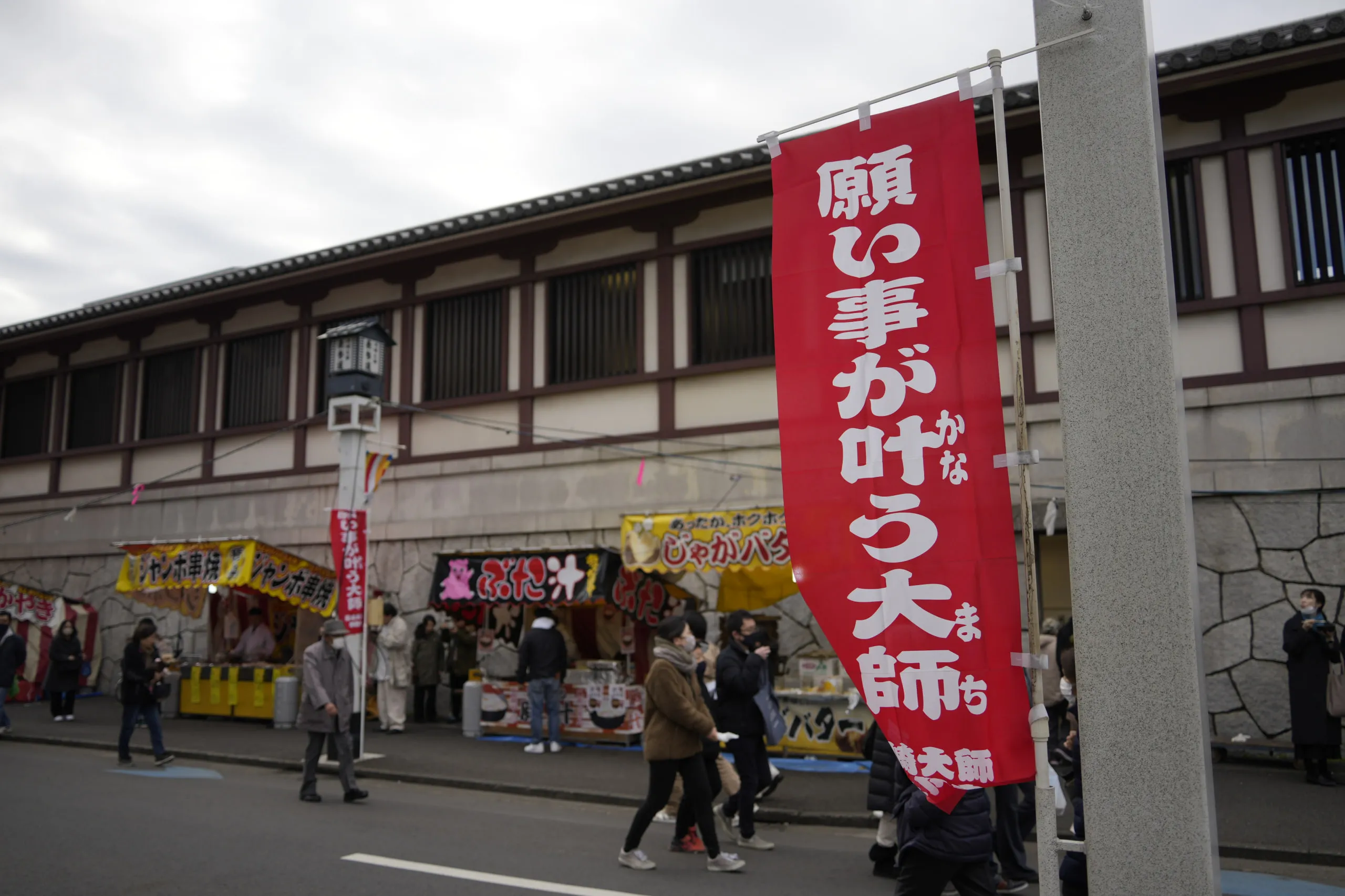
So we moved it to January 2 instead.
We took the train to Kawasaki Daishi, and almost the entire carriage seemed to be headed to the same place.
There was no need to check directions. Following the crowd was enough.

川崎大師 平間寺.
To be honest, I wasn’t especially invested. I don’t know much about either history or religion, so I was mostly there to join the crowd and absorb the atmosphere.
I followed the flow of people and tossed in a few coins like everyone else.
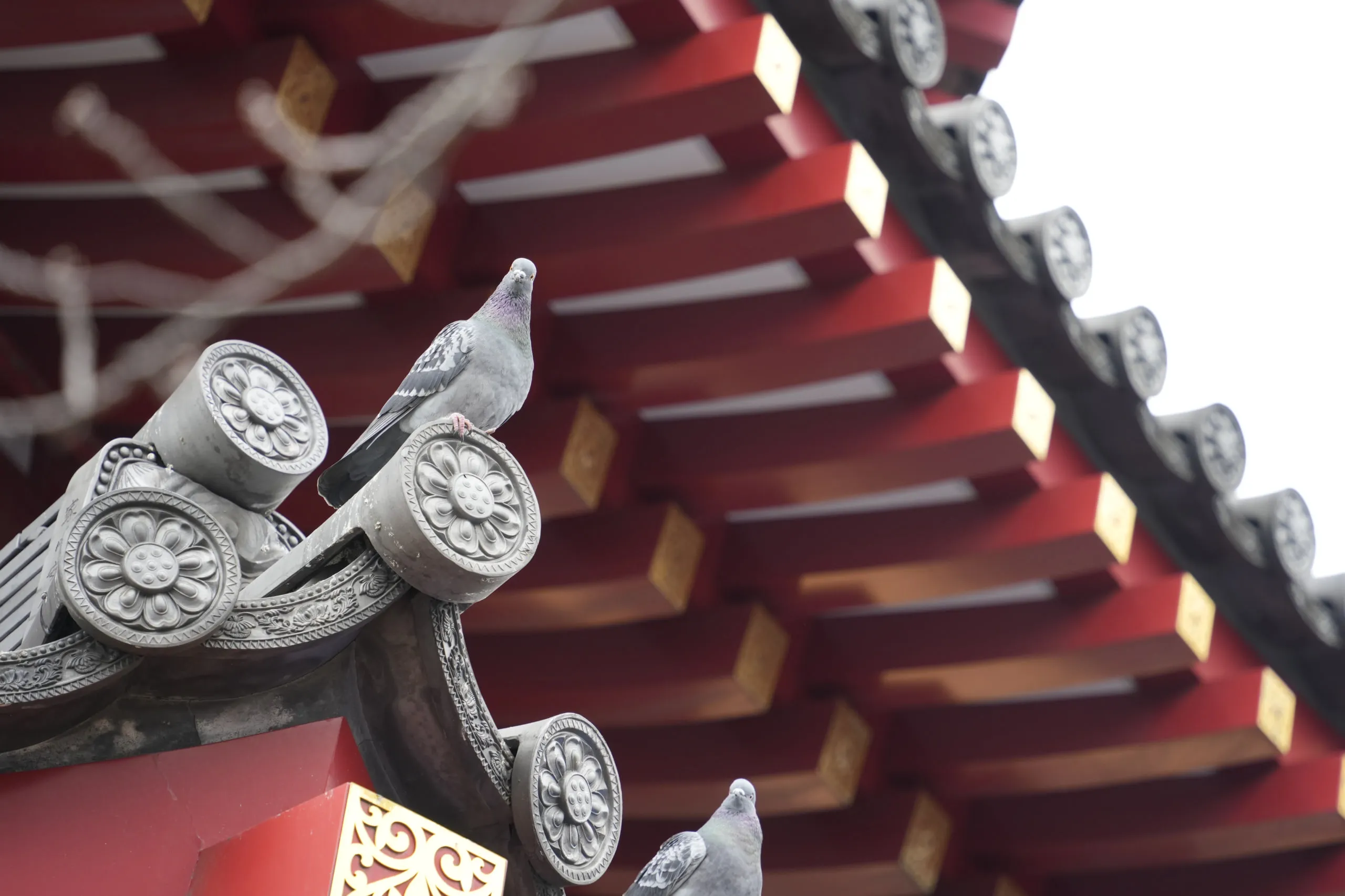
Hey kid, what are you looking at?.jpg
There were a ton of people inside the temple.
We wandered around for a bit and then left.

There is a park right next to the temple, so we wandered around there for a bit.
Even though it was already January, some autumn leaves were still hanging on.
This winter Tokyo wasn’t very cold; the lowest was around -1°C.
We just wandered around, then everyone went home.
Alright, I’ve used up this month’s “fulfilled-life quota”.
Misc
基本技術情報
In mid-January, I finally received the certificate for the 基本情報技術者試験.
It adds five points toward the 高度人才 application, which makes it a pretty efficient exam to take.
The exam itself covers basic IT knowledge, so the difficulty probably isn’t that high.
For me, the hardest part was Japanese.
As a non-CS graduate, the preparation process also doubled as a way to patch up both my IT fundamentals and my technical Japanese.
I learned about this exam before moving to Japan, from a blog post:
Yuanji’s Blog - 日本软考之基本情报技术者
Following that post’s recommendation, I bought 栢木先生の基本情報技術者教室 (情報処理技術者試験).
Starting from Reiwa 5, the 基本情報技術者試験 changed into a year-round exam.
You can apply anytime and take it on a computer.
It’s much more convenient than the old twice-a-year fixed schedule.
Another change was the duration: instead of separate morning/afternoon sections, it became a bit over 3 hours total.
The format is still all multiple-choice.
There isn’t much to say about the study process.
I worked through 栢木先生の基本情報技術者教室 (情報処理技術者試験) once, then practiced a few sets on 基本情報技術者試験過去問道場.
I spent about a month preparing, and right before the exam my accuracy rate in practice was hovering around 70%.
I was still nervous on the day itself because my grasp didn’t feel especially solid.
The exam lasts three hours, and I only just finished in time, with a fair amount of guessing near the end.
The final score turned out to be about the same as my practice results, around 70%, so luck was on my side.
A few things to note about this exam:
- If you fail, you can register again, but there’s a 30-day cooldown. Basically: at most once per month. So prepare before you book it, otherwise you waste time and money.
- After the 3-hour exam ends (or you finish early and submit), your score shows up on-screen immediately. It’s pretty thrilling.
- The official result is published mid next month on the website. The paper certificate is mailed out mid the month after that.
Closing
Before February was even over, I finally managed to finish writing up January. That was not easy.
Looking back, the month was fuller than I expected.
If every month ends up containing this much material, then trying to hammer out a year-end review in a few rushed days really was doomed from the start.
All right. Onward.
There are only two weeks left before February is over, which means it is already time to start plotting the February log.
Comments