This trip started because I won two tickets to a screening of Gridman Universe. A friend happened to be visiting, and it felt wasteful to only watch a movie, so we figured we might as well make it a road trip.
Since we had just gone to Mount Fuji last month, Izu became the destination this time.
The Perfect Plan (
For the Fuji trip last time, we had exactly one destination: Mount Fuji. This time, with some help from AI, we prepared a very “thorough” plan: drive to a guesthouse in Atami on Saturday night and sleep there, take the Skyline south to Shuzenji on Sunday, head to Shimoda after lunch, then drive home at night.
A flawless plan. All that remained was executing it accurately.
The Movie, Gridman Universe
First stop: the movie. Only after arriving did I realize this was a cheering screening where people were allowed to make noise. The atmosphere was lively, and the experience was great.
Every time the male lead appeared, some guy shouted, “Yuta kawaii.” Shotacons are terrifying.
During the creator talk after the screening, Shion Wakayama laughed so hard several times that she collapsed to the floor. Literally to the floor. It was extremely fun.
Dinner, Yakiniku King
We expected to arrive in Izu fairly late, so the plan was to eat dinner before setting off.
Several yakiniku places we checked were fully booked. Apparently Saturday nights are this hard without a reservation. Terrible planning on our part. In the end, we waited an hour at Yakiniku King before getting a table.
Since it was all-you-can-eat, we had to eat with commitment. Aside from friend A spilling drinks three times and letting both his pants and shoes taste the sweetness, it was a perfect meal.
Also, the ice cream at Yakiniku King tastes awful. I should never have expected anything from it.
Starting Out, Taking the Wrong Road Again
Hm? Why did I say “again” (
One moment of inattention, and I took the wrong expressway route. We had barely been driving before getting off again.
After my friend once got lost driving in Shimokitazawa, I managed to blunder into Minato Mirai by car. A truly legendary pair of incompetents.
Putting aside my own fault here, surely Japanese road design bears at least a tiny bit of responsibility?
The main road, frontage road, and exit lane were basically impossible to distinguish. Apple, Google, and Yahoo all failed to give lane guidance. Too hard.
Yahoo Navigation received an epic update on April 21, 2026, adding expressway lane guidance and voice prompts for which route to take.
I hope I stop taking wrong turns next time.
We passed Minato Mirai without going in, turned back onto the expressway, and kept driving.
Even though the whole route was along the coast, it was pitch-black at night and we could not see anything. Boring.
Steep-Slope Parallel Parking: Giving It Everything and Still Losing
After many trials and hardships, we finally arrived at the guesthouse entrance, or more accurately, below the slope leading to it. The guesthouse description had said its parking space was difficult, and it was telling the truth.
Before trying it, I had thought, “Even if the space is a little small, surely I can get in after a few adjustments?” Once I actually saw the parking spot halfway up that steep slope, I lost confidence.
I tried anyway, with the kind of bravery that comes from a hard head, and immediately got stuck while nosing into the space: if I stopped holding the brake, the car rolled downhill; if I reversed without enough throttle, it also rolled; if I gave it too much throttle, I was afraid the rear would hit the wall.
After weighing the costs, 50,000+ yen in repairs versus under 1,000 yen for parking, I decisively admitted defeat. “Sorry, I underestimated you.” Then I obediently went downhill to find a commercial parking lot.
“Steep slope + tiny space + parallel parking” was a full-contact combo. Respect.
Tatami Guesthouse, Surprise Cockroach
The guesthouse was huge. Countryside lodging really is nice. But the joy lasted only a moment, because we found a cockroach in the living room…
This one was oddly slow, just lying on the floor without moving, and friend A executed it without mercy.
In my memory, cockroaches back in China crawl extremely fast and can even take off for short flights. Threat level ++.
This room was unusable now. Close the door. Check the futons, mats, and every corner of the other rooms. For the moment, no second one appeared.
I slept through the night in a state of quiet dread…
Good Morning, the Izu Trip Officially Begins
Apparently no cockroach crawled into the bedding overnight. If I did not see one, it did not exist.
A quick wash-up.
First stop: the Skyline.
Izu Skyline
At the tollgate entrance.
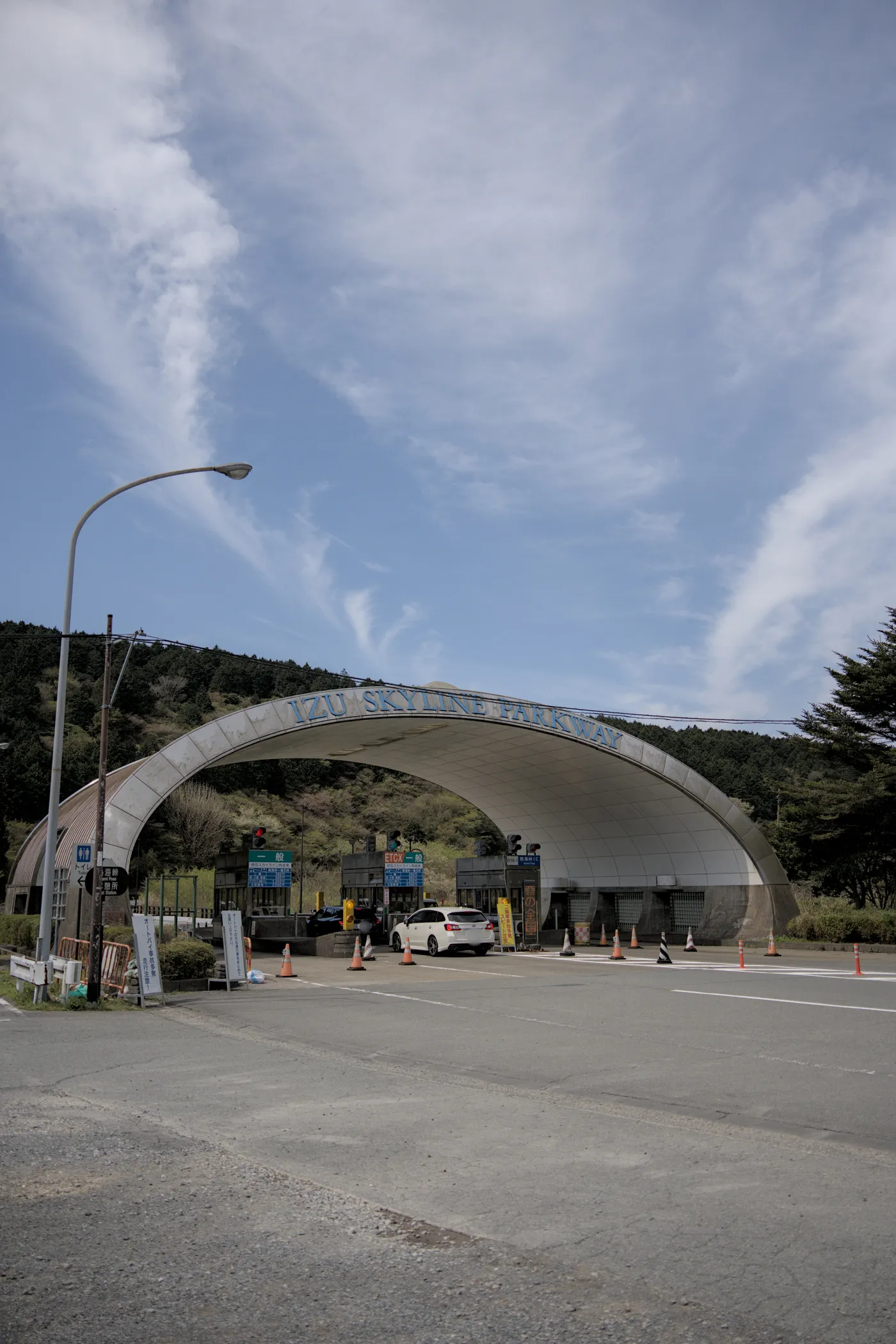
Thin clouds drifted elegantly across the sky.
In front of the tollgate was a Subaru LEVORG. Wagons are so good. I also want to drive a wagon out on trips. It could even save on accommodation (
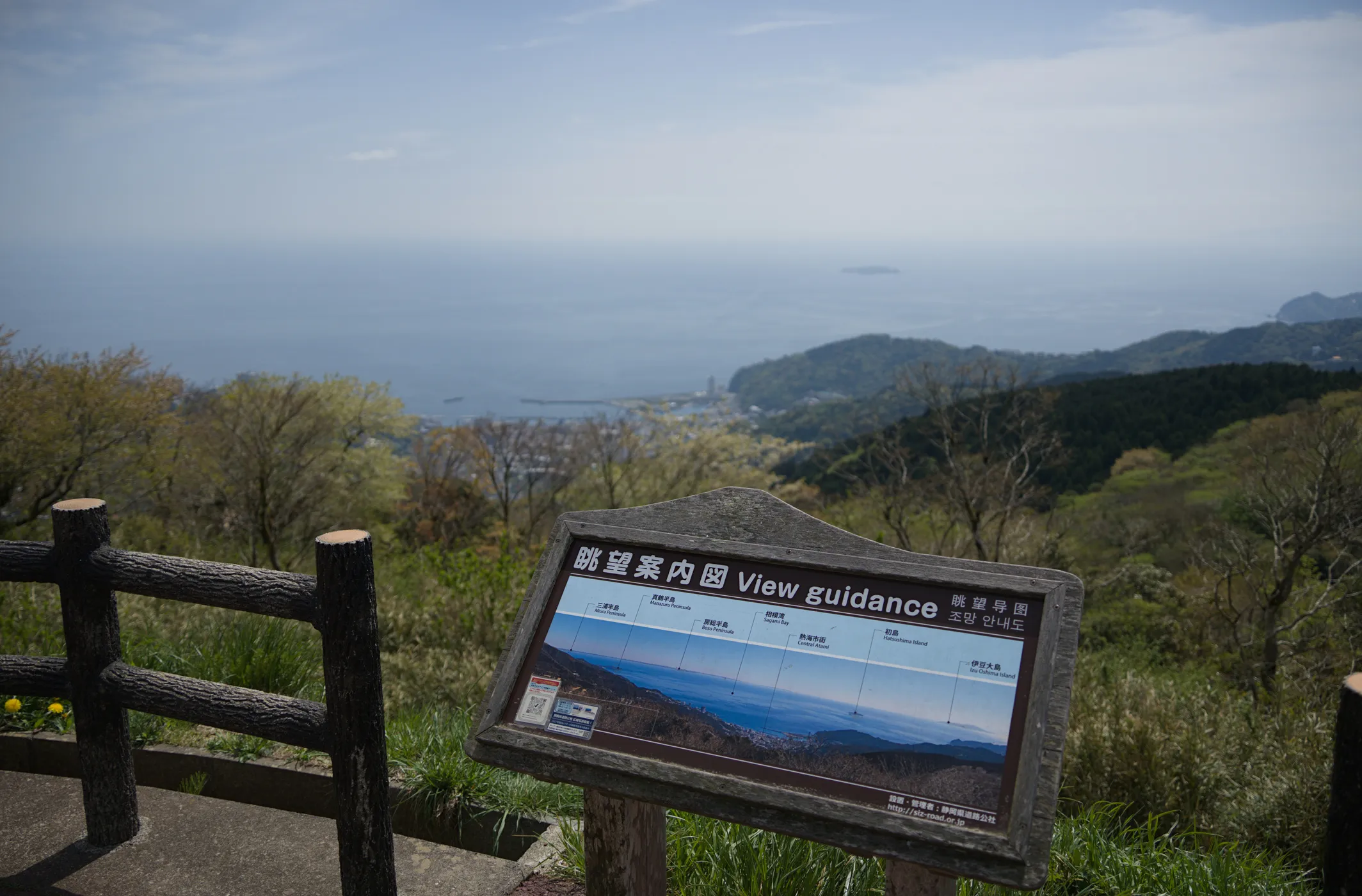
Visibility was only so-so. Chiba was nowhere to be seen.
There were lots of little sports cars and motorcycles on the Izu Skyline. Everyone was taking advantage of the lovely spring weather to go for a drive.
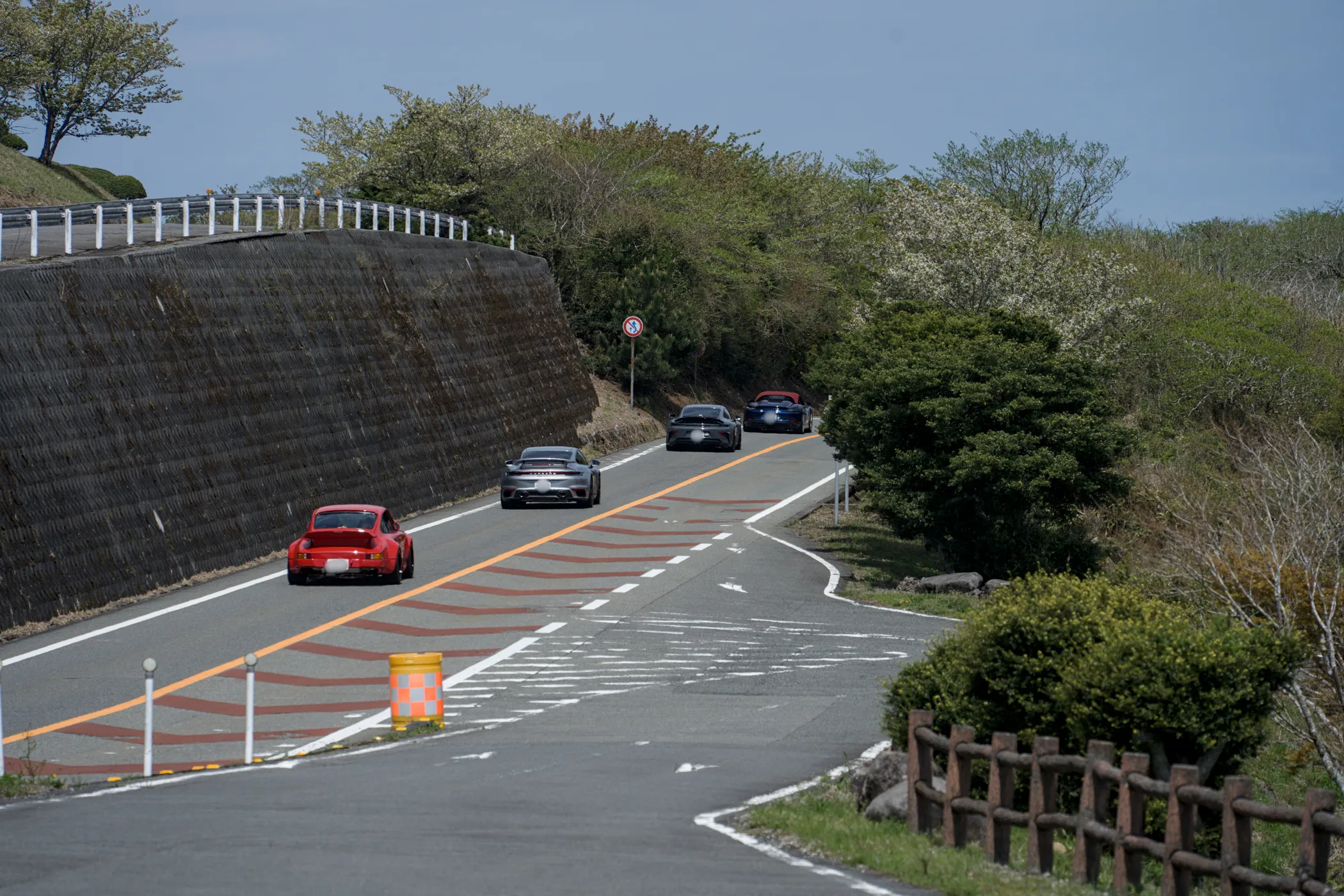
Ran into a Porsche convoy, though I only managed to snap the last few cars.
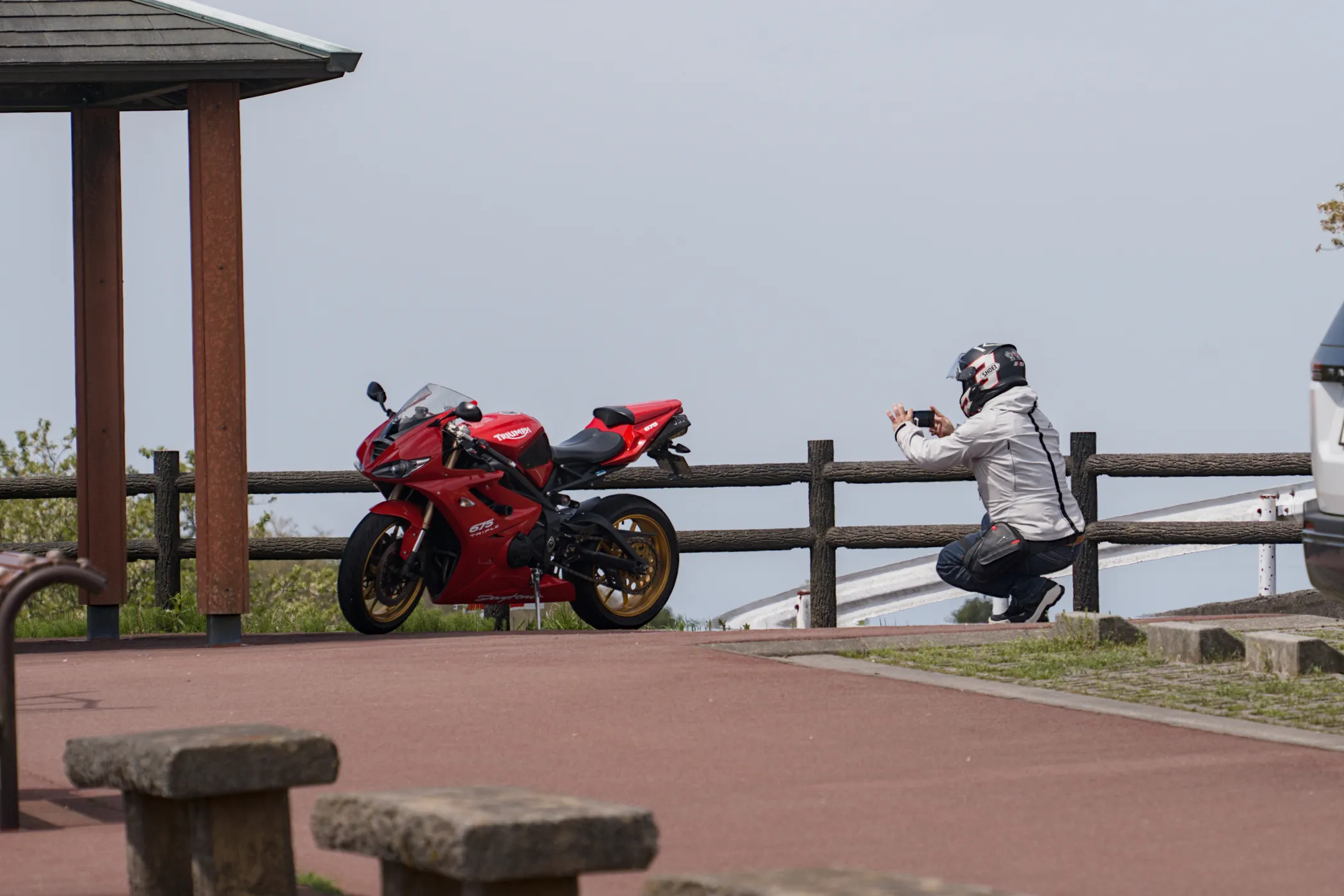
A rider taking photos of his beloved bike.
Zhang Xue Motorcycles has exploded in popularity in China recently. I watched an interview with the founder and felt he was a very pure-hearted person.
I like stories about people changing the world through their own passion, keeping their edges intact, and eventually succeeding.
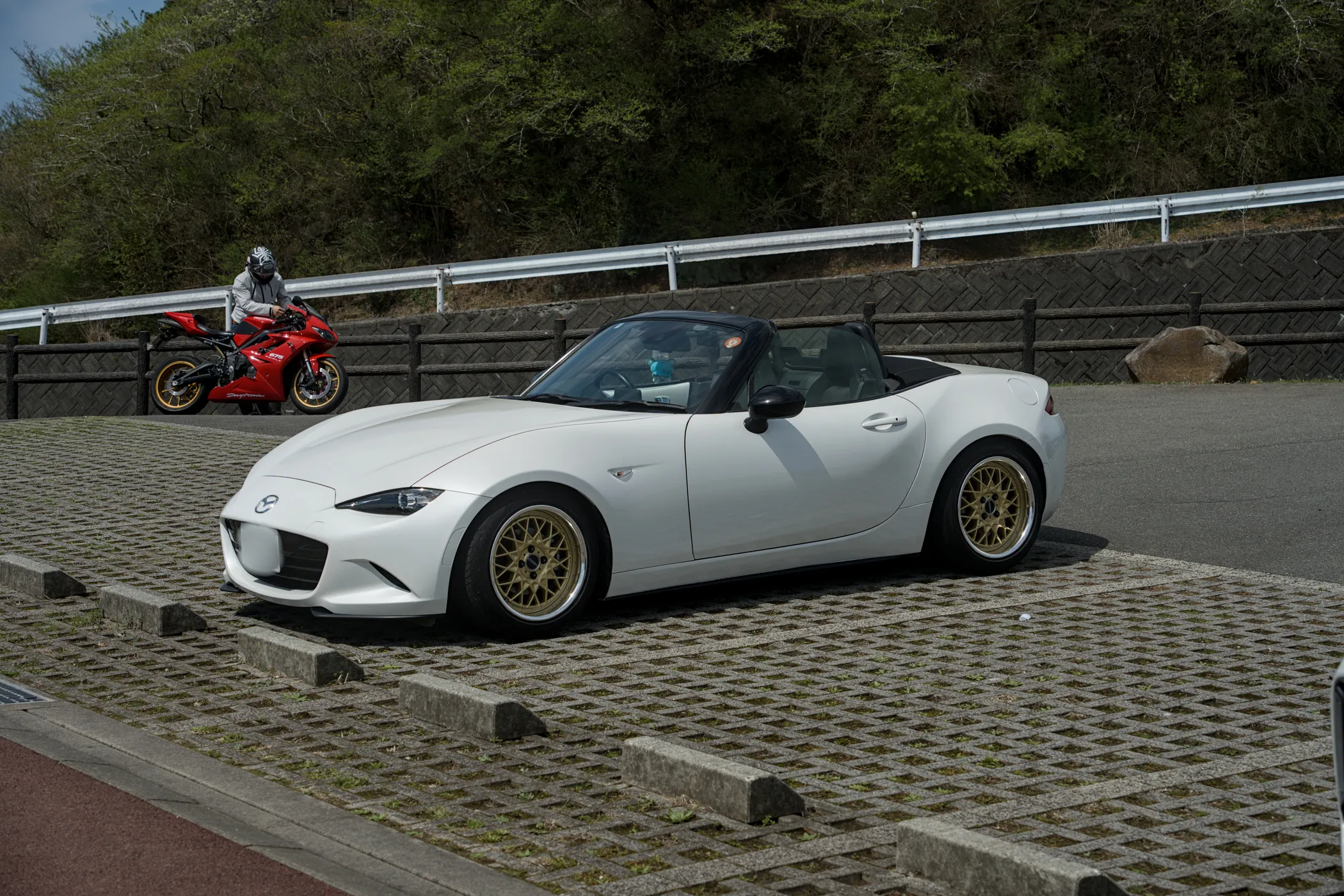
Tiny convertible. Very cute.
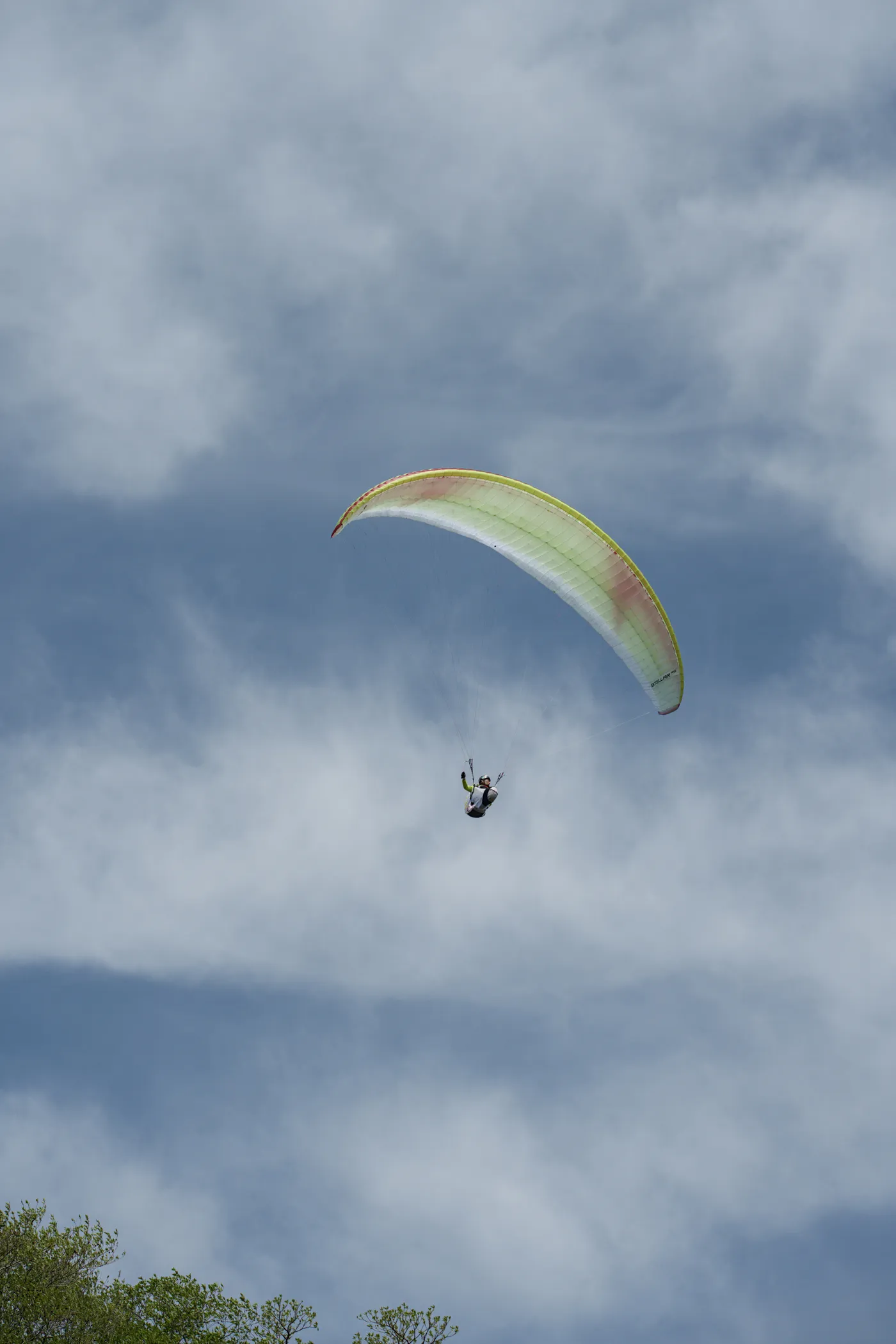
Paragliders were flying back and forth right along the road, quite low. I wondered if they might accidentally fall down.
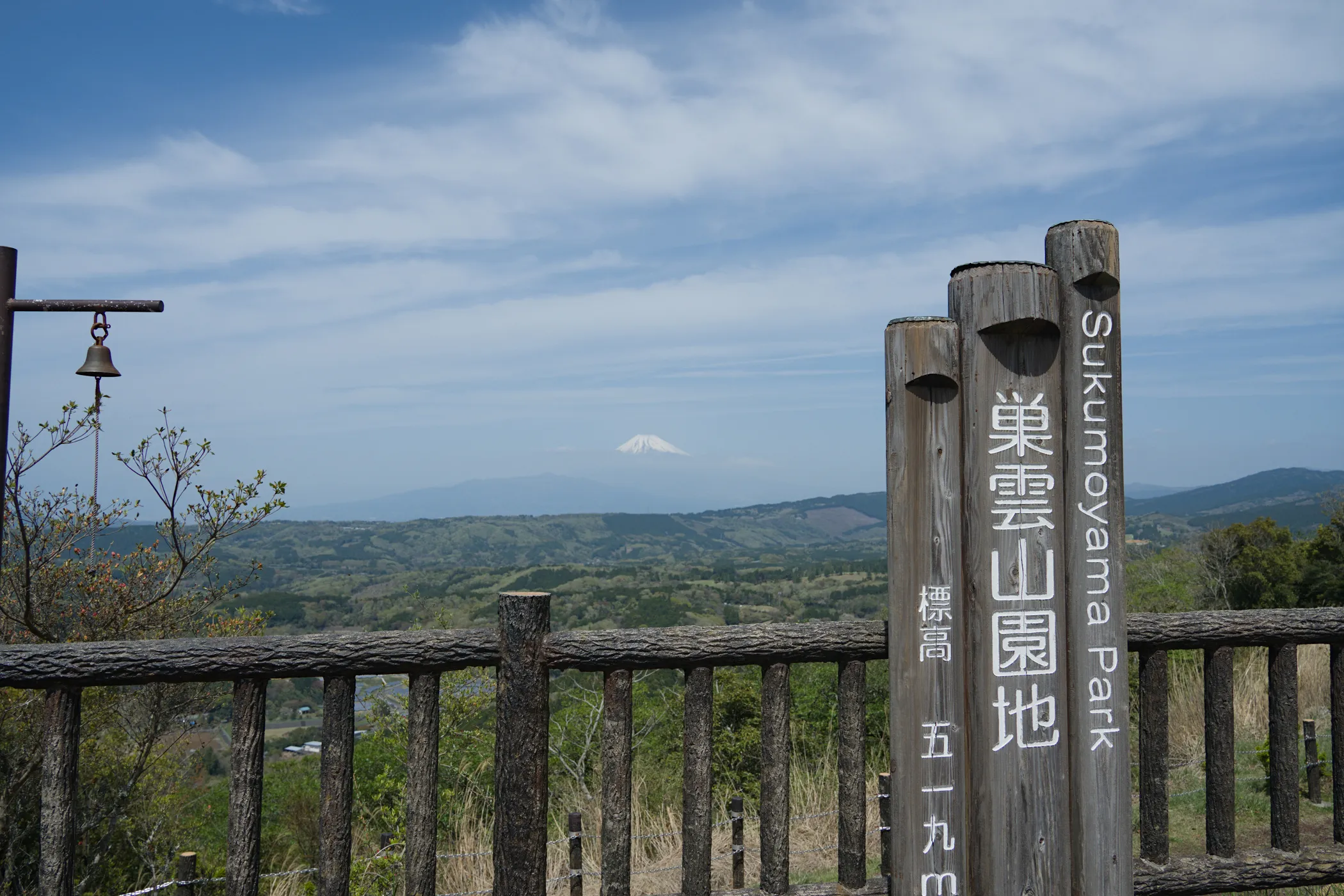
Mount Fuji in the distance.
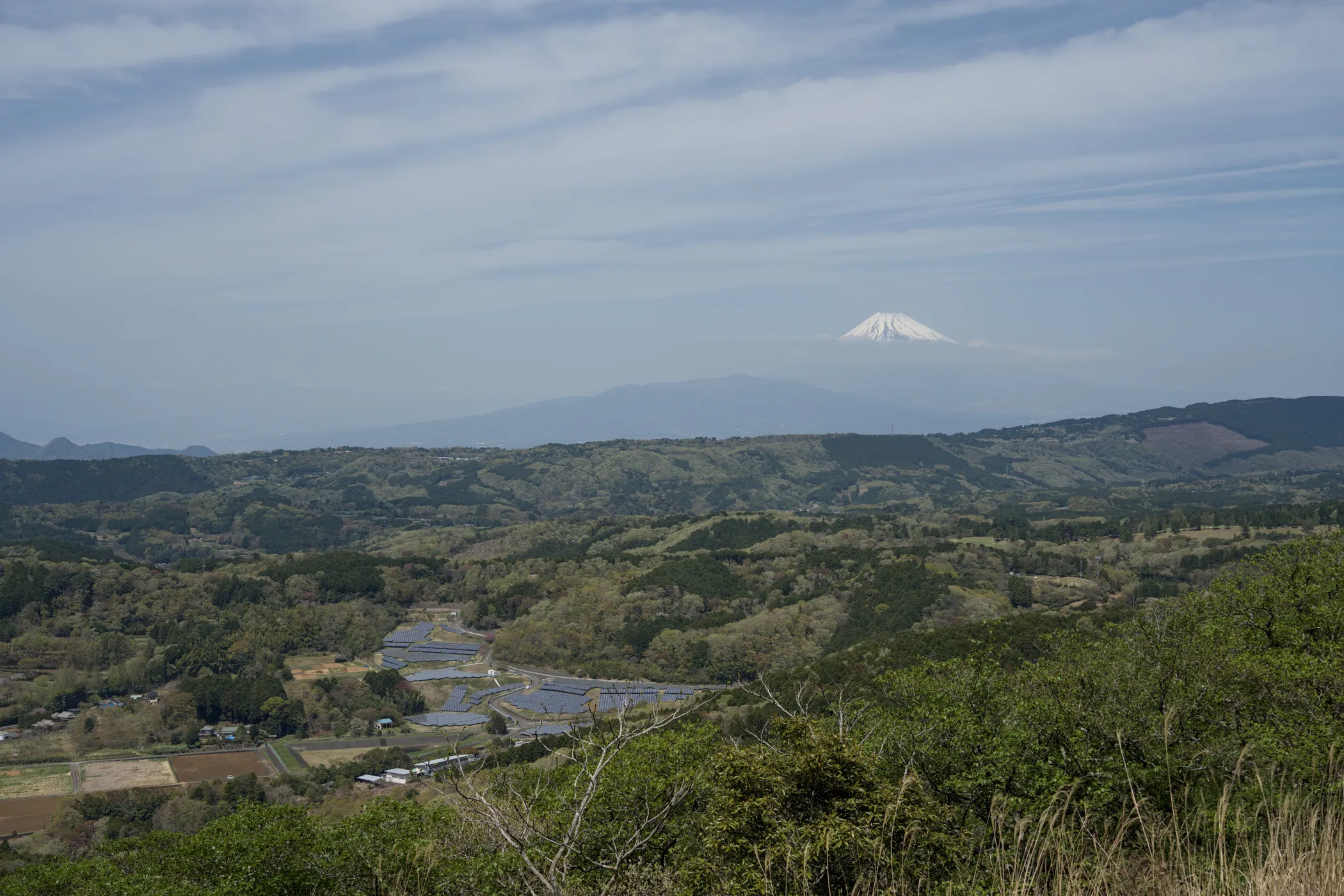
This patch of solar panels on the hillside gave me a flashback to the photovoltaic stations covering hillsides back in China.
Shuzenji
After coming down from the Skyline, we headed toward Shuzenji.
Lunch
After driving around all morning, it was just about lunchtime, so we found somewhere to eat first.
Soba seems to be famous around here, so we picked a place that looked decent.
After we sat down, tea arrived as usual. Then, somehow, a whole piece of wasabi appeared???
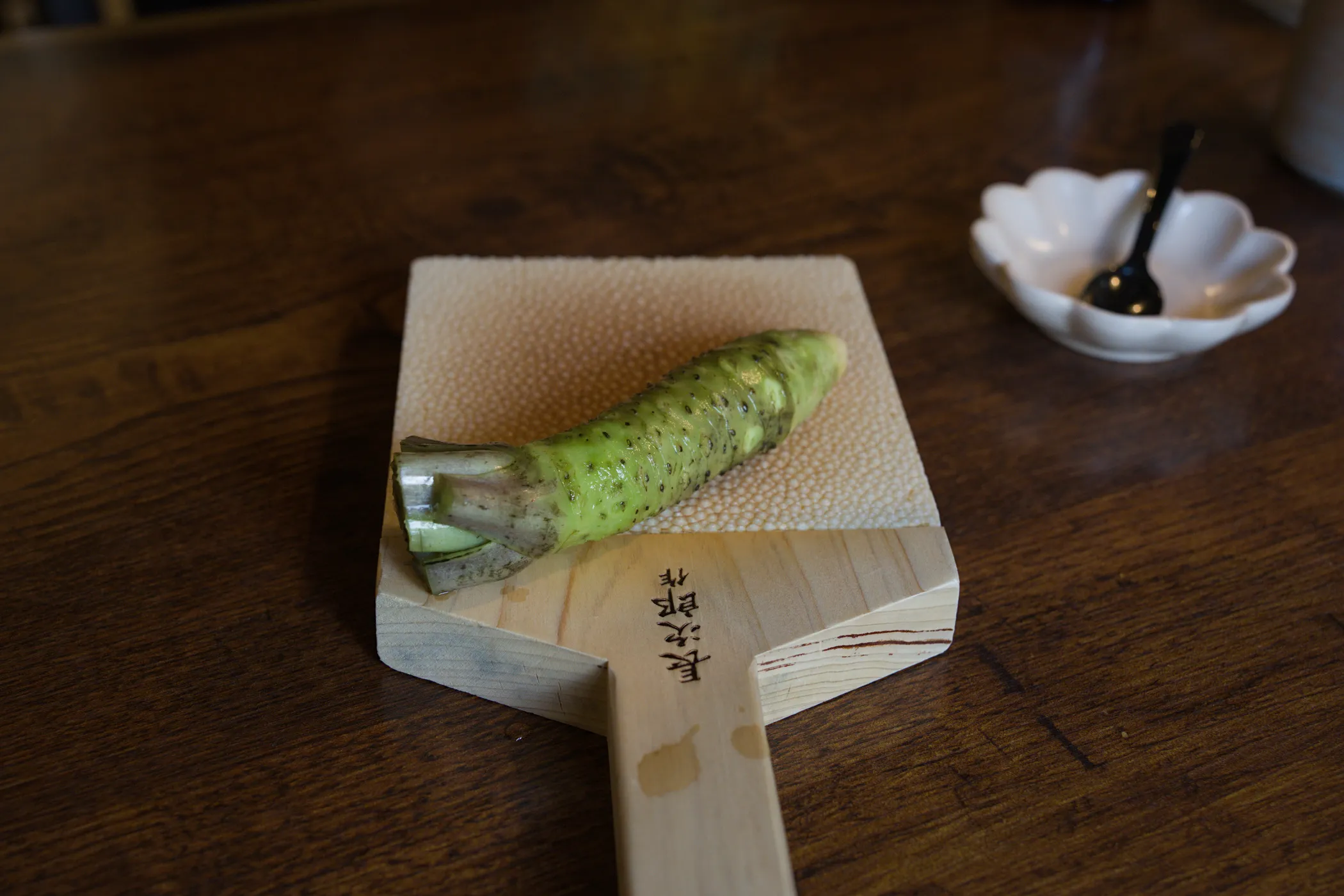
My first time seeing wasabi before it gets grated into paste. So this is what it looks like.
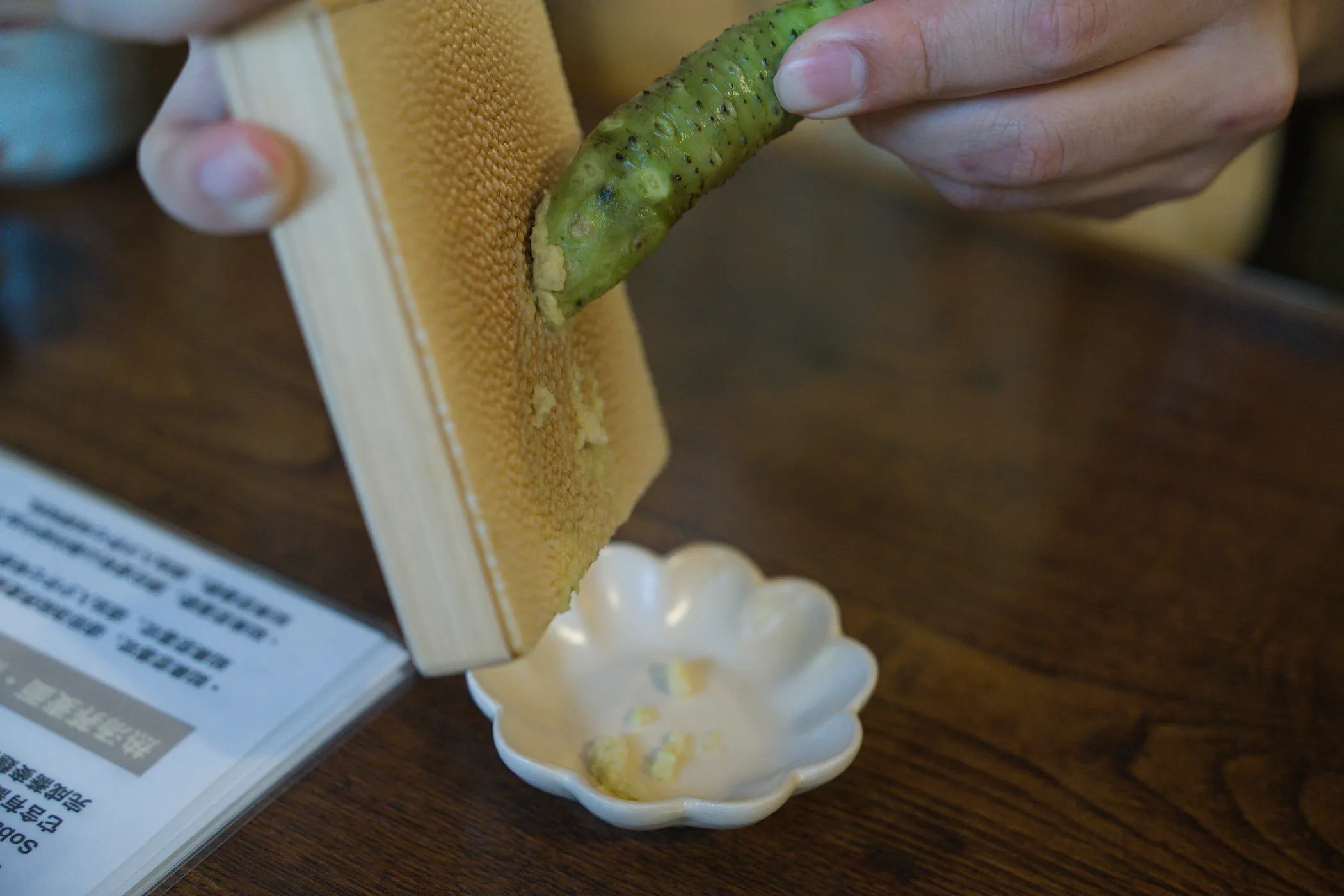
Though fallen into mud and ground to dust, only its fragrance remains
I cannot handle the smell of wasabi, so taking photos was enough for me.
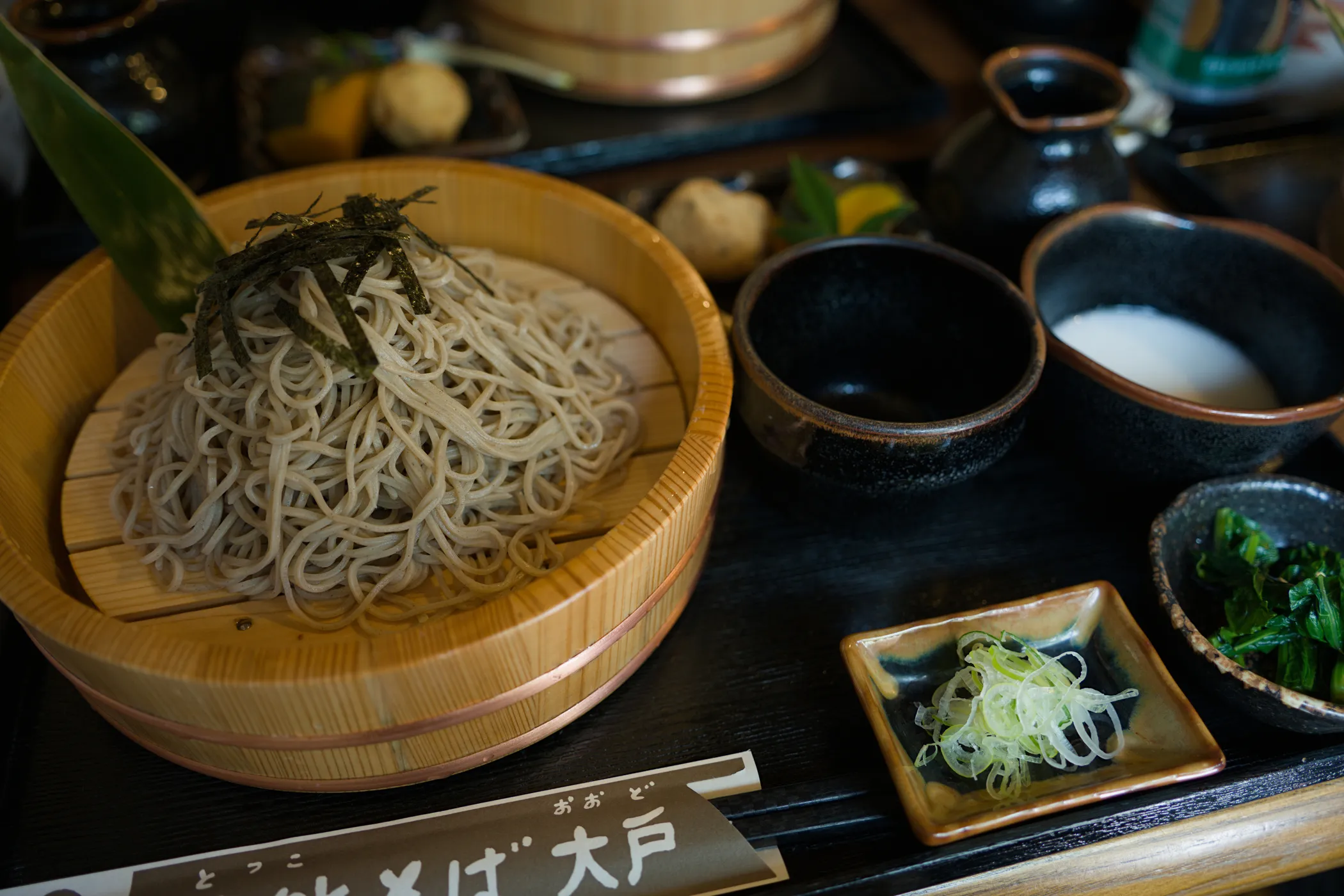
The main meal arrived. Not a single piece of meat.
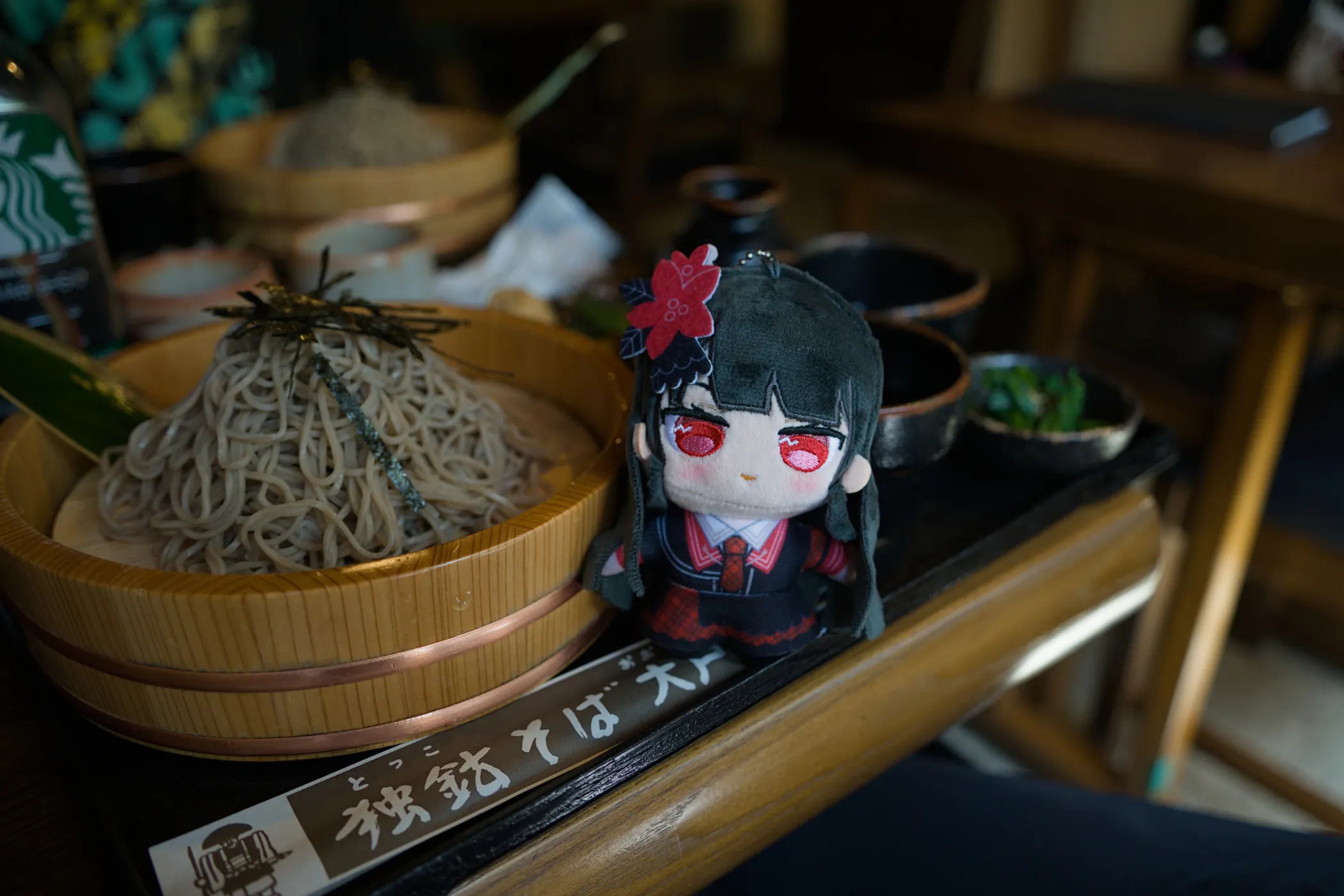
Friend C’s plush doll eats first.
After replenishing ourselves with a pile of carbs, we continued the itinerary.
Destination: Shuzenji.
The Temple
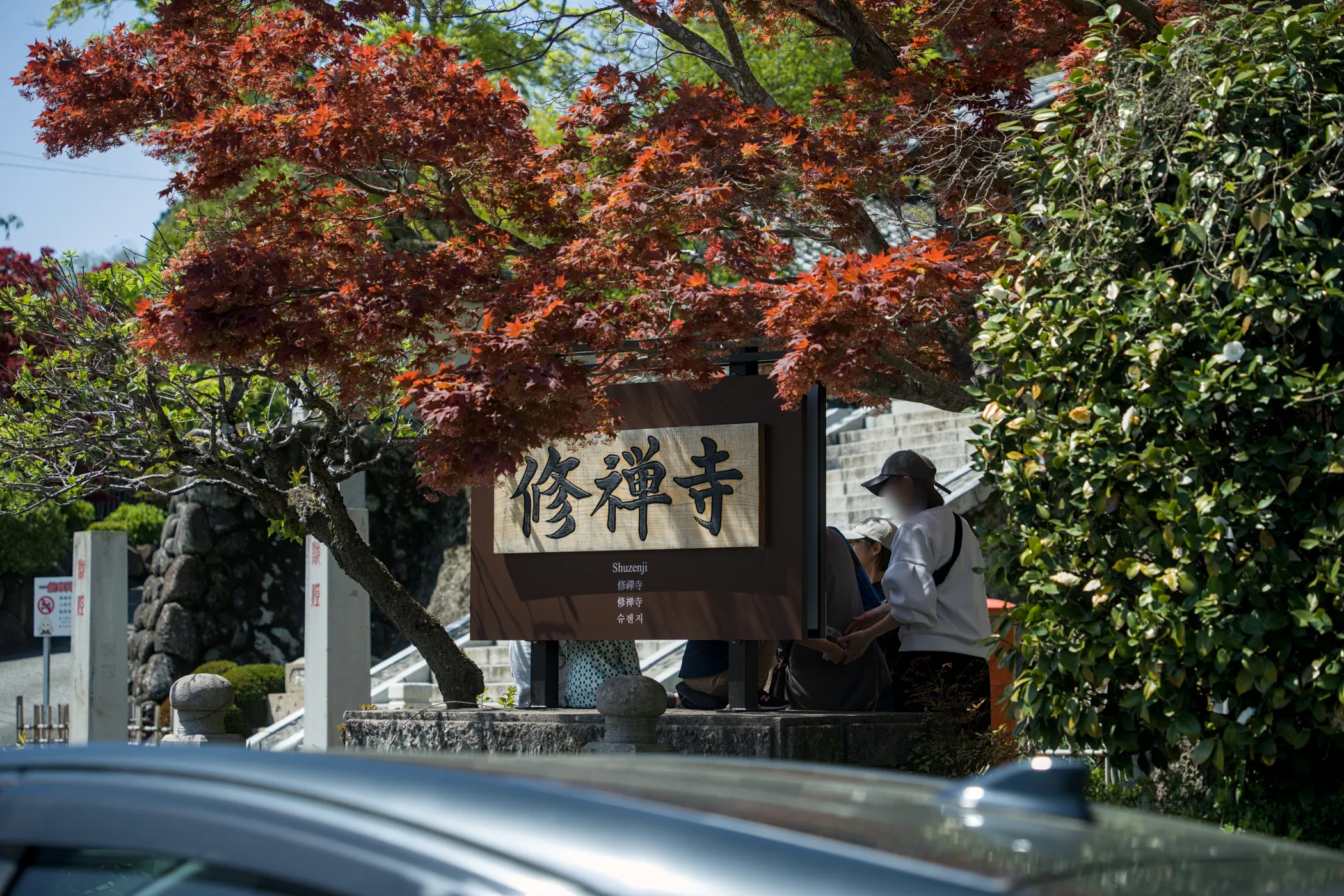
Are those red maple leaves on top of the sign? Why are there red leaves in this season?
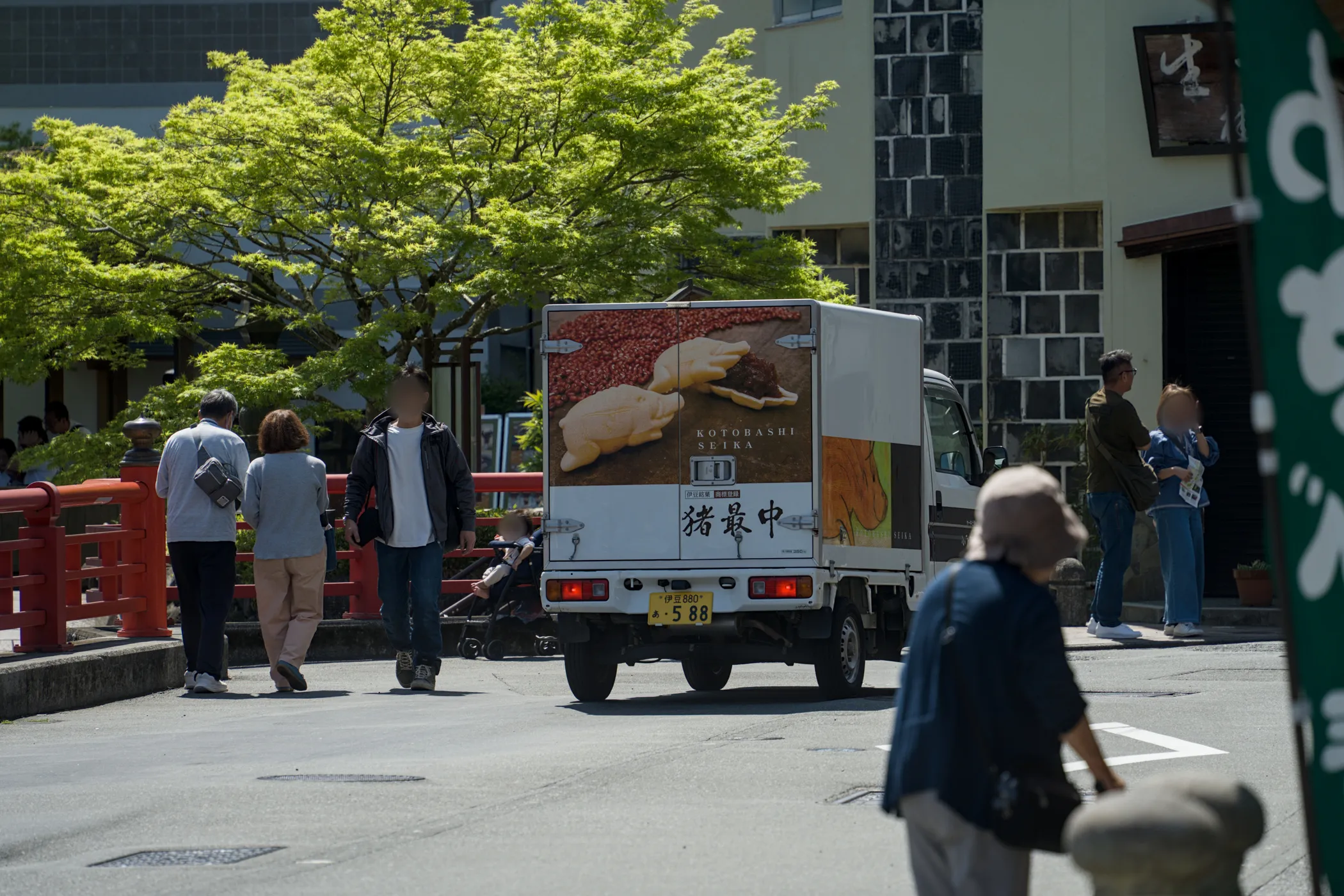
A small truck passed by with “Inoshishi Monaka” written on it. The name was interesting, so I snapped a photo.
At the time, I thought it was just an ordinary brand and had no idea what they sold, but we kept running into it later in the trip.
After getting home, curiosity drove me to ask Gemini. The answer was:The “Inoshishi Monaka” you saw is a very famous specialty of the Izu Peninsula, made by the century-old shop Kotobashi Seika.
What kind of shop is it?
Long history: Kotobashi Seika is a long-established wagashi shop with over 100 years of history.
Signature product: Its most famous product is this “Inoshishi Monaka.” Japanese monaka usually consists of a glutinous rice wafer wrapped around red bean paste, and this shop’s specialty is shaping it like a running little wild boar. Very cute.
Origin: The Amagi area of Izu is known for wild boar hot pot, and the shop created this sweet inspired by that. It has now become a classic Izu souvenir.Slapping my thigh. It was a famous sweet, and we walked right past it.
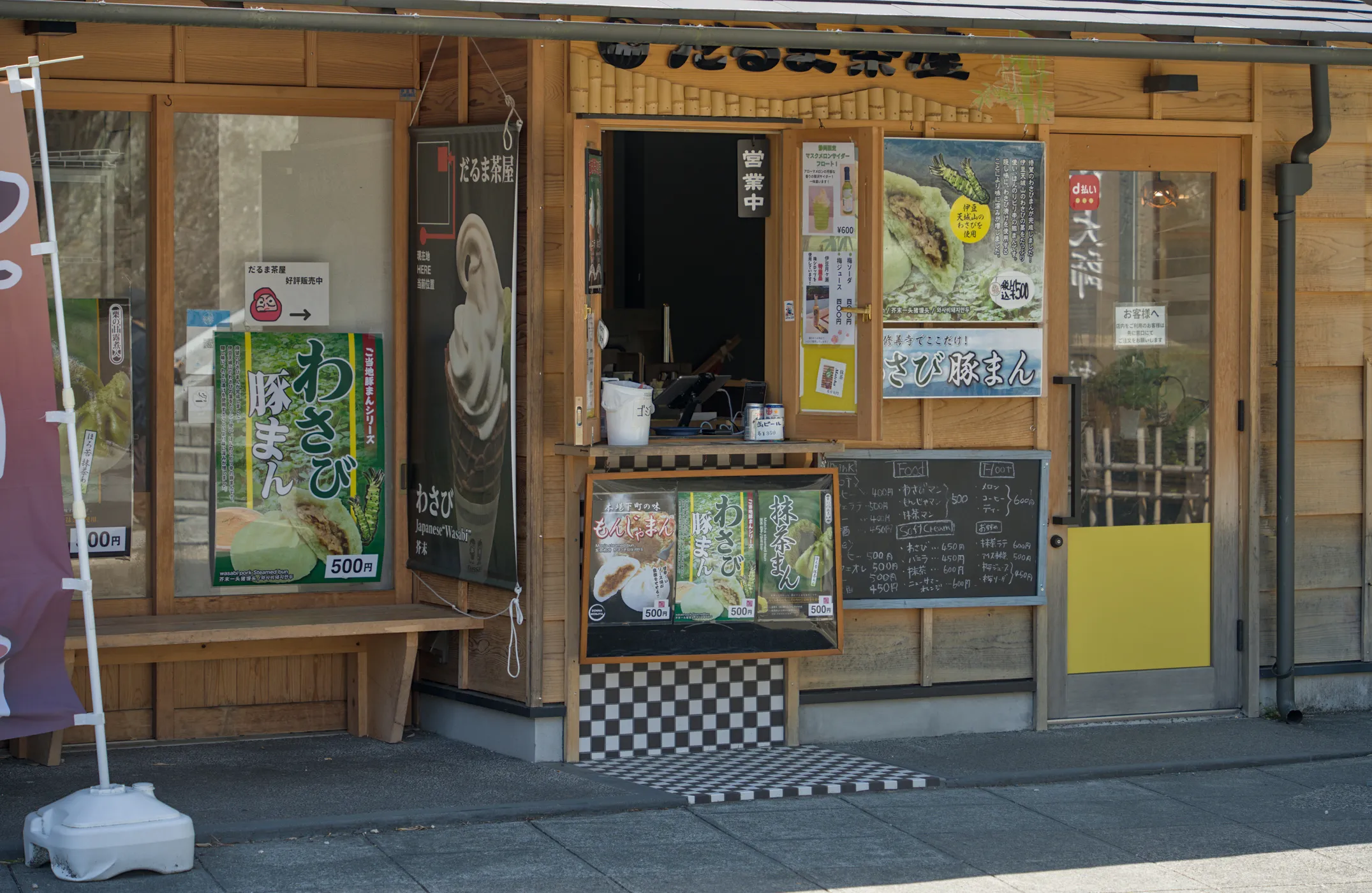
Matcha packets I can understand, but wasabi packets… I do not want to imagine the flavor.
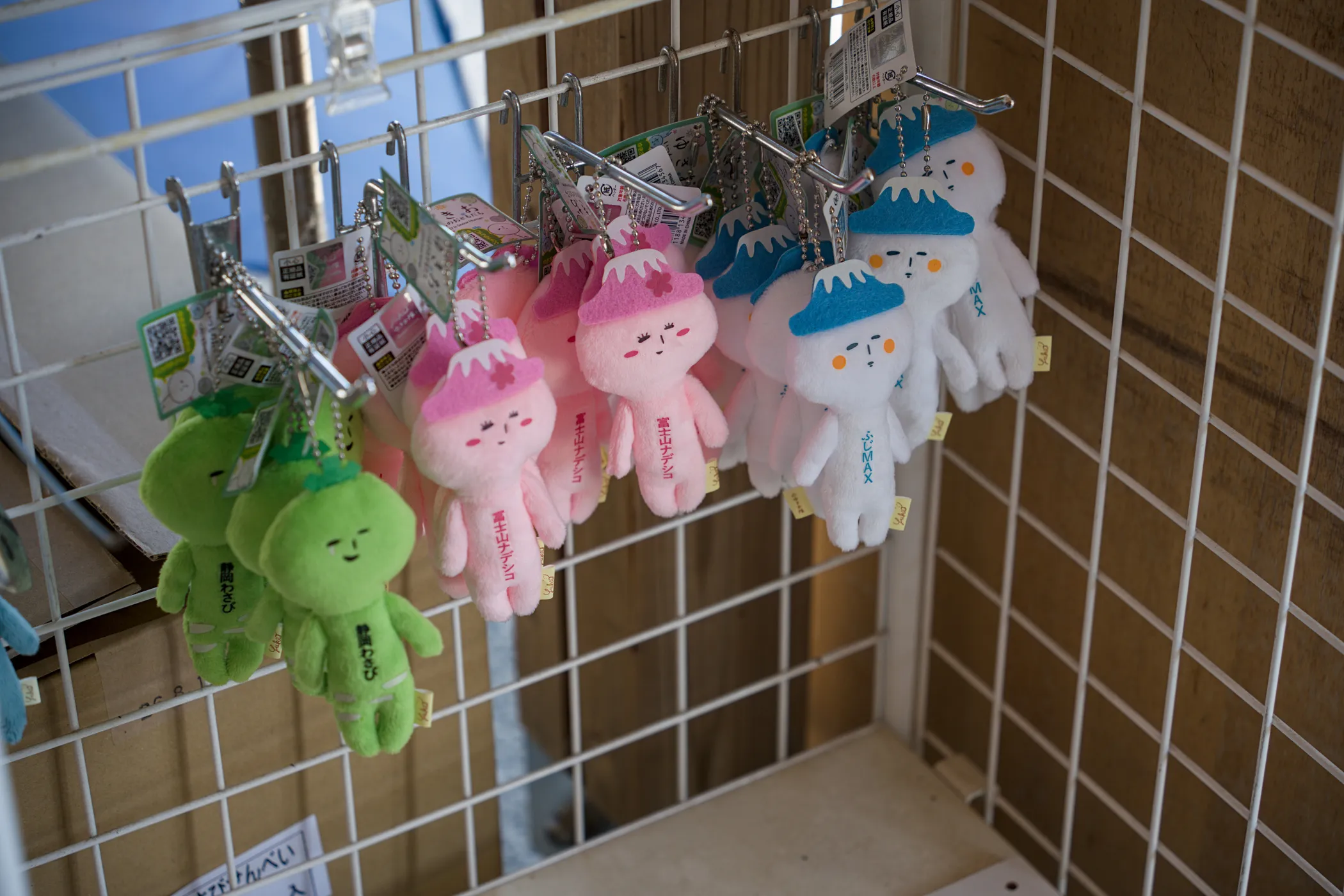
It can even become a mascot. So is wasabi Shizuoka’s specialty?
I do not eat wasabi, but I can buy a little charm. This one has no wasabi flavor, after all.
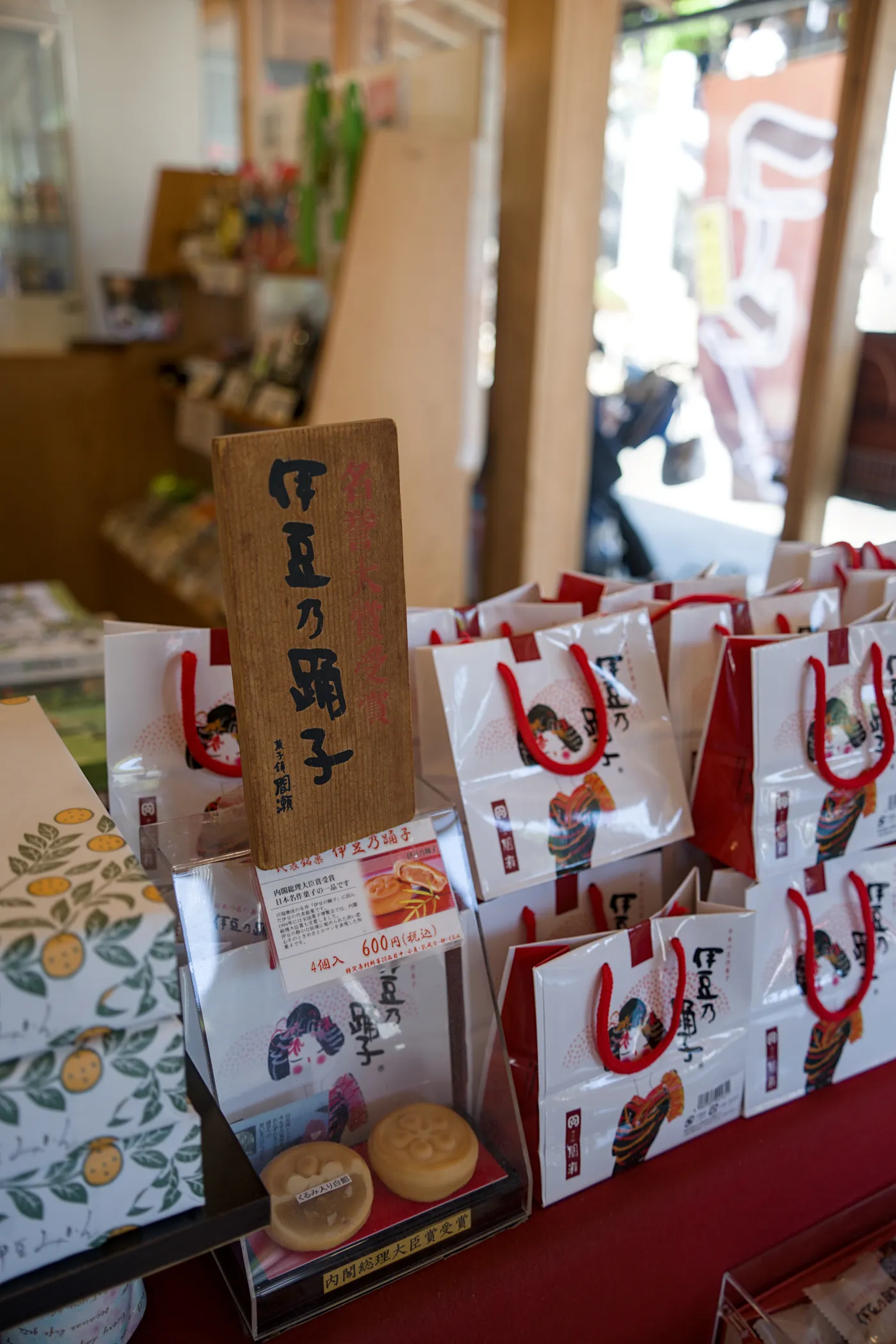
The Dancing Girl of Izu. I have not read the book, so I have no idea what this sweet has to do with it.
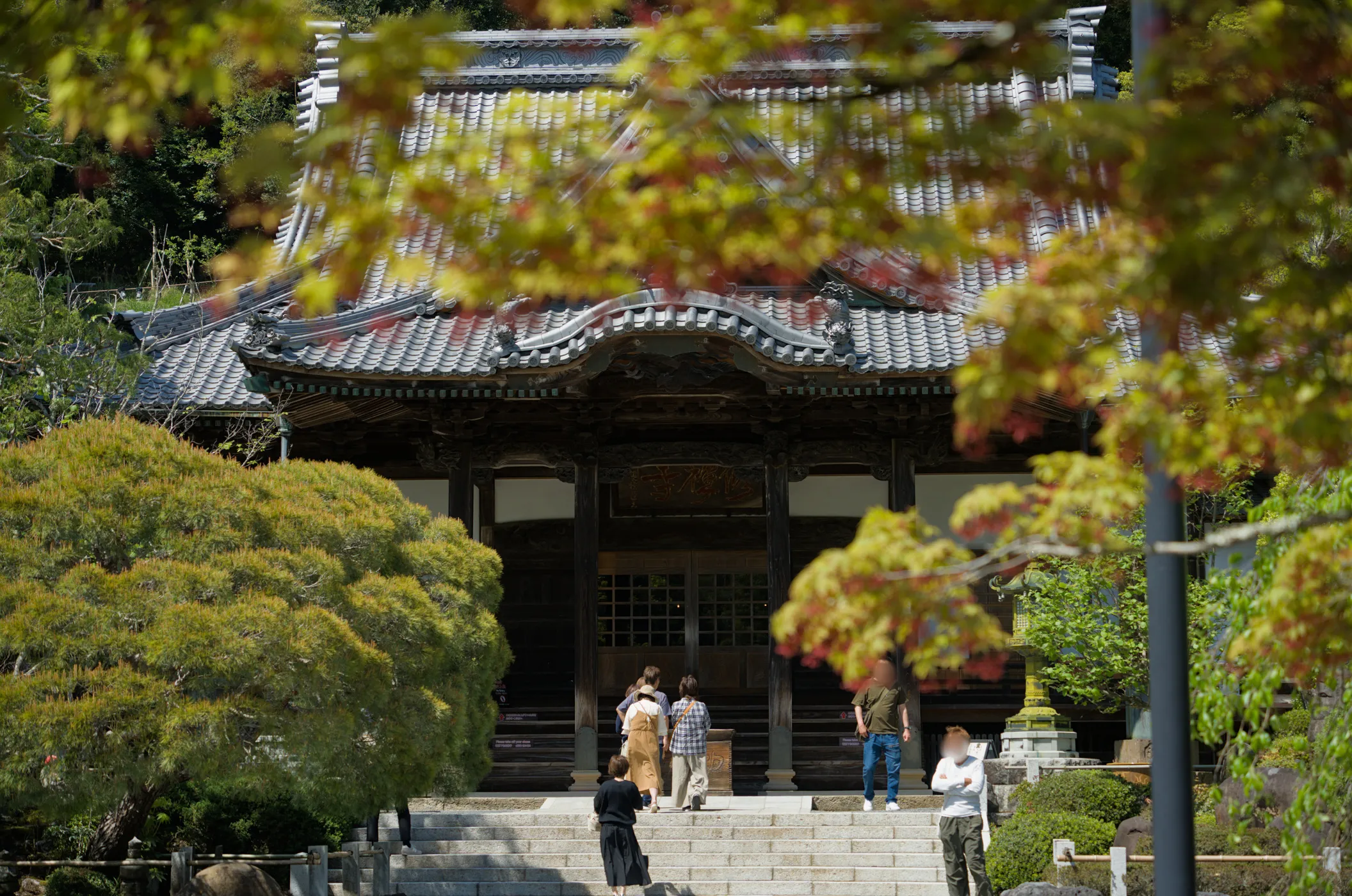
The main hall itself. I did not have any spare 5-yen coins on me, so I theatrically tossed in three 1-yen coins and lightened my wallet (
So losing my wallet afterward was karmic retribution? Now that really lightened it.
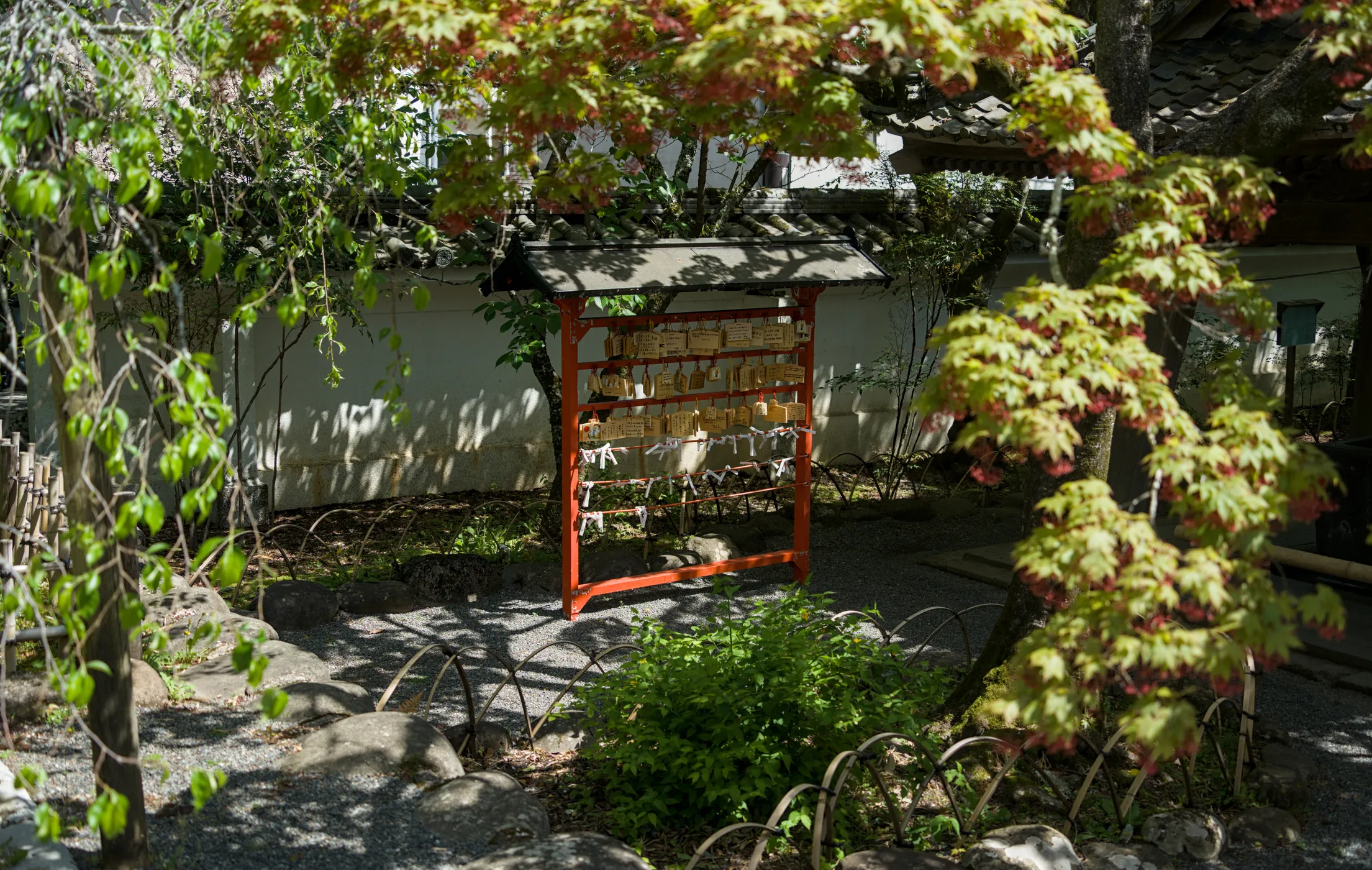
There did not seem to be many ema plaques.
The temple was small, and we finished walking around quickly.
At the end, I drew an omikuji and got “great fortune.” Hahahaha. Smug.
Every flag has now been raised.
We left the temple and wandered around the area.
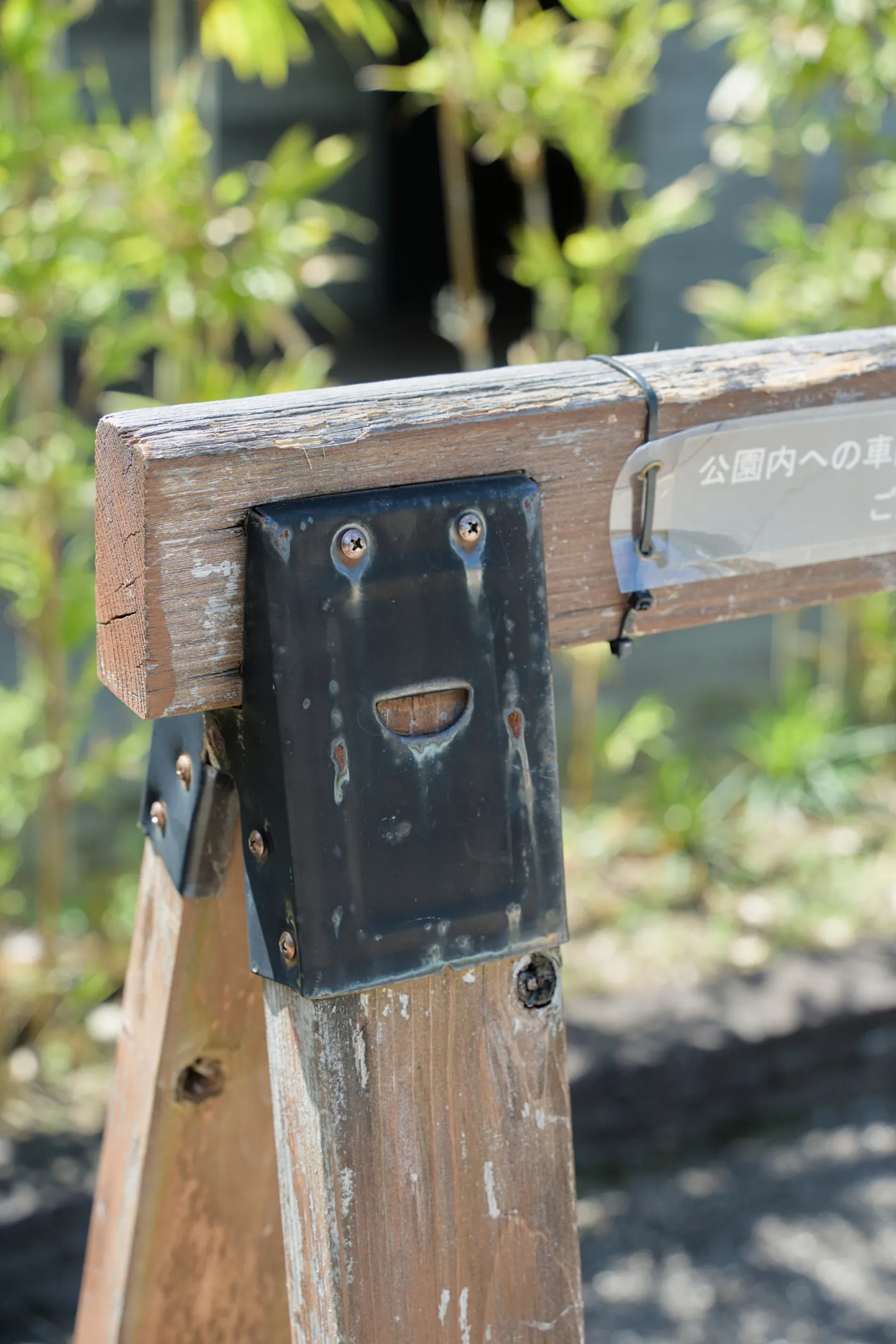
It looks a bit like the “囧” face?
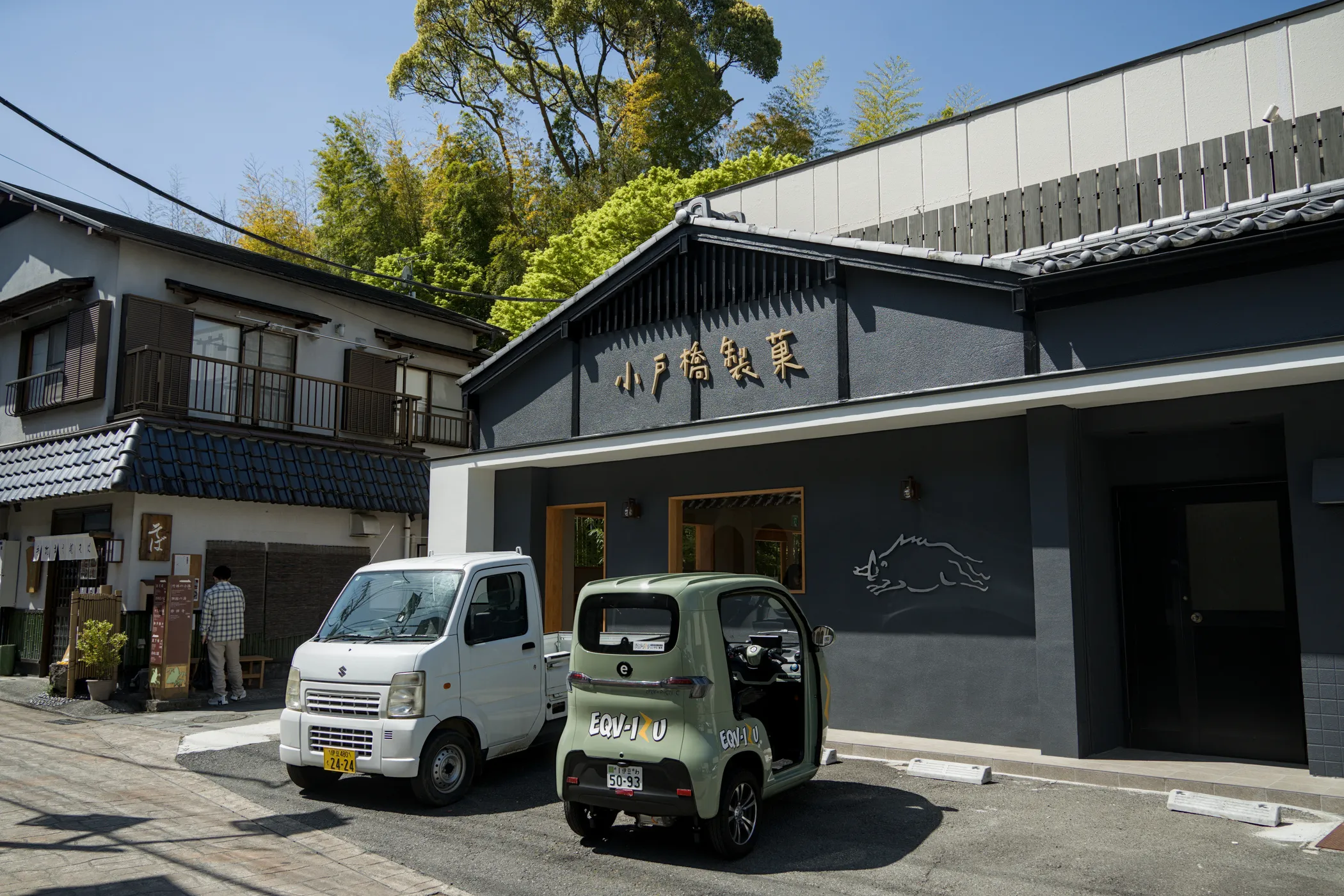
Japan’s senior mobility scooter.
The building behind it is the century-old Kotobashi Seika shop mentioned earlier, the one that makes Inoshishi Monaka. Only when sorting photos after getting home did I realize we had passed right by it…
Slapping my thigh again.
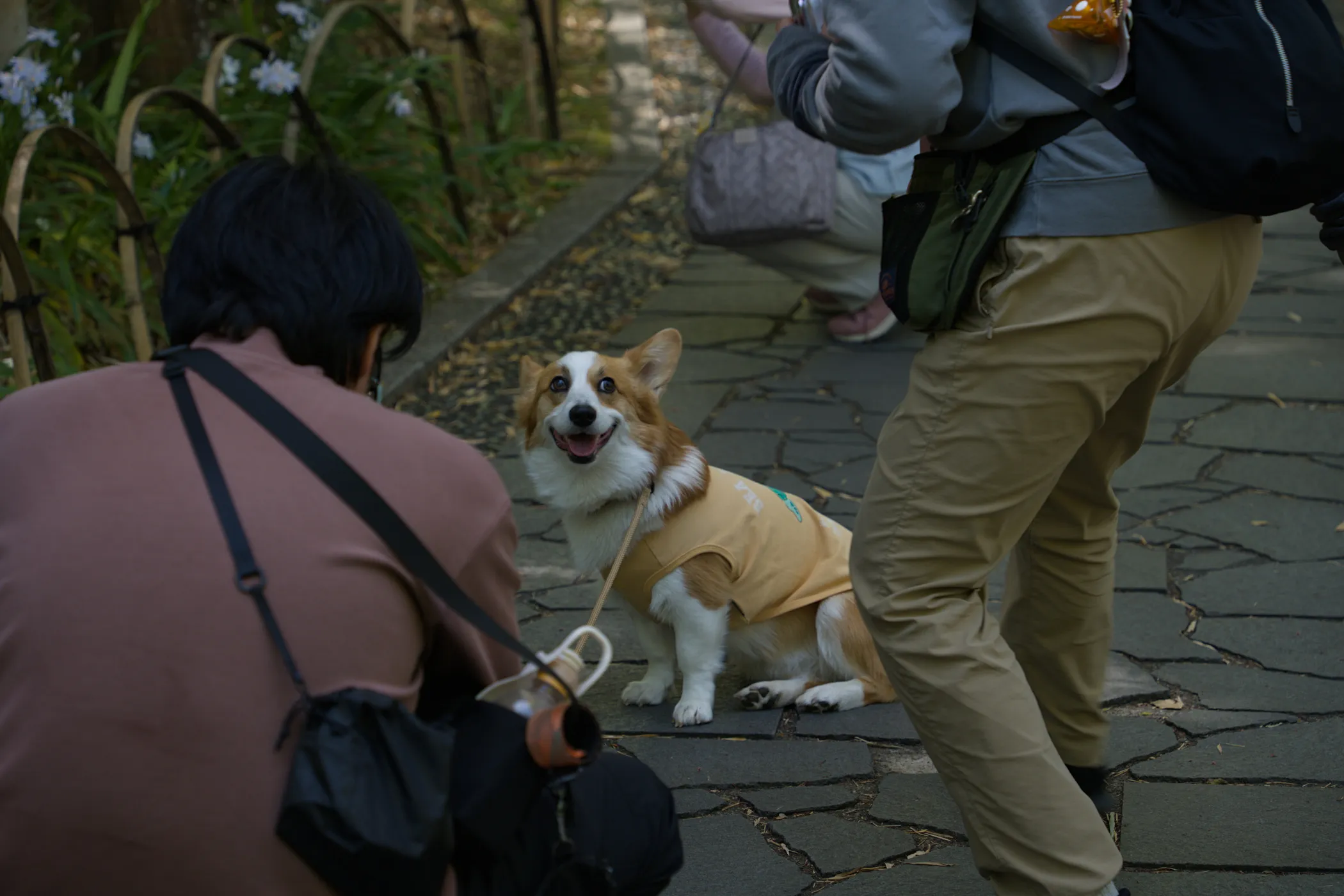
A cute corgi.
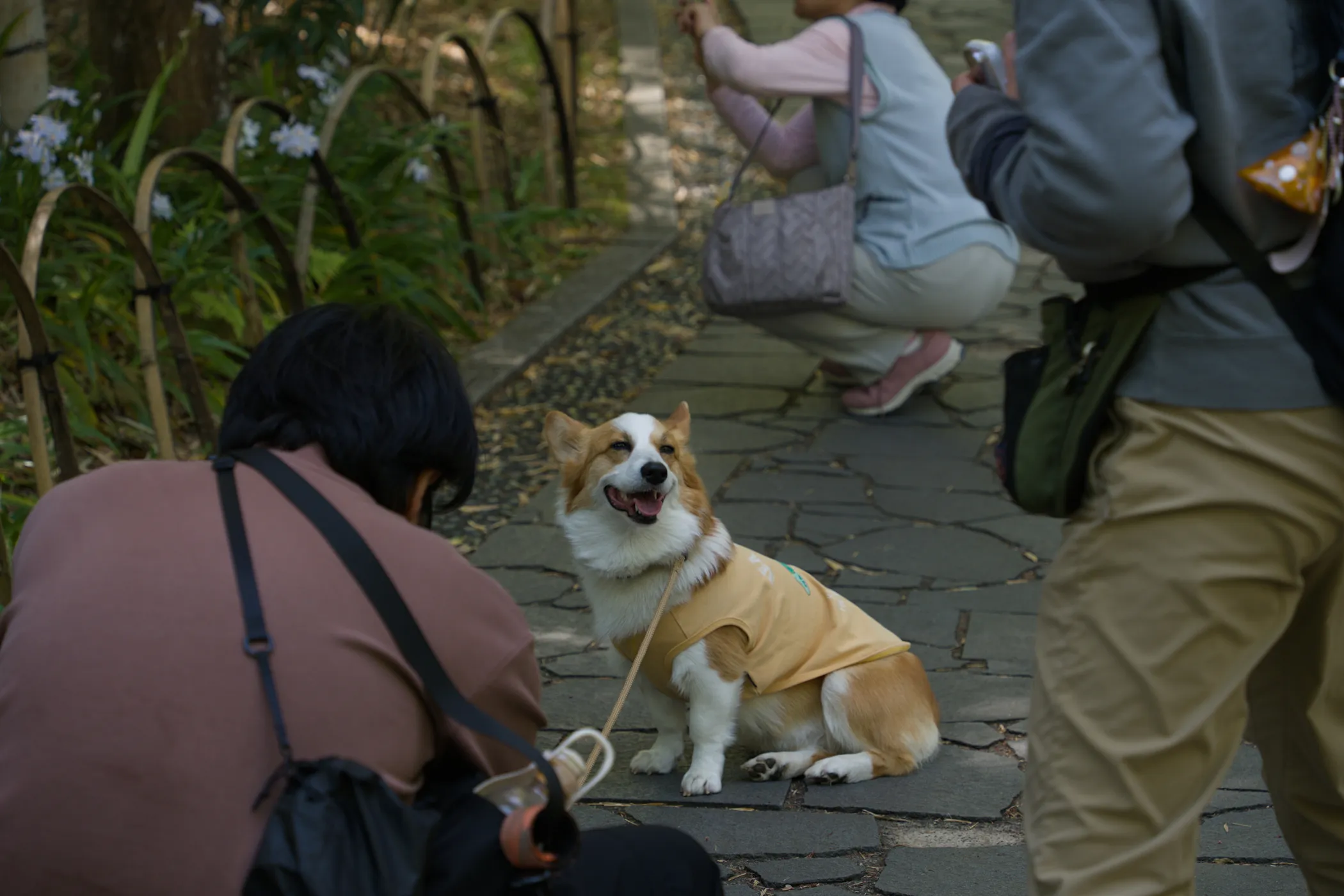
Your smile is so doggy.
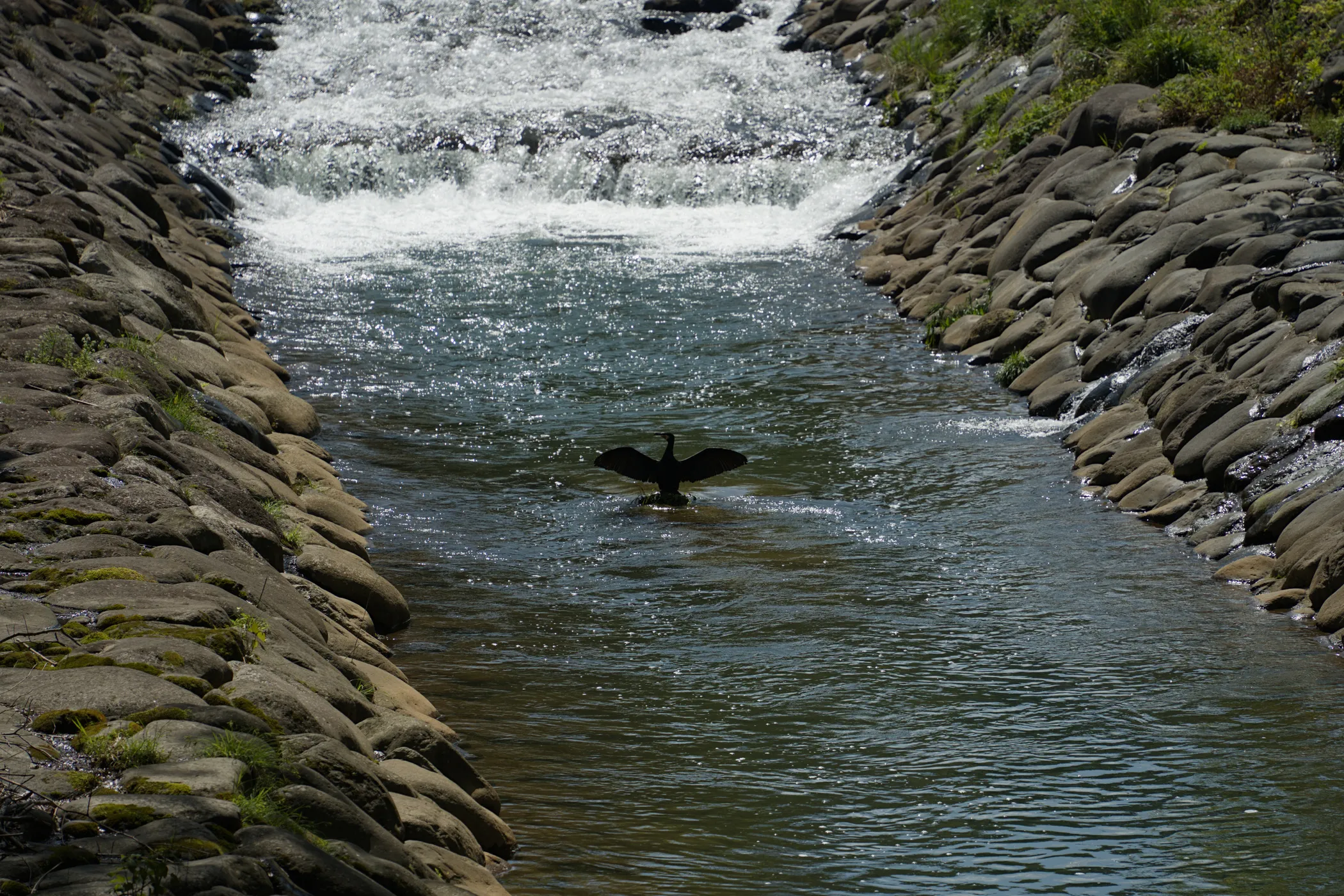
Some kind of large bird drying its wings in the middle of the river.
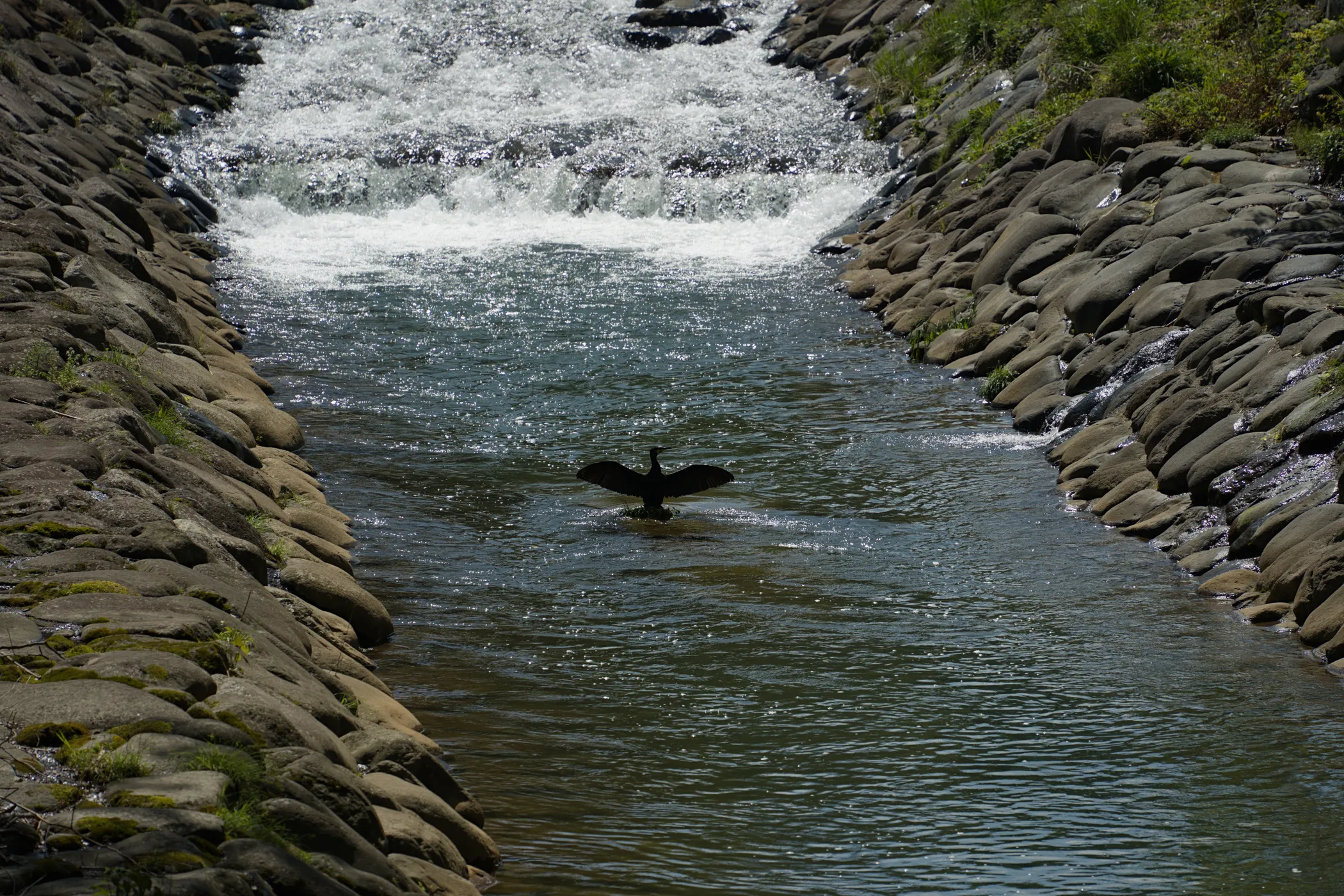
Stretching exercise.
After sunning itself for a while, it suddenly took off.
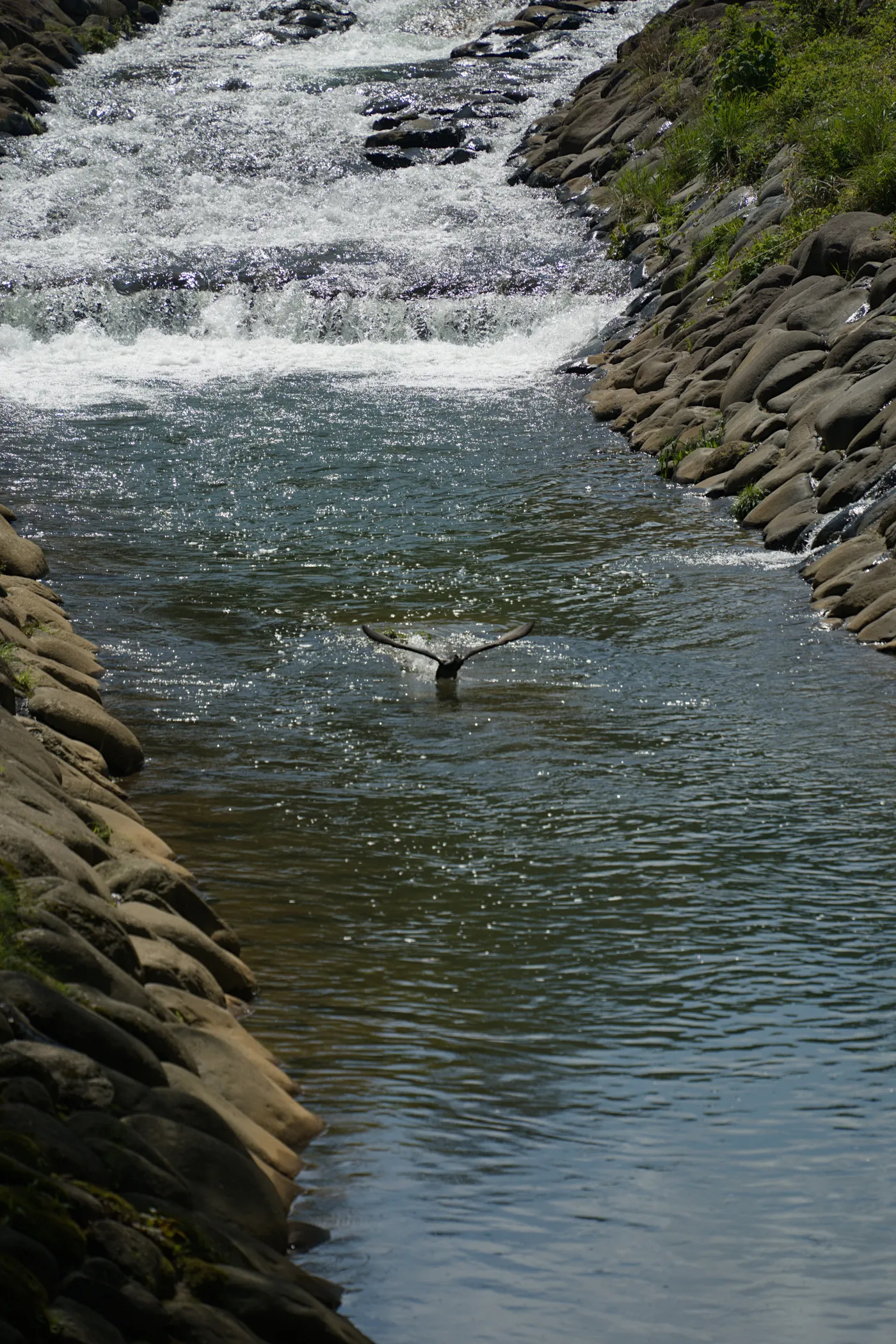
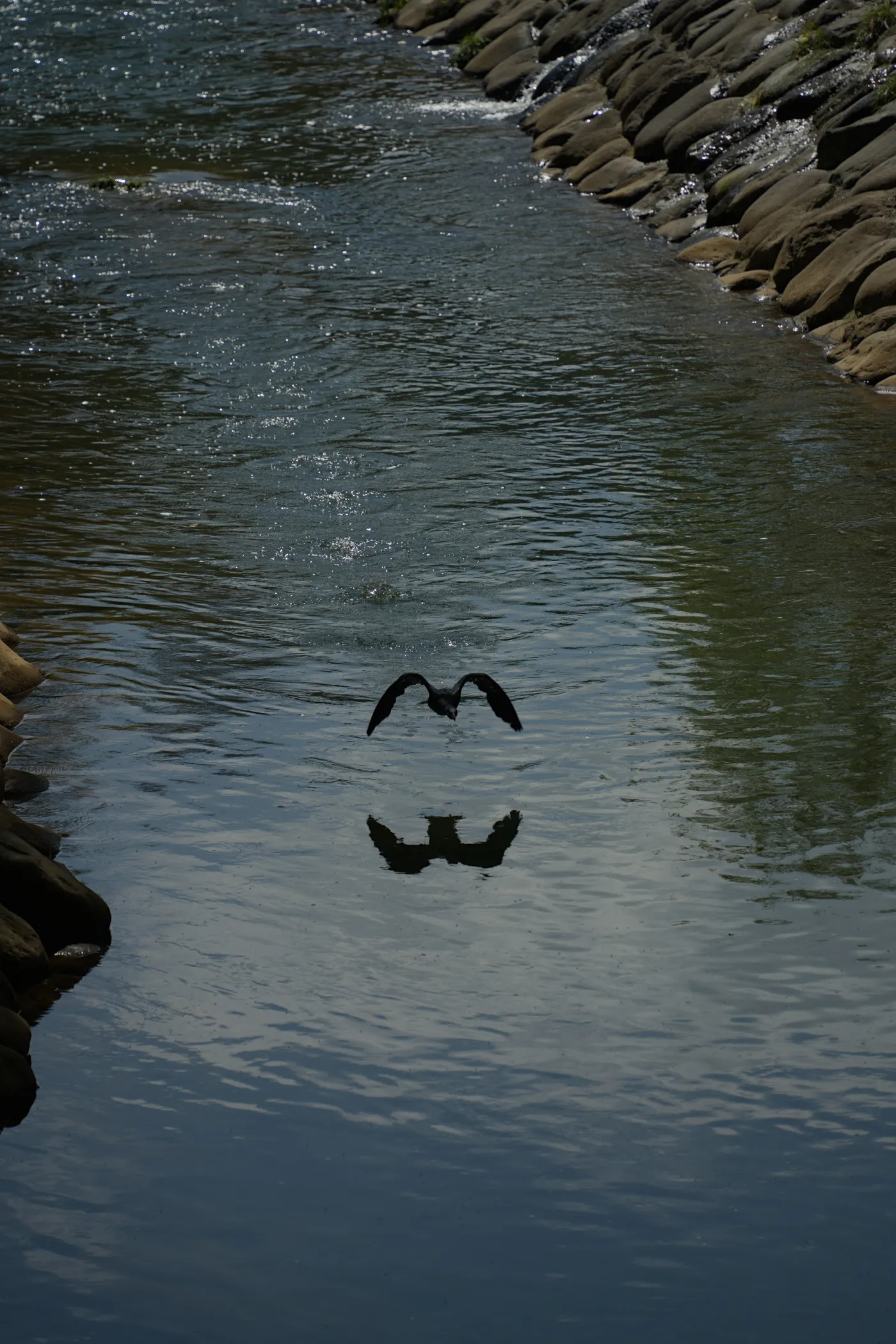
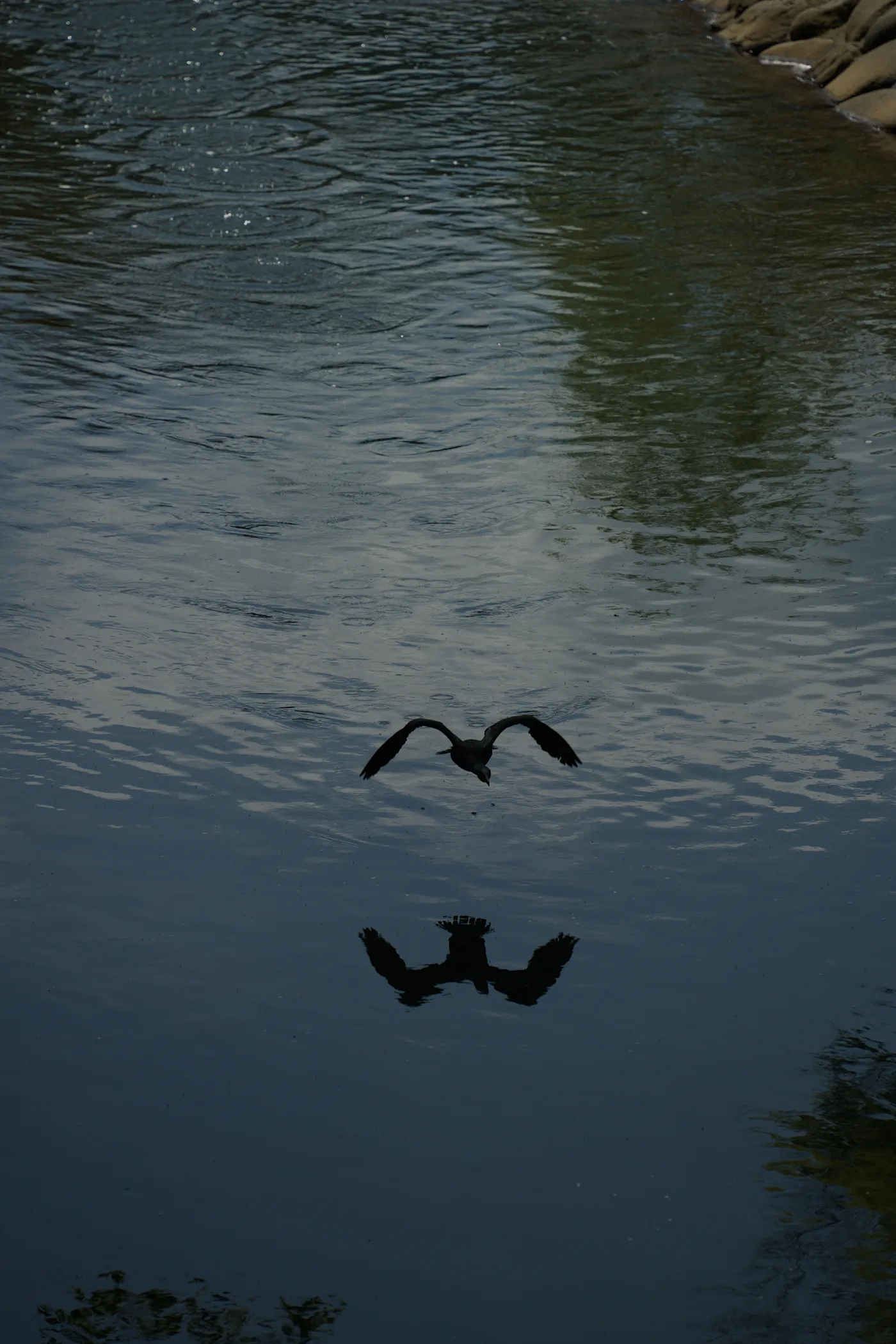
Managed to capture three wing-spreading moments.
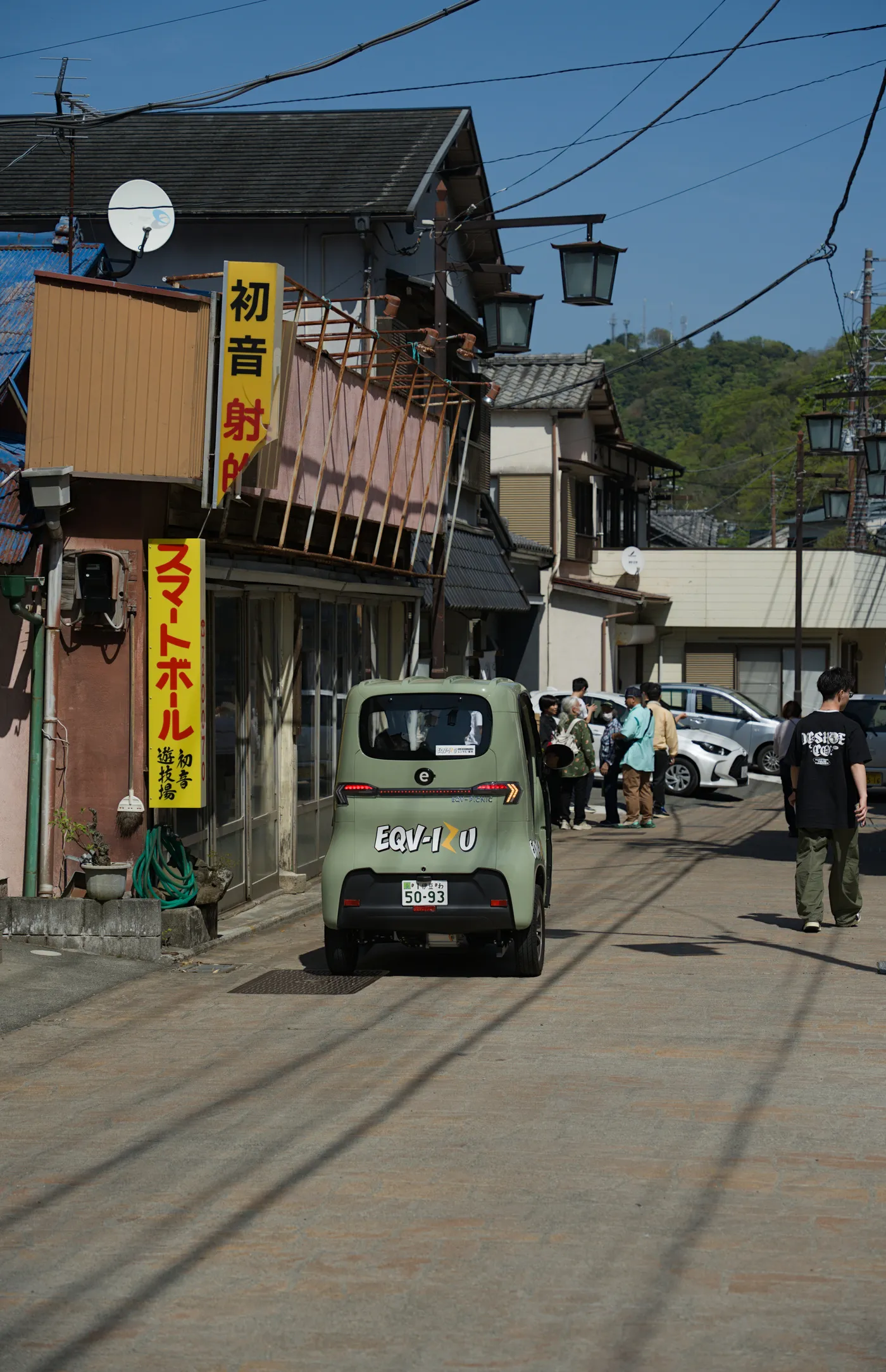
Hatsune shot. Senior scooter, sortie.
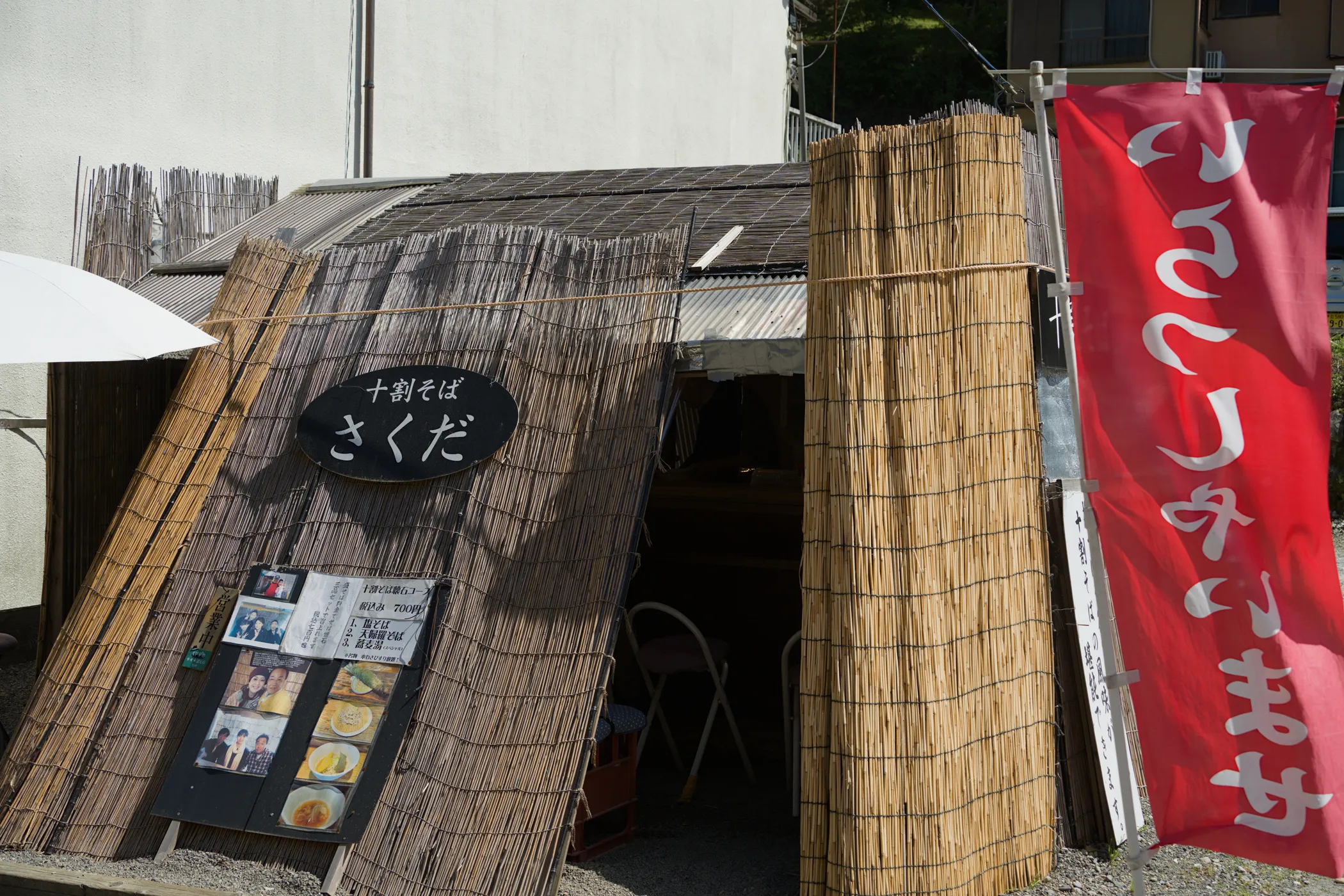
Juwari soba.
Ichiwari means 10% off, so juwari must mean 100% off. Free meal.
Hie Shrine
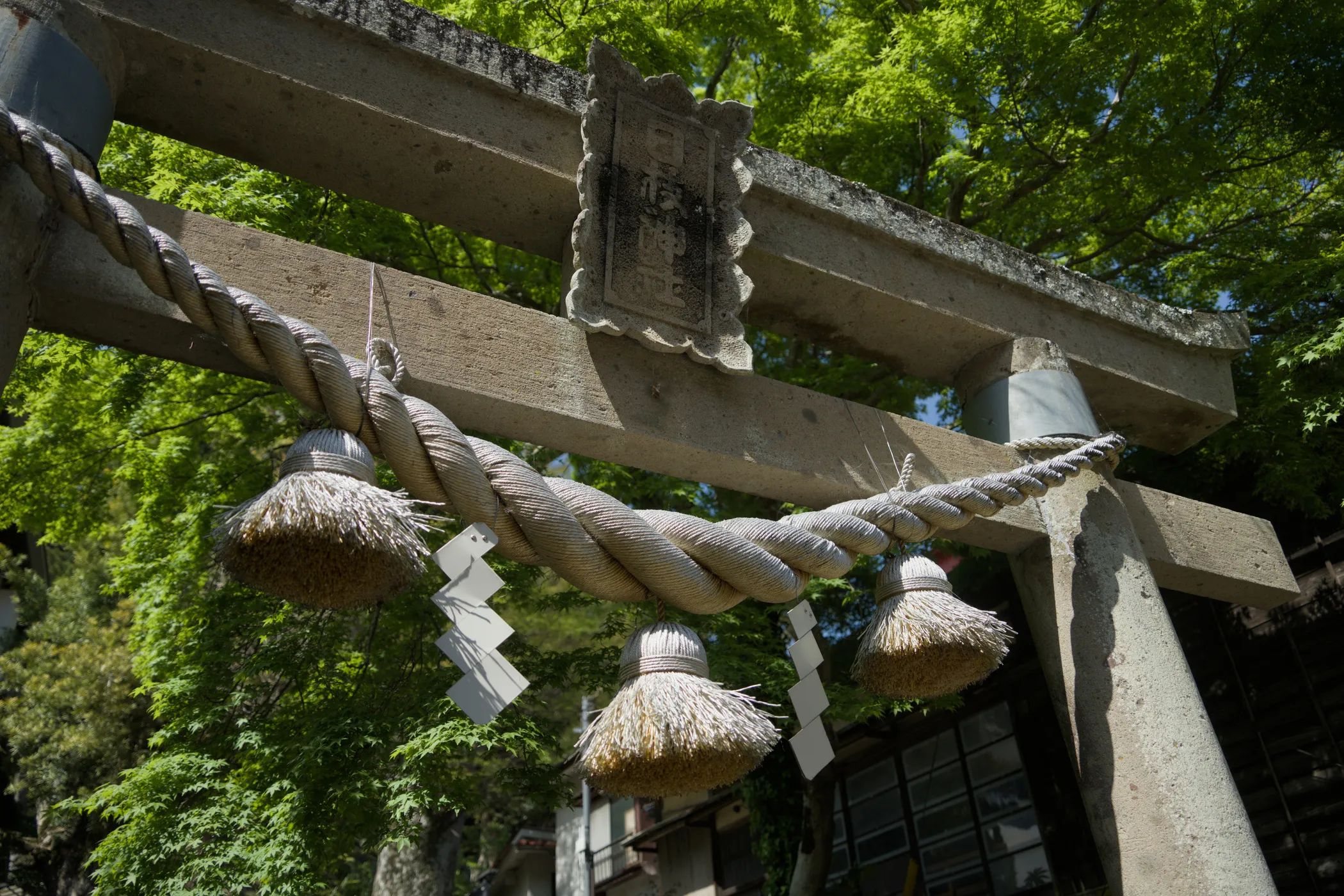
There was a Hie Shrine beside the temple. There is also a Hie Shrine around Kawasaki. Is this a chain?
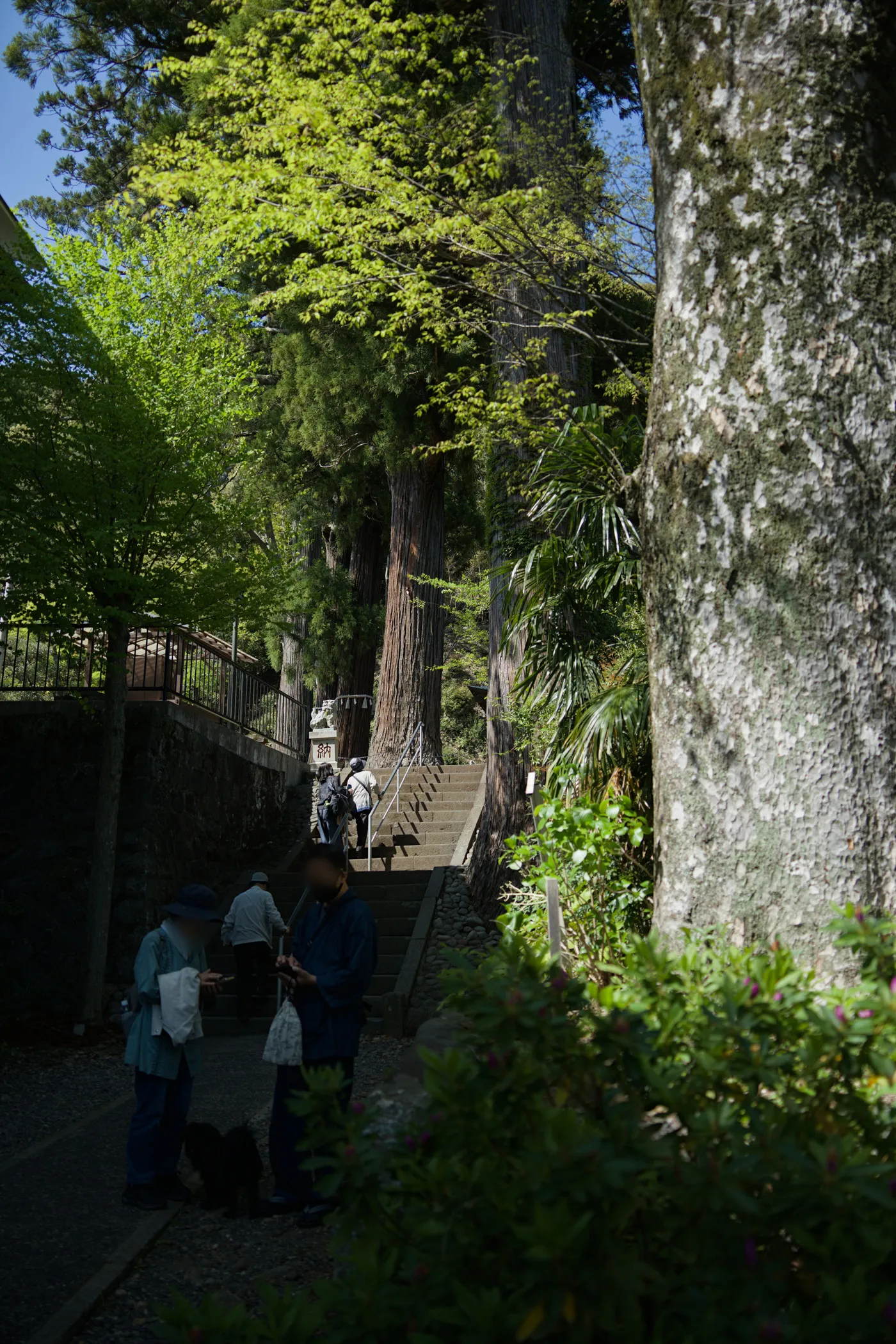
Several trees were extremely thick and sturdy.
Back to the Parking Lot, On to the Next Spot
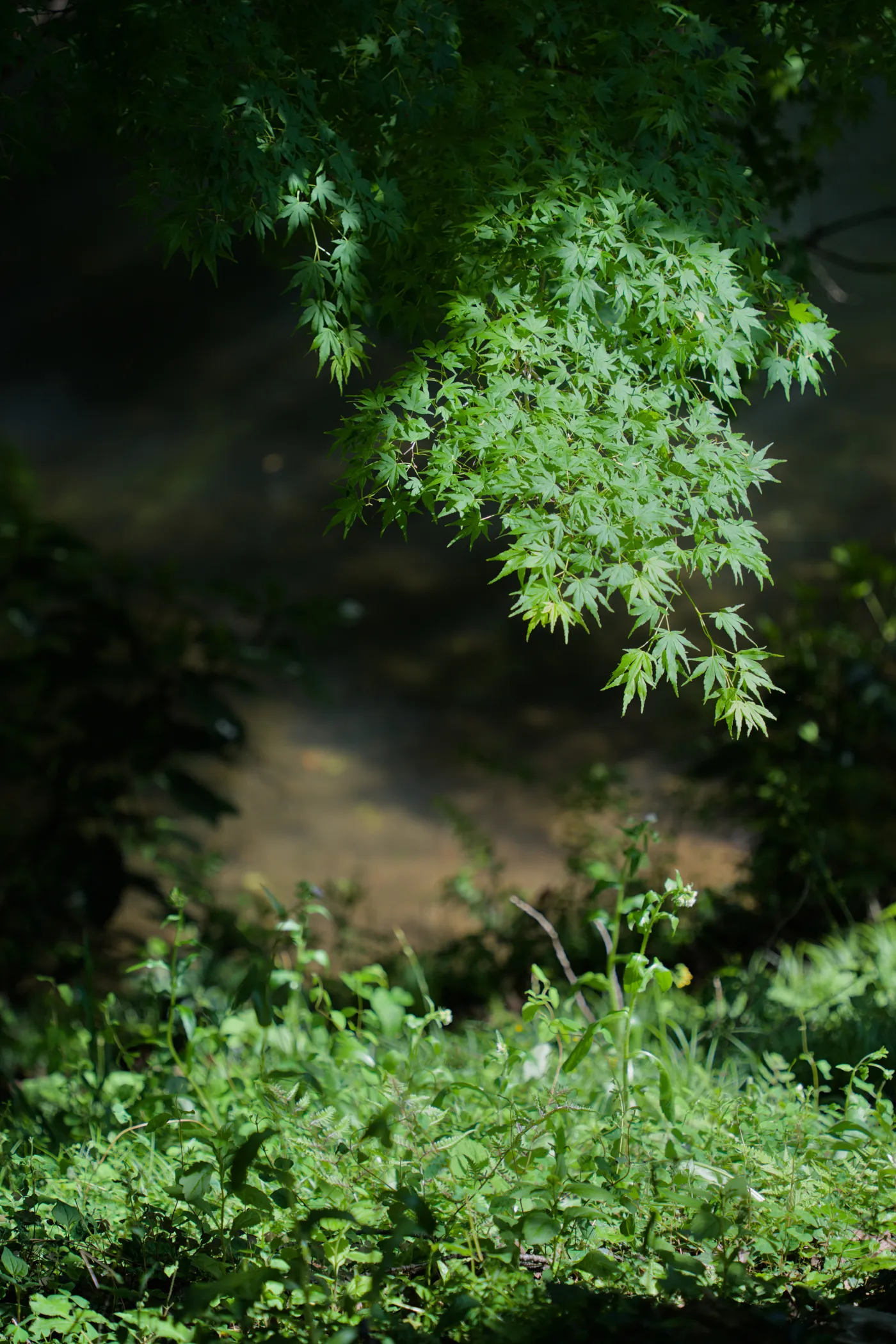
Beside the parking lot was the downstream part of a small river. Nice light.
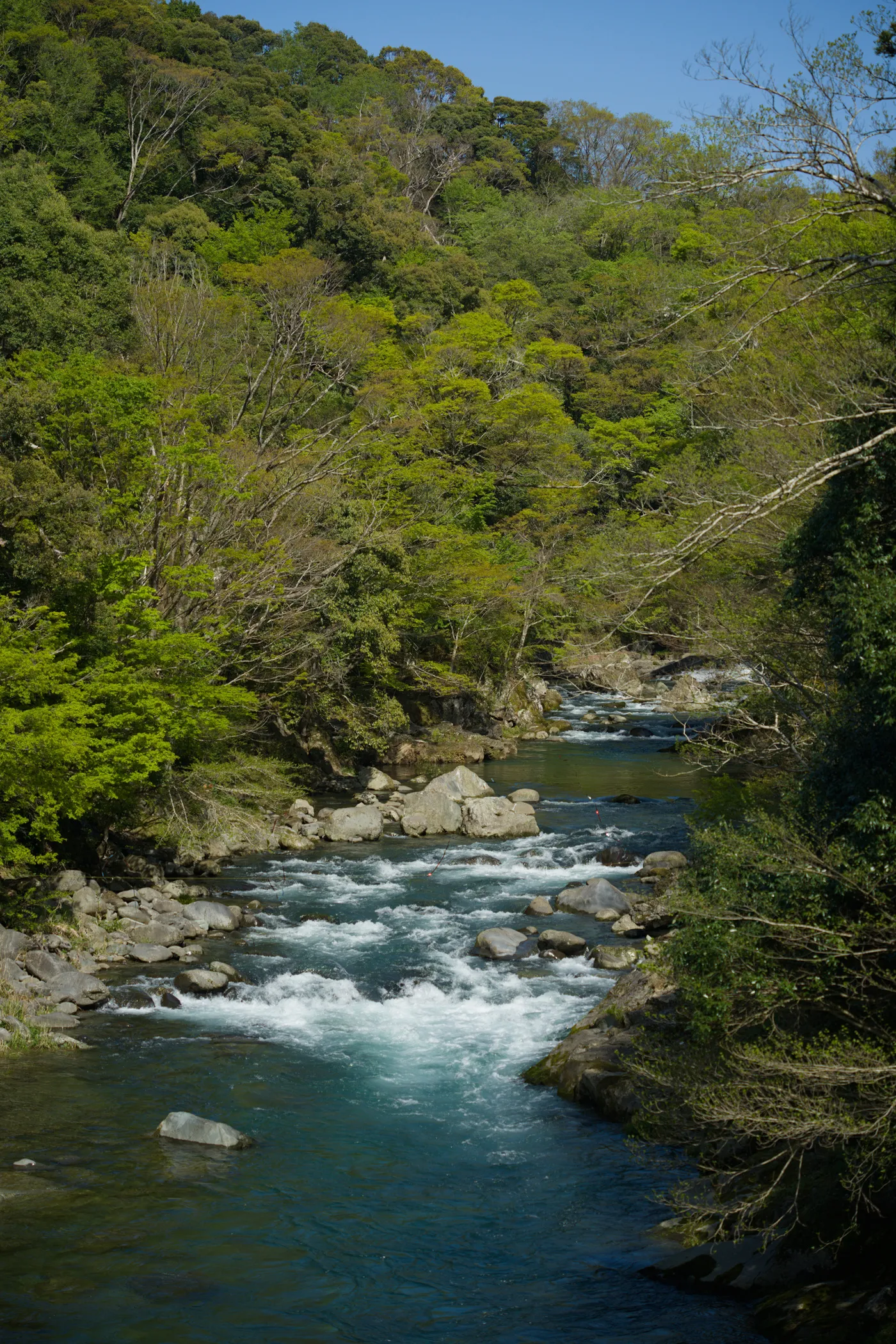
Another little river. The scenery was nice.
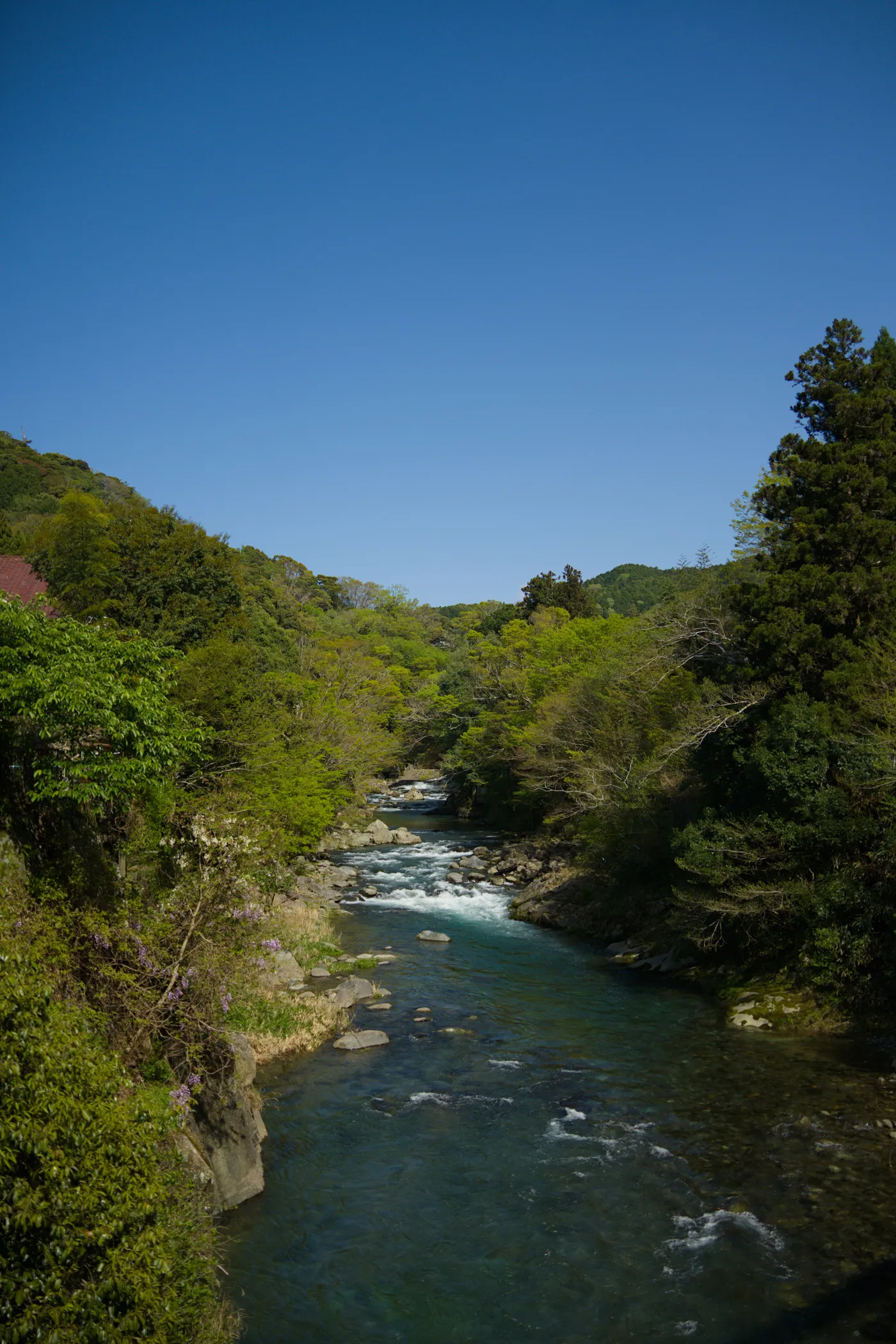
Take a couple shots.
Joren Falls
A waterfall.
But I no longer have many expectations for Japanese waterfalls. A tiny stream can be called a waterfall, just like a small yard in Japan can be called a park.
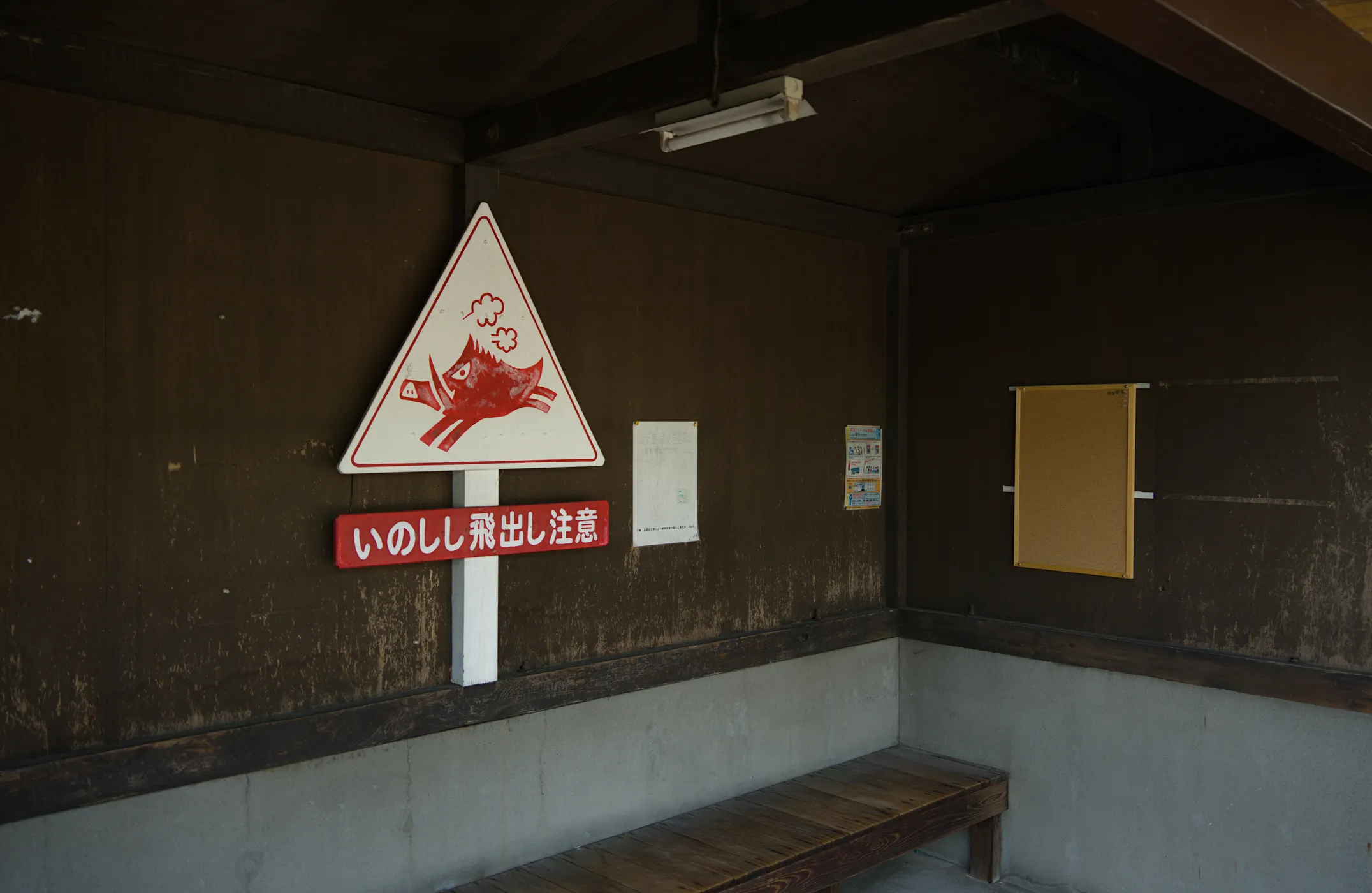
Can you randomly encounter wild boars while waiting for a bus?
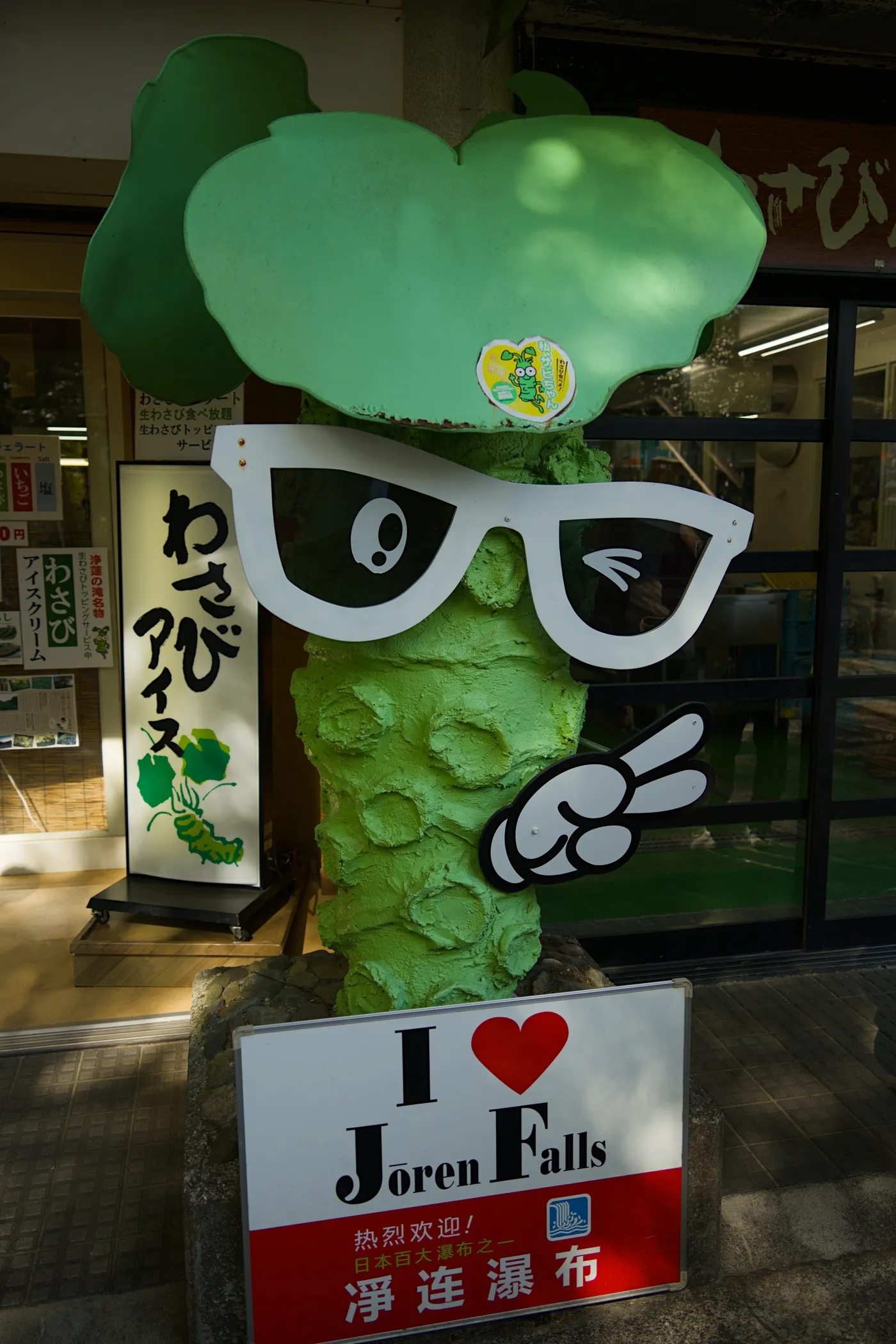
How much do you people love wasabi (
This place actually sold wasabi ice cream. Emmmm. After seeing wasabi all day, I was almost starting to want to try it.
I reached for my wallet, ready to jump into the pit.
But… I could not feel it?
Huh?
Feel again? Still nothing?
Huh huh?
Horror Story: I Lost My Wallet
They say grief has five stages
- “Denial”: “No way, how could my wallet be gone?” “Haven’t I never lost a wallet before?”
- “Anger”: “Why me?” “I just drew a great fortune earlier, didn’t I?”
- “Bargaining”: “At least please do not be on the road. If I search under the car seats carefully, maybe it fell in the car?” “Please, if I really cannot find my wallet, watashi”
- “Depression”: “Sigh, I searched the whole car and there is nothing.” “It’s over. My wallet is really gone.”
- “Acceptance”: “Fine. Things have come to this. Time to prepare for replacing a whole pile of documents.”
Accepting Reality
So, the wallet was probably really gone.
Thinking back, I might have lost it on the way from Shuzenji back to the parking lot. Maybe I pulled it out together with the car key while unlocking the car at the end.
To be honest, when I realized my wallet was missing, I was not especially panicked. Mostly I just felt that it would be such a pain: “When I get back, I will have to replace a ton of documents. It may take days. Sigh. Exhausting.”
Filing a Report
At first, I tried to turn back to Shuzenji to look for the wallet, but the fuel tank was nearly empty. Gas station or Shuzenji. We could only pick one.
At this point, friend A suggested I call the police station near Shuzenji first and ask if anyone had picked it up.
He had once lost his wallet at a train station, noticed quickly, went to the nearby police station, and found that a kind passerby had already turned it in. He got his wallet back smoothly.
After that experience, he immediately bought a card-shaped AirTag for his wallet.
I found the police station’s phone number on Google Maps and filed a report in scattered Japanese. The officer who answered did not waste words. He asked for basic information and what was inside the wallet, then said they would help search and call me back shortly. If I had not heard back in 20 minutes, I should call again.
The officer also asked whether someone else here could drive, because my driver’s license was in the lost wallet, and continuing to drive might count as driving without a license. Luckily, we had two drivers on this trip, so friend A, who had already driven all morning, was forced to keep driving (
Well, we could only leave it to the police for now and go get gas.
After a while, I suddenly realized I had not mentioned the wallet’s color or distinguishing features, so I called the same police station again. But the officer did not seem to need that information very much. He said they were asking nearby police stations and would contact me if there was news, so I should just wait.
Another ten or twenty minutes later, the police called and said the wallet had been found, then asked when we could come pick it up.
They actually found it. And so quickly. My feeling at the time was, “Good thing I lost it in Japan.” Thank you, thank you.
But we had already driven quite far, and turning back would take an hour. After hearing that, the police seemed unwilling to wait. A little later, they said they would transfer my wallet to the nearby main station, and we could pick it up directly at the central police station later.
I checked Google Maps and saw that the police station was open 24 hours. That was reassuring.
Since the wallet had been found and could be picked up anytime, we continued the trip (
Depart. Destination: Shimoda.
Shimoda
Shimoda is at the southern tip of the Izu Peninsula. On the way there, we passed Kawazu, where the Kawazu-zakura bloom very early every year.
Some other friends had gone there during the bloom a little earlier, but unfortunately we had already missed it this time.
The Harbor
First stop: take a look around the harbor area.
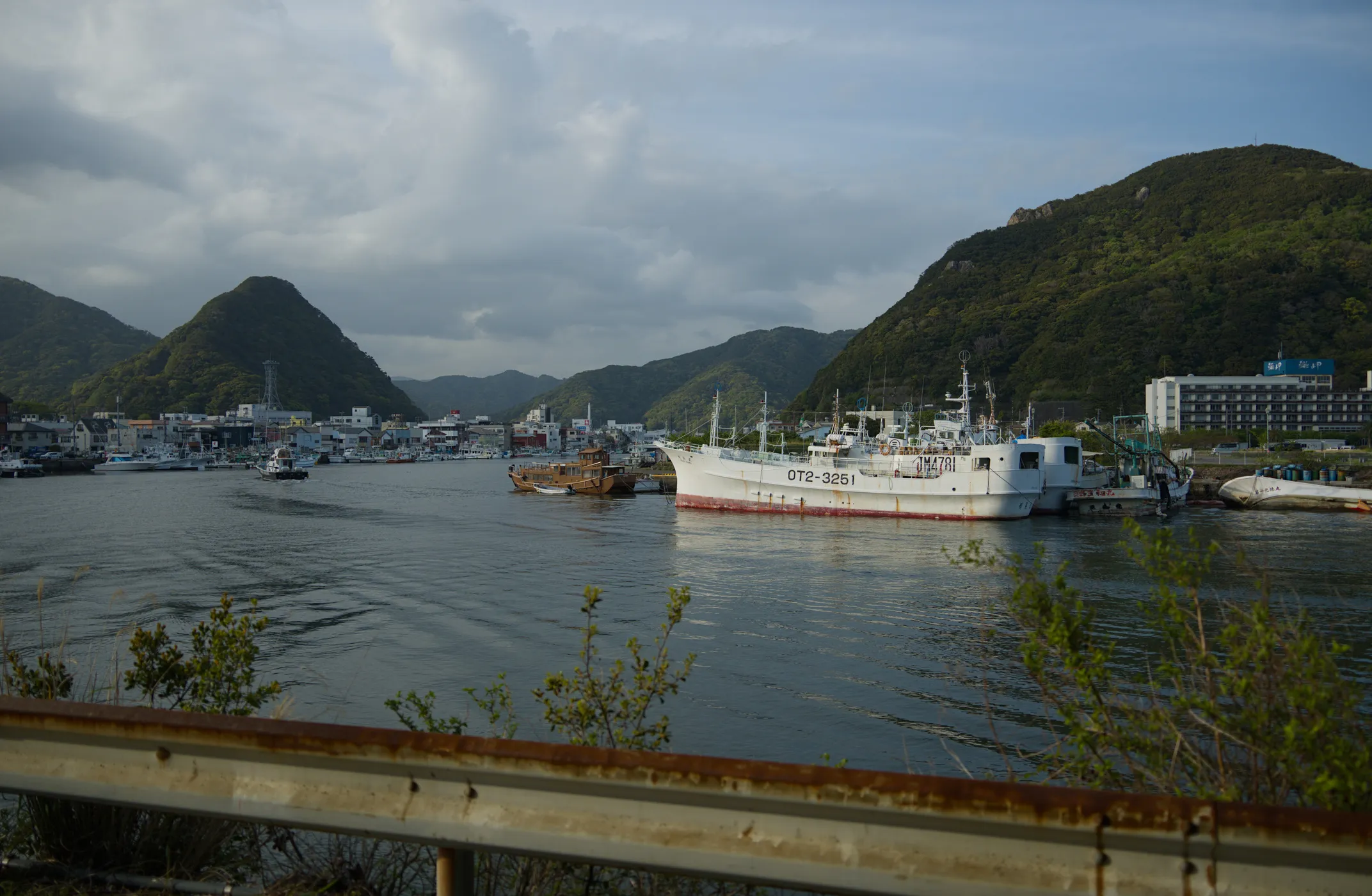
It felt a little like Guilin, with random mountains everywhere.
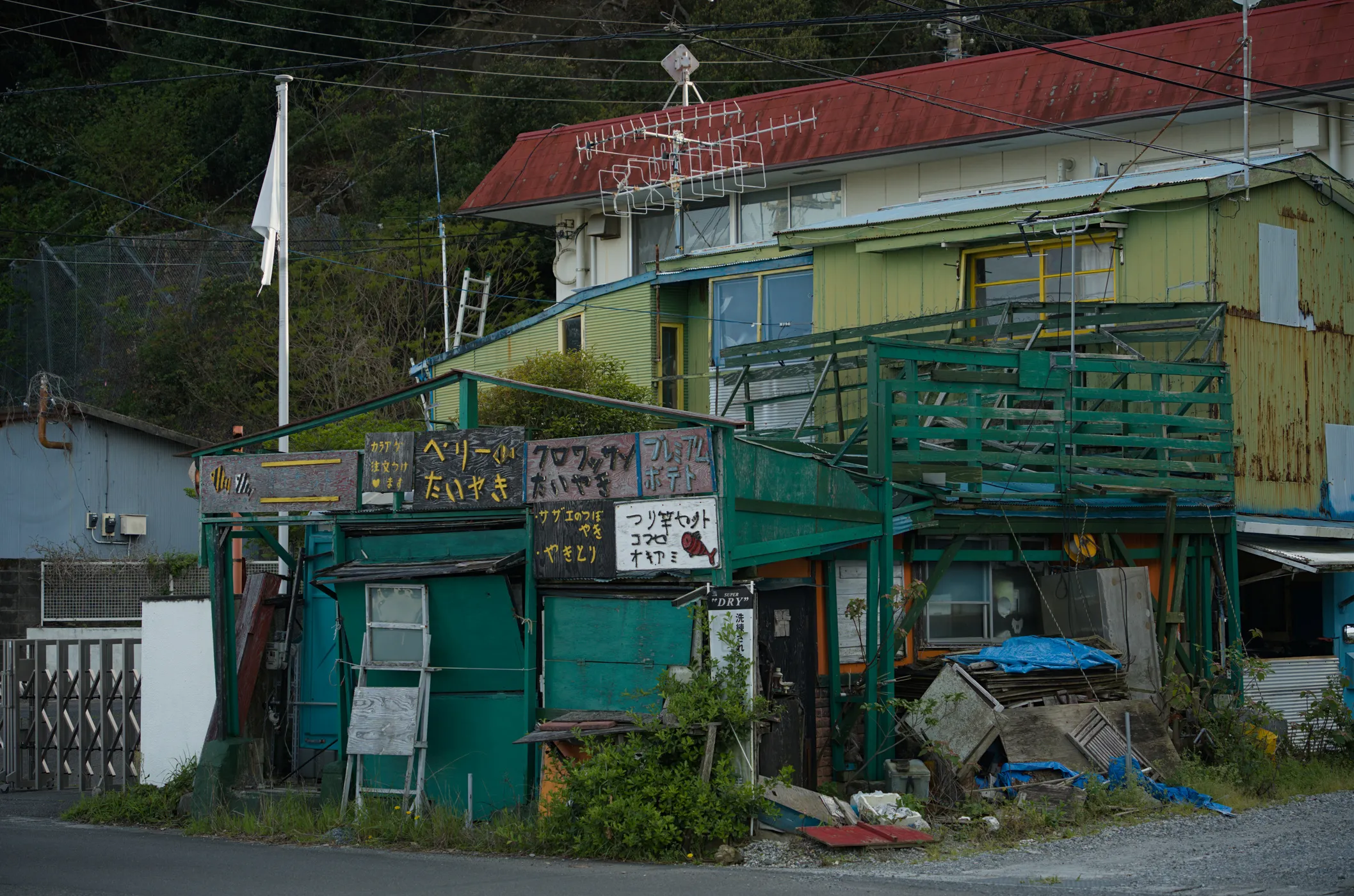
A dilapidated building, seemingly unmanaged.
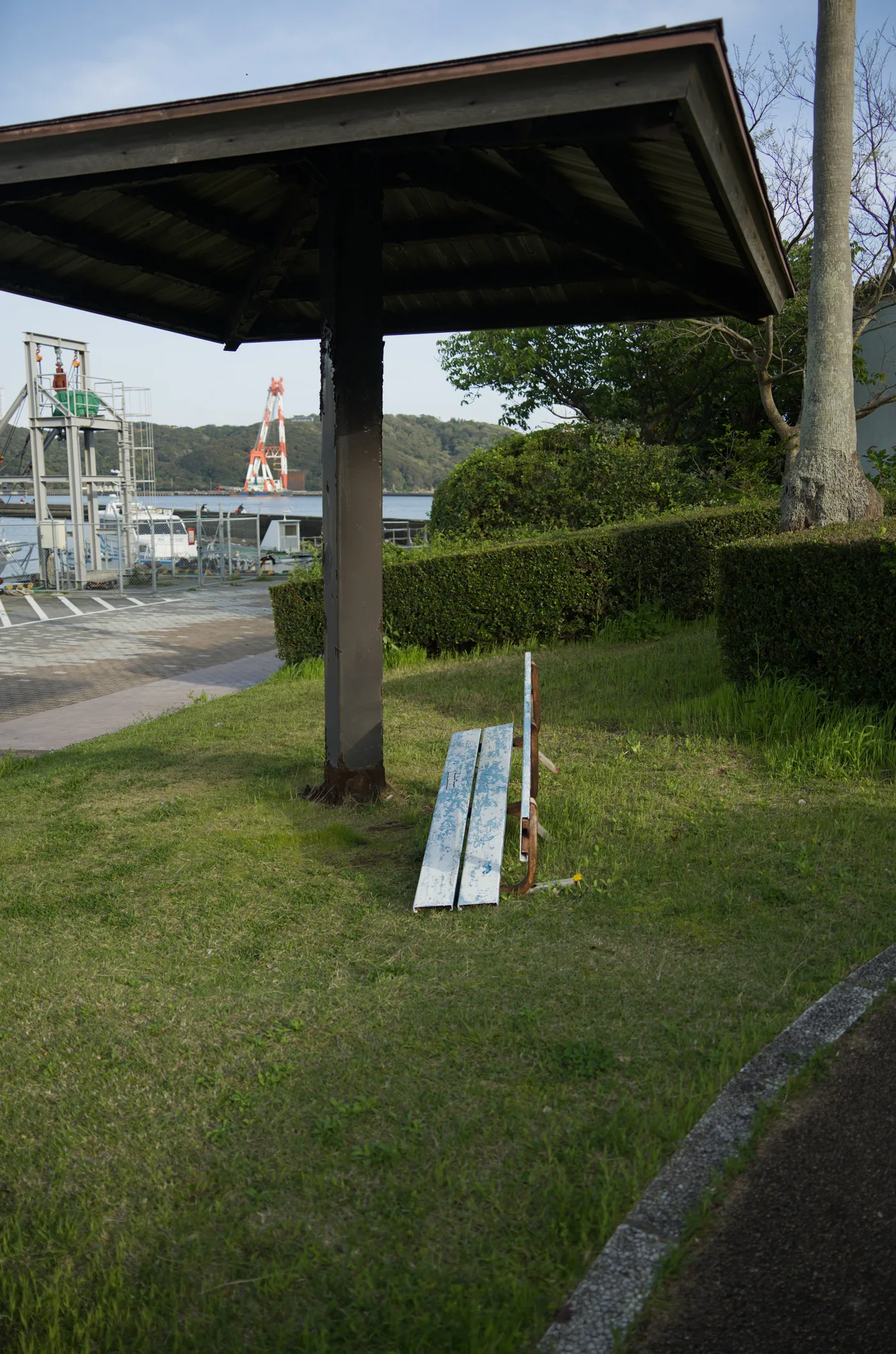
A bench that had lost one leg.
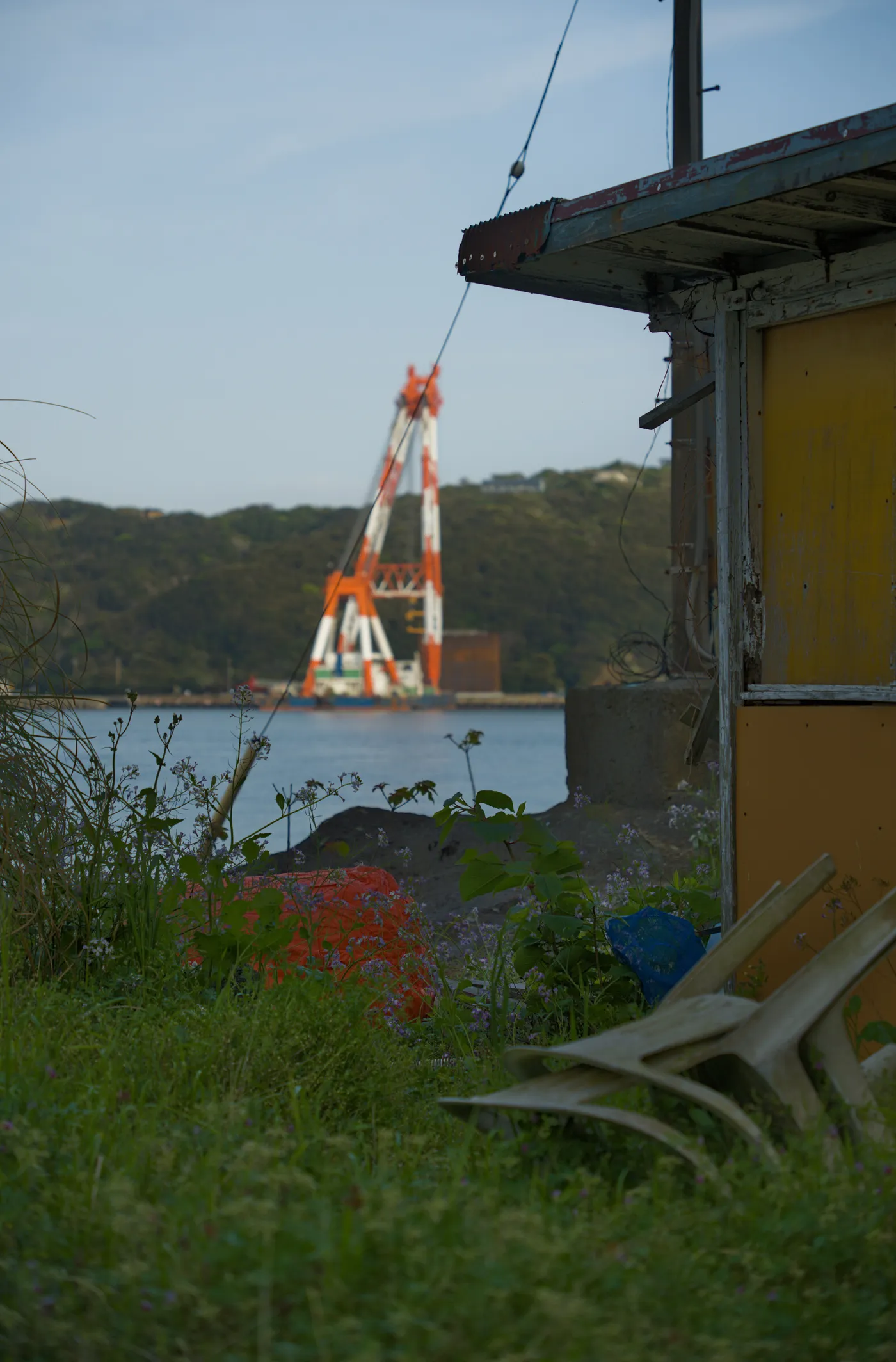
A fallen plastic chair.
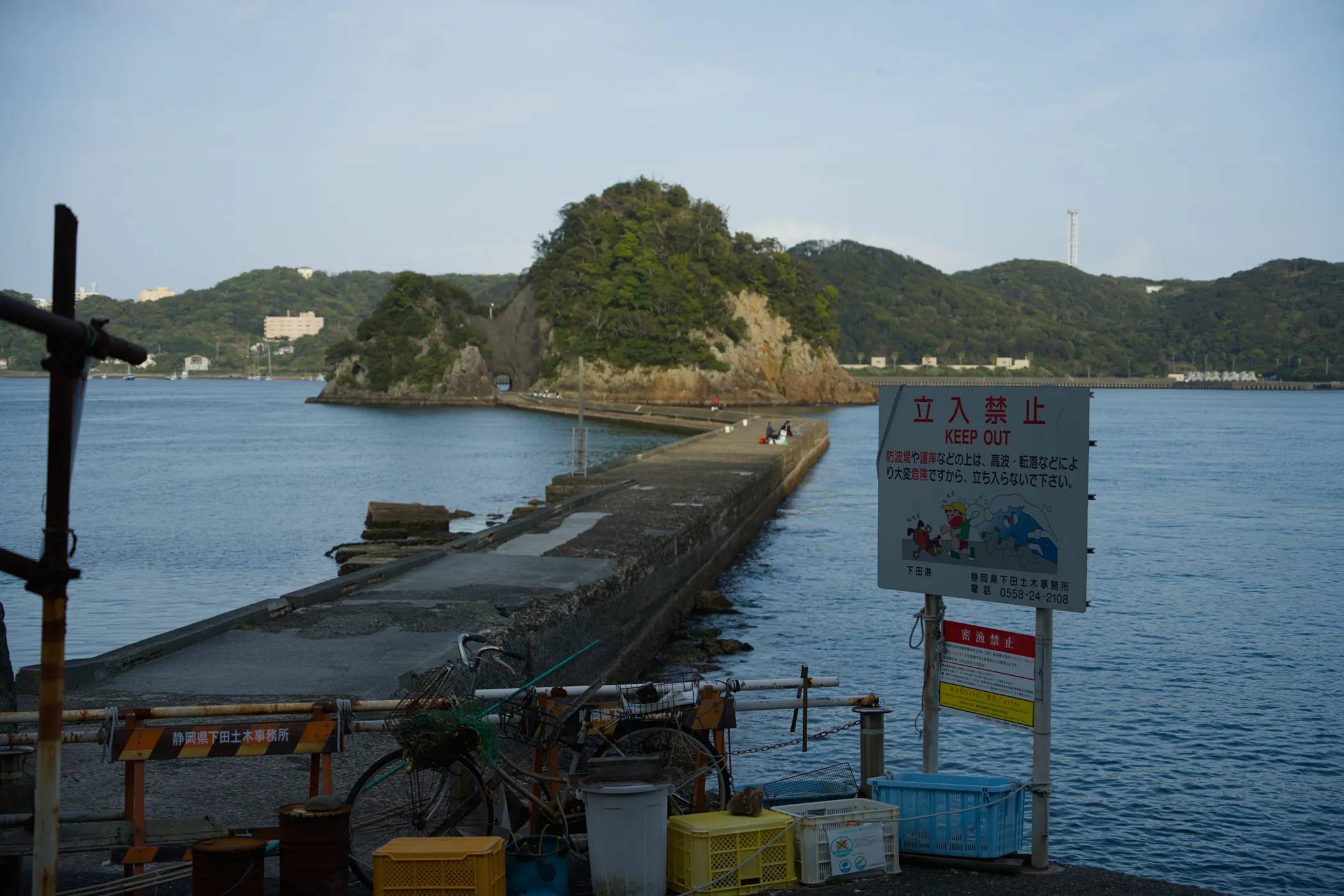
A broken bicycle.
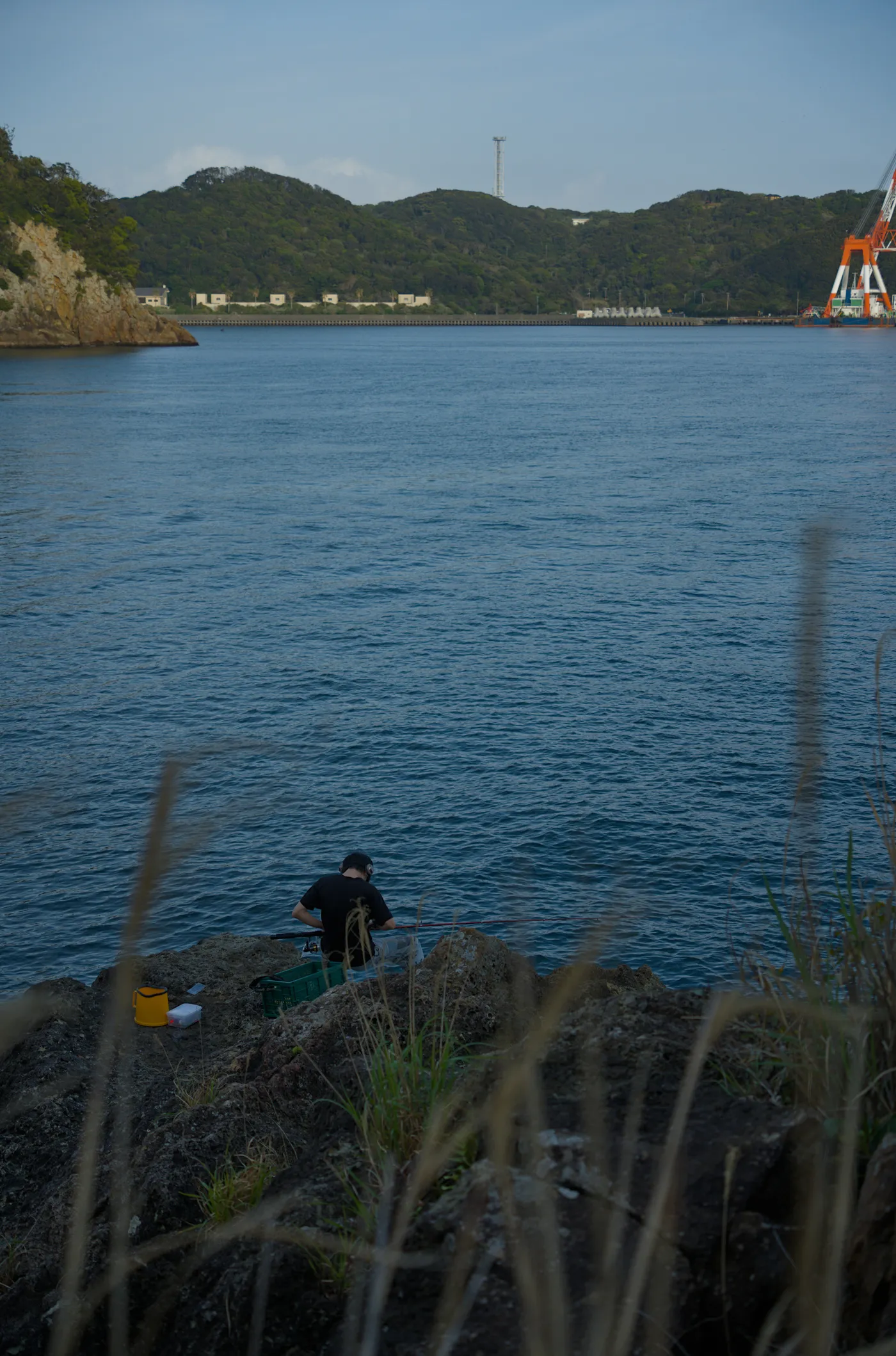
A randomly spawned fishing guy, wearing headphones and immersed in his own world. So young, yet already living a retirement life. Envious.
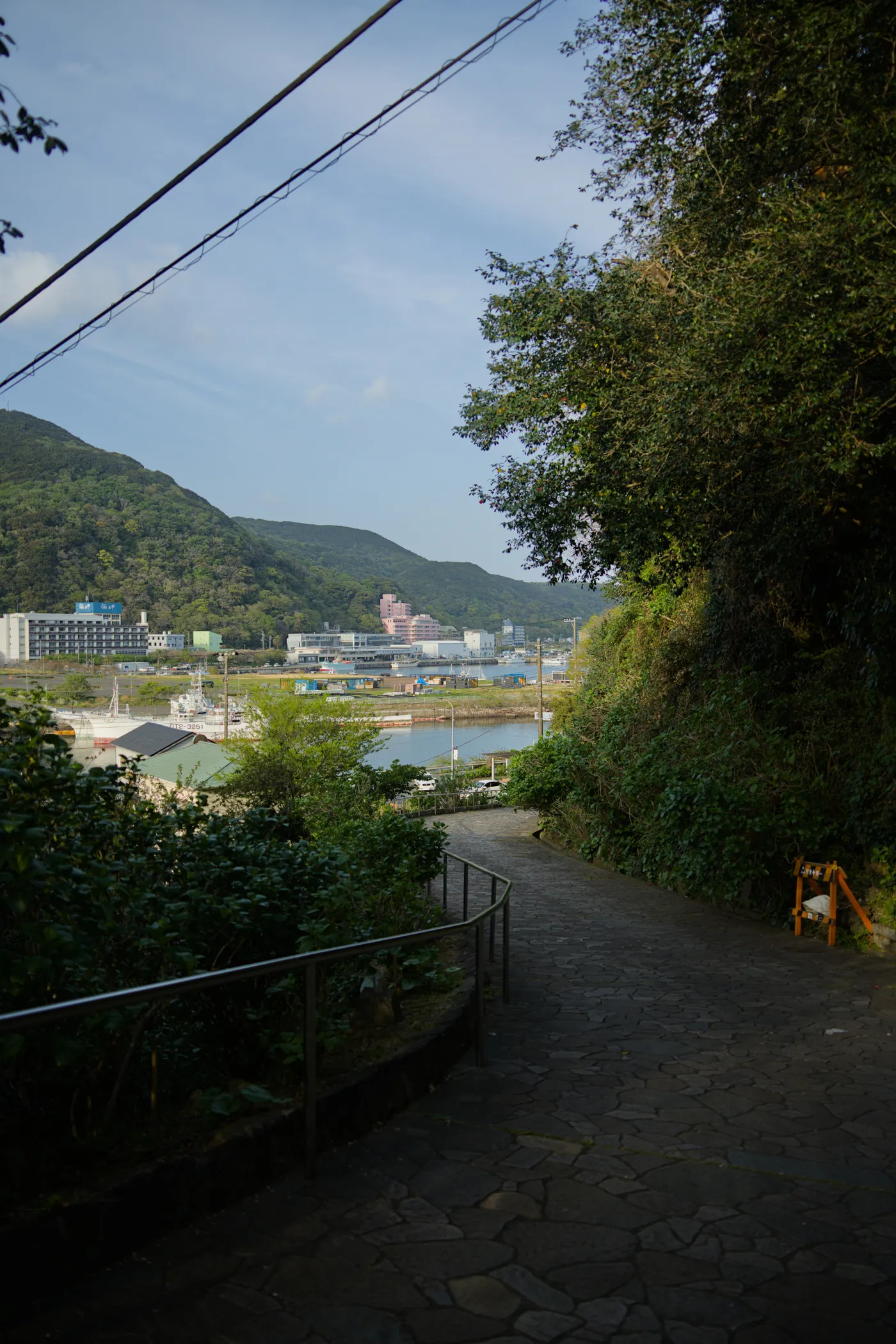
A mountain path leading to a park. Up there was an “Opening of Japan Memorial Plaza,” related to the Black Ships.
Google Maps reviews say there is a hydrangea festival in June. Normally it is just a quiet little park.
This place felt a bit run-down, and there were not many people on the road.
The Lighthouse
Second stop: the lighthouse across the bay. When we arrived, the parking lot had already closed for the day, so it seemed we could park for free?
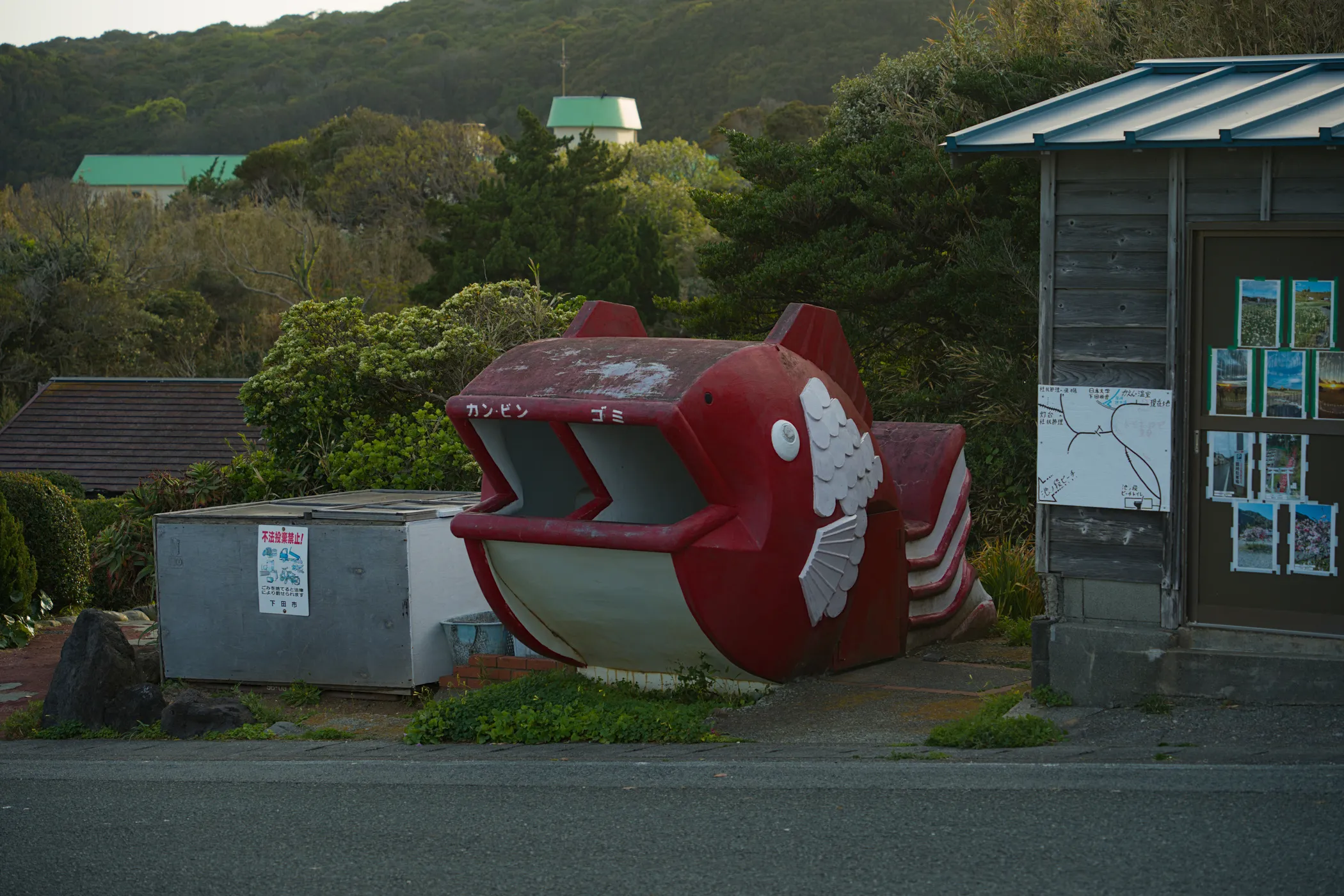
There was actually a rare Japanese species next to the parking lot: a wild trash can. Stylish shape.
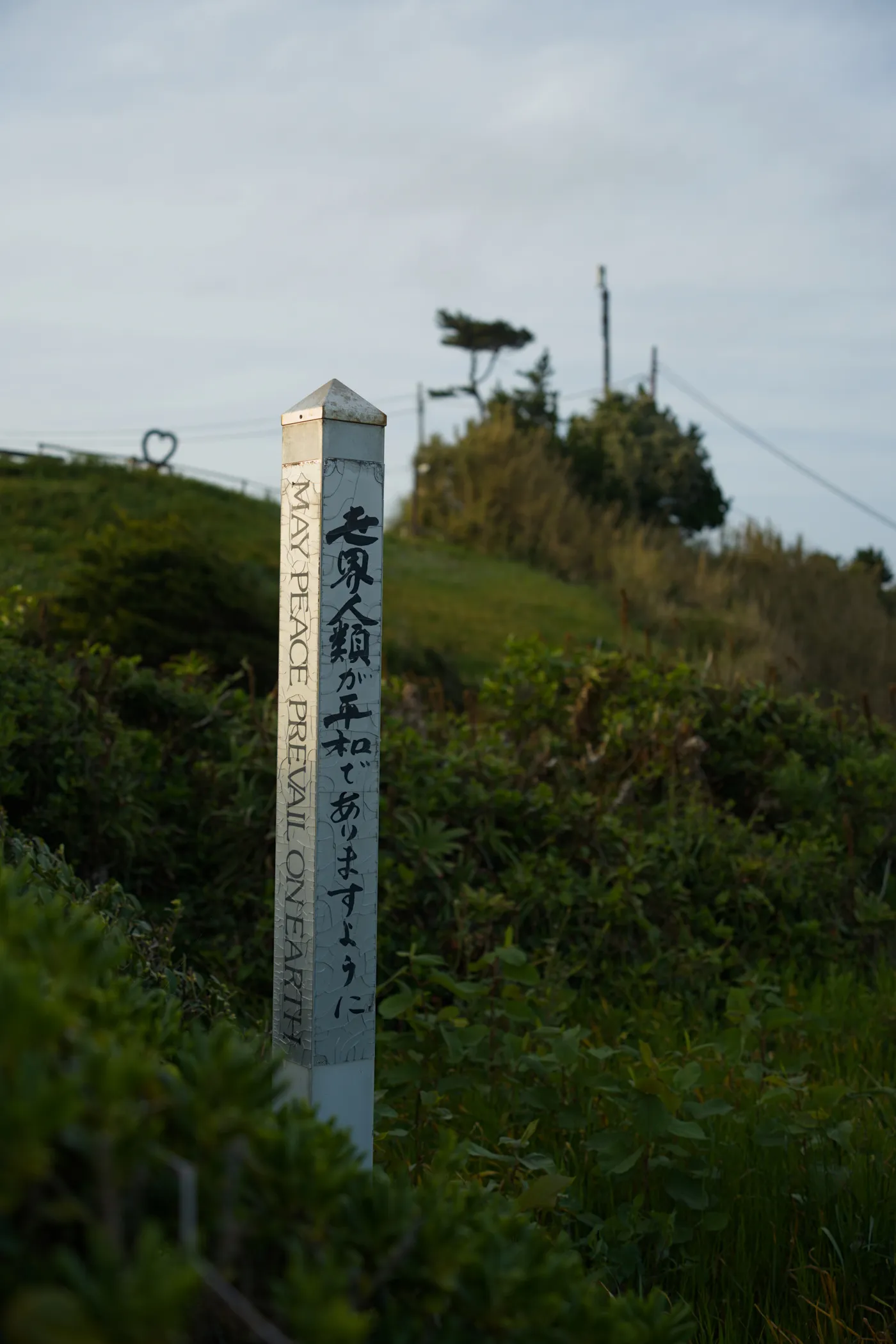
Praying for world peace. Ambitious.
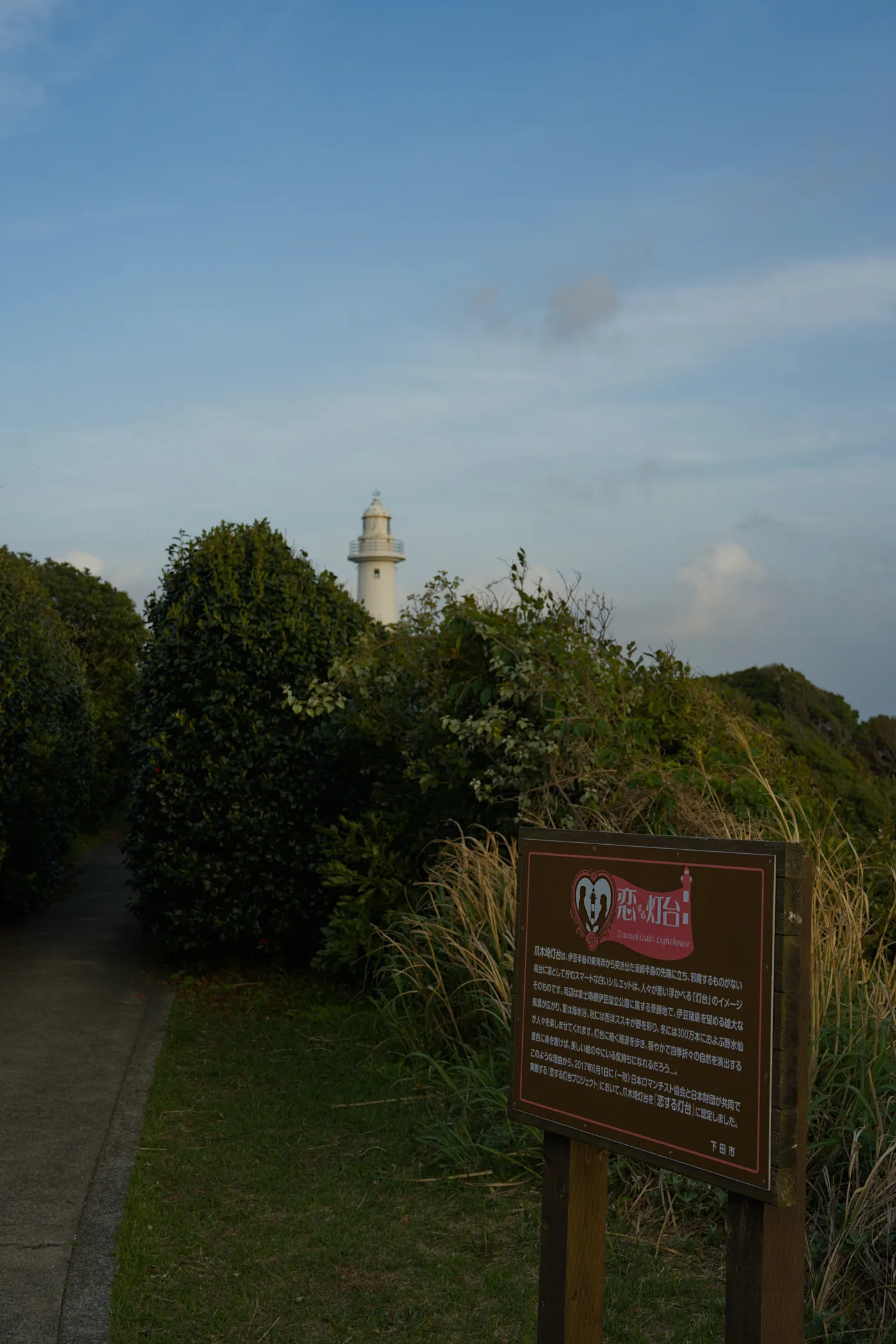
The lighthouse of love. Put together with the previous one, this becomes a prayer for love and peace. What a grand theme.
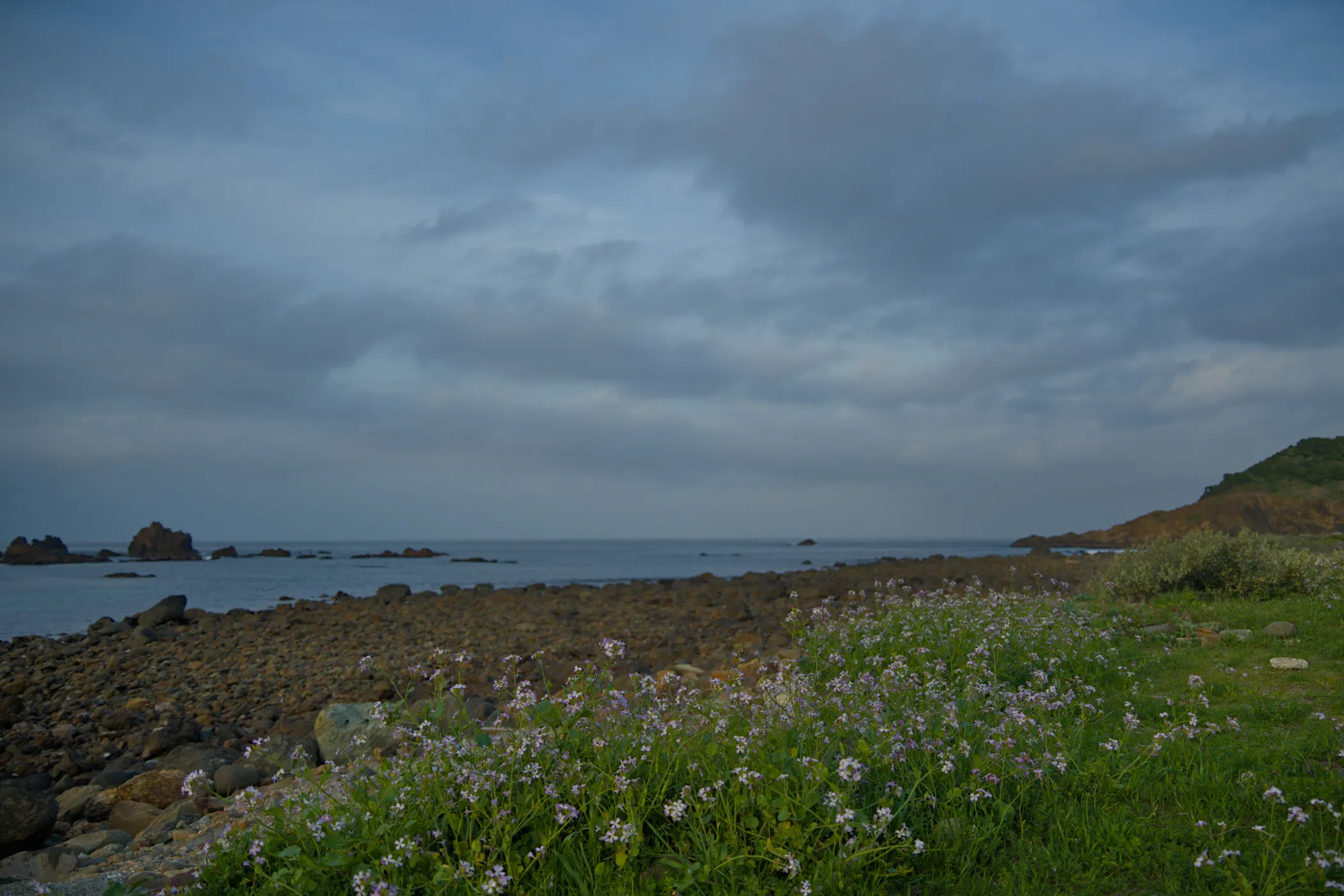
It was almost dark. This Izu trip was about to reach its end… right?
The Drive Home
Obviously it was not over. My wallet was still at the police station, so:
Straight to the Police Station
Now I finally understand why there are so many high-beam offenders. When driving on an unfamiliar mountain road with poor lighting, high beams are the only thing you can rely on. Low beams give terrible visibility.
It took an hour and a half to get from the southern tip back to central Izu. Friend A, who had driven mountain roads all day, said he was fully satisfied completely burned out this time, and that as soon as I got my license back, we absolutely had to switch drivers.
At the police station, I explained why I was there and ran into the classic question: “How do you prove you are you?”
Everything on me that could prove my identity was inside the wallet, and Japanese name formats are wildly chaotic.
“Whose name is on this card?” “My name in pinyin.”
“Whose name is on this card?” “My Japanese name written in reverse order.”
“Then whose name is on this card?” “My dad’s.”
I have wanted to complain about Japan’s name system for ages. Suppose you have a Chinese-character name, “Zhang San.” You instantly gain the following aliases:
Chinese characters: “张 三” “三 张”
Chinese pinyin: “ZHANG SAN” “SAN ZHANG”
Japanese kanji: “張 三” “三 張”
Japanese hiragana: “ちょう さん” “さん ちょう”
Japanese katakana: “チョウ サン” “サン チョウ”
Japanese romanization: “chou san” “san chou”
These names ambush you in daily life, especially in places like banking systems where identity verification matters. There is no pattern to summarize; you simply get trapped by it every time.
And so, after a series of questions and another half hour of waiting, the police finally confirmed that I was me…
At the end, I had to fill out a document listing every item in the wallet and the exact amount of cash down to the single-yen digit, confirming each item one by one.
By rule, the person who found a wallet can ask for a portion of the money, apparently about 30% of the cash inside, but they did not ask for anything.
Signed, confirmed, wallet received. All documents were there, and not a single yen of cash was missing.
A false alarm. Thank you to the unknown kind person, the police, and the friends who got startled along with me.
It took more time than expected, so dinner had to be a random McDonald’s meal. Achievement unlocked: “Park at the police station and eat McDonald’s across the street.”
Friend A wrote the wallet incident into his blog: A Few Stories About Losing and Finding Things in Japan - huggy’s blog (
Heading Home
The final drive back was exceptionally smooth, with no wrong turns (
After leaving the Hakone mountain roads, the roads across the flatland were straight, the streetlights were bright, the traffic was light, and my wallet had returned. Driving felt wonderfully refreshing.
We broke our record by arriving at the destination ahead of the navigation estimate. Safe arrival. Worth celebrating.
Locking the Stable Door
Only after losing something do you learn to treasure it.
Once I got home, I immediately ordered a cheaper AirTag alternative: Xiaomi Tags. Four for only 6,000 yen. As expected from the best Apple accessory manufacturer.
The price that once felt a bit expensive now seemed extremely good value.
I had previously looked into similar card-shaped AirTags on Taobao. After checking around, even the cheap ones were about 60 RMB.
Compared with those, Xiaomi’s version is only a little more expensive, but the build quality is probably good, and it uses a 2032 battery, which is easy to replace.
After they arrived, they felt better than expected: compact, about the size of two 500-yen coins and the thickness of three coins.
It fits perfectly in the coin pocket, giving a huge sense of security.
I also attached tags to my keys and backpack. Now I no longer need to worry about losing things again (hopefully).
Afterword
Taking a wrong road at the start has become routine by now, since I am not sure we have ever had a trip without one. But losing my wallet was a first in my life.
Experience +1.
Besides the dokidoki wallet tour, this trip still had a few regrets. For example, we did not get to eat local specialties like wild boar hot pot, Inoshishi Monaka, or kinmedai.
The itinerary was also a bit rushed this time, with a Saturday-night departure and the Sunday wallet incident. I hope the next Izu trip can be more relaxed.
Also, even though I had just said in the previous post that the spring weather is lovely and I should go out more, work is exhausting and on weekends I only want to stay home. Golden Week is almost here, and I still have not figured out where to go. In the end, I may spend the whole week lying at home. Honestly, that sounds amazing.
Comments