No. I don’t understand.
Online Mirrors
Archive - Weibo: The Whistle Giver
Notion - The Whistle Giver
Telegraph - The Whistle Giver
Matters - The Whistle Giver
Pincong - [Repost] “The Whistle Giver”
Personal Drive Mirror
https://white.kassadin.moe/发哨子的人/
Drive setup: from P3TERX’s tutorial I found in Note: Moving Files Off Baidu Netdisk (Failed Attempt): GoIndex - Serverless Google Drive directory index
[Main Text]
The Whistle Giver
Renwu 03-10 09:42
If these doctors could have been warned in time, perhaps this day would not have come.
On December 30, 2019, Ai Fen once received a viral testing report of a patient with pneumonia of unknown cause. She circled the words “SARS coronavirus” in red. When a classmate from university asked her about it, she photographed the report and sent it to that classmate, who was also a doctor. That night, the report spread throughout Wuhan’s doctors’ circles. Among those who forwarded it were the eight doctors later reprimanded by police.
This brought trouble to Ai Fen. As the source of the spread, she was summoned by the hospital’s discipline committee and received an “unprecedented, harsh scolding”, accused of “spreading rumors as a professional”.
In earlier reports, Ai Fen was described as “another reprimanded female doctor coming to light”, and some also called her a “whistleblower”. Ai Fen corrected that. She said she was not a whistleblower, but the one who “gave out the whistle”.
This is the second report in Renwu’s March issue cover story “Wuhan Doctors”.
The text message confirming that Ai Fen, director of the Emergency Department at Wuhan Central Hospital, agreed to be interviewed arrived at 5:00 a.m. on March 1. About half an hour later, at 5:32 a.m. on March 1, her colleague Jiang Xueqing, director of Thyroid and Breast Surgery, died after contracting COVID-19. Two days later, Mei Zhongming, deputy director of the hospital’s Ophthalmology Department, also passed away. He and Li Wenliang were in the same department.
As of March 9, 2020, Wuhan Central Hospital had already lost four medical staff to COVID-19. Since the outbreak began, this hospital, only a few kilometers from the Huanan Seafood Market, became one of the hospitals in Wuhan with the highest number of staff infections. Media reports said more than 200 people were infected, including three vice presidents and many department heads. Several department directors were, at the time, on ECMO.
A shadow of death hung over Wuhan’s largest top-tier hospital. A doctor told Renwu that in the hospital’s large group chats, almost no one spoke; people only mourned and discussed quietly in private.
The tragedy might have been avoidable. On December 30, 2019, Ai Fen received that viral testing report of an unknown pneumonia patient, circled “SARS coronavirus” in red, photographed it, and sent it to a doctor classmate when asked. That night it spread across Wuhan’s doctors. Those who forwarded it included the eight doctors later reprimanded by police.
This brought trouble to Ai Fen. As the source of the spread, she was summoned by the hospital’s discipline committee and received an “unprecedented, harsh scolding”, accused of “spreading rumors as a professional”.
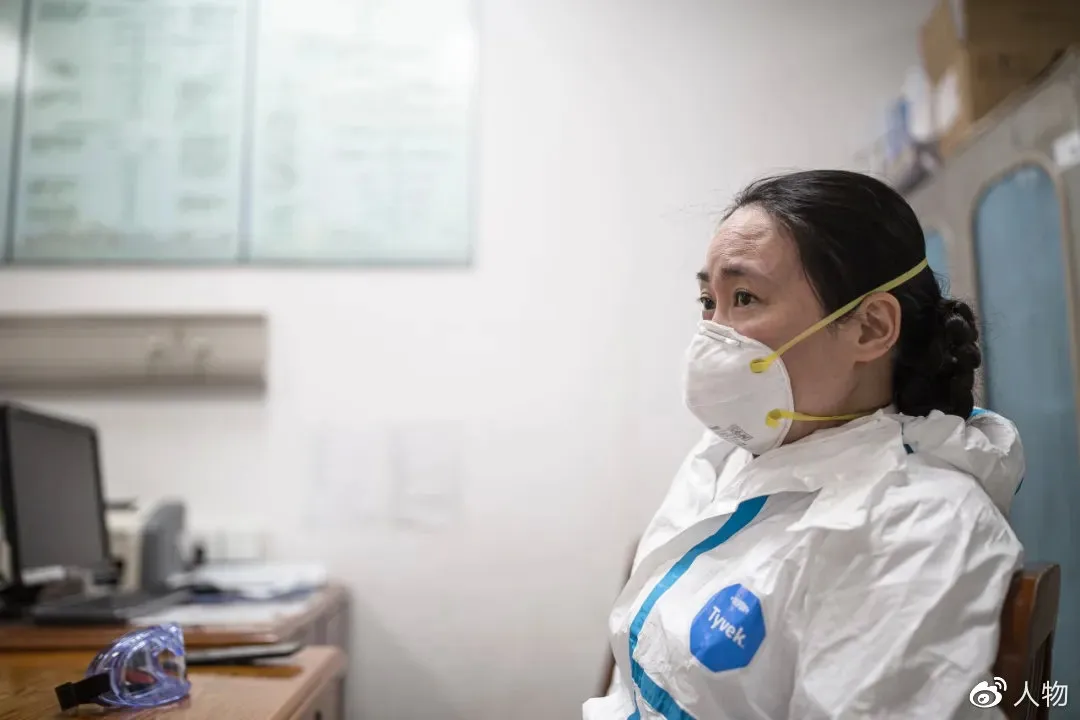
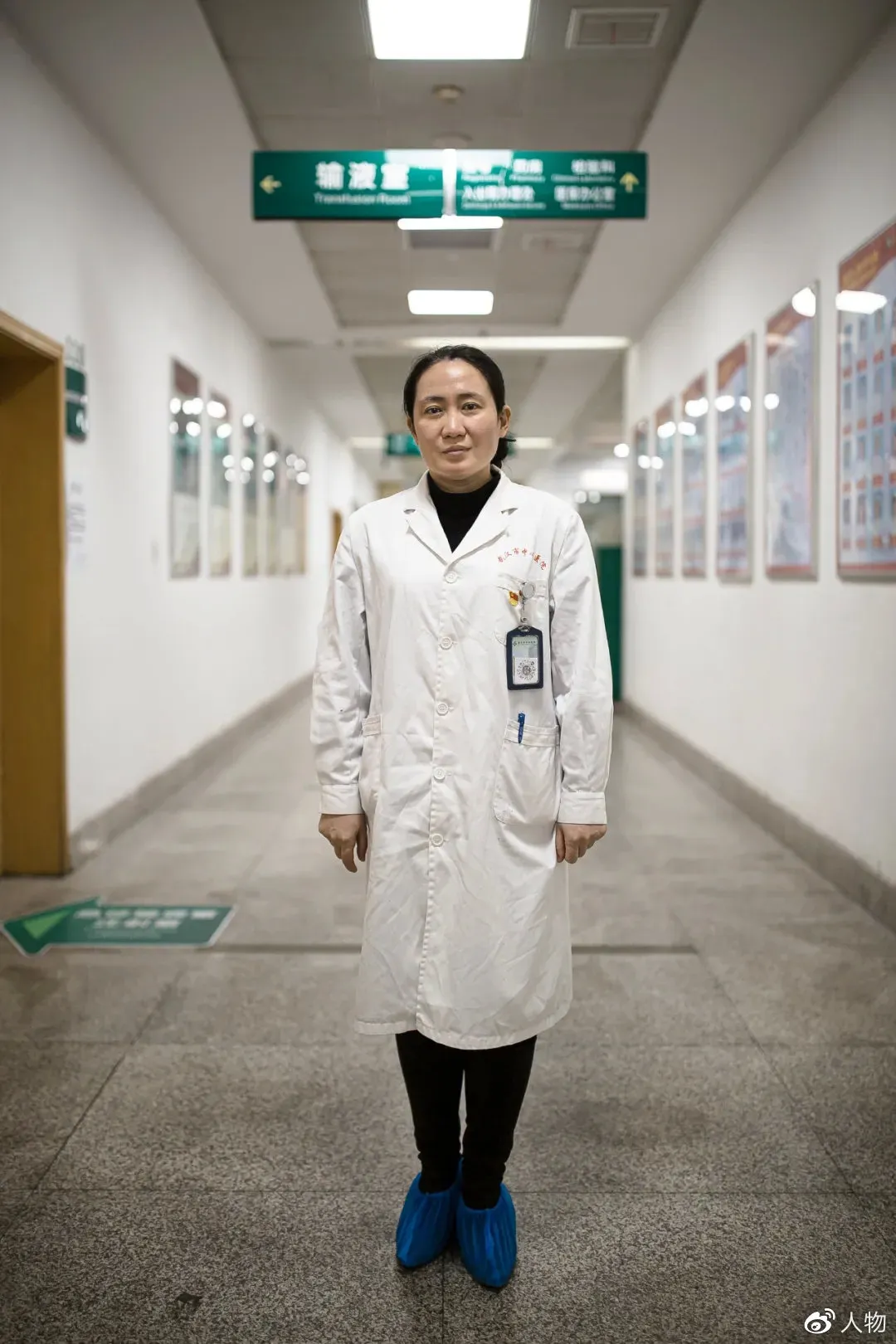
On the afternoon of March 2, Ai Fen accepted an exclusive interview with Renwu at the Nanjing Road campus of Wuhan Central Hospital. She sat alone in an emergency office. The emergency department, which once saw over 1,500 patients a day, had become quiet again. In the emergency hall, there was only a homeless man lying there.
In earlier reports, Ai Fen was described as “another reprimanded female doctor coming to light”, and some called her a “whistleblower”. Ai Fen corrected that. She said she was not a whistleblower, but the one who “gave out the whistle”. During the interview, she mentioned the word “regret” several times. She regretted that after being summoned, she did not keep sounding the whistle. Especially for the colleagues who had died, she said: “If I’d known it would end up like this, I wouldn’t care whether they criticized me or not. I would have said it everywhere, wouldn’t I?”
What did Wuhan Central Hospital and Ai Fen go through over those two months? Below is Ai Fen’s account.
An Unprecedented Scolding
On December 16 last year, the emergency department at our Nanjing Road campus received a patient. They had an unexplained high fever. No matter what medications we used, nothing worked; the temperature wouldn’t budge. On the 22nd they were transferred to Respiratory. A bronchoscopy was done, bronchoalveolar lavage fluid was collected, and sent out for high-throughput sequencing. Later we got a verbal report: coronavirus. The colleague in charge of the patient kept repeating in my ear: “Director Ai, that person’s report says coronavirus.” Later we learned the patient worked at the Huanan Seafood Market.
Right after that, on December 27, another patient came to the Nanjing Road campus. He was the nephew of one of our doctors, in his 40s, with no underlying diseases, lungs in terrible shape, oxygen saturation only 90%. He had already been treated for nearly 10 days at another hospital with no improvement, and was admitted to the respiratory ICU. They also did bronchoscopy, collected lavage fluid, and sent it for testing.
At noon on December 30, a classmate working at Tongji Hospital sent me a screenshot of a WeChat chat. It said: “Don’t go to Huanan recently, lots of people there have high fevers…” He asked me if it was real. At the time I was looking at a CT scan of a very typical pulmonary infection patient on my computer. I recorded an 11-second video of the CT and sent it to him, telling him: this was a patient who came to our emergency department this morning, also from the Huanan Seafood Market.
Just after 4 p.m. that day, a colleague showed me a report. It listed: SARS coronavirus, Pseudomonas aeruginosa, and 46 kinds of oral/respiratory tract colonizing bacteria. I read it over and over. The note below said: SARS coronavirus is a single-stranded positive-sense RNA virus. It spreads mainly through close-range droplets or contact with a patient’s respiratory secretions, can cause a special pneumonia with obvious infectiousness that can affect multiple organ systems, also known as atypical pneumonia.
I broke out in a cold sweat. This was terrifying. The patient had been admitted under Respiratory; logically, Respiratory should report it. But to be safe and to take it seriously, I immediately called and reported it to the hospital’s public health department and infection control. At that moment, our hospital’s respiratory director happened to pass my door. He had lived through SARS. I grabbed him and said: a patient was admitted to your department and we found this. He took one look and said: then we’re in trouble. That’s when I knew we were in trouble.
After calling the hospital, I also sent that report to my classmate, and I deliberately drew a red circle around the line “SARS coronavirus, Pseudomonas aeruginosa, 46 kinds of oral/respiratory tract colonizing bacteria” to remind him to pay attention. I also posted the report in our department doctors’ group chat, telling everyone to be careful.
That night, it spread everywhere. Screenshots circulating were all the photo with my red circle. Later I learned the one Li Wenliang posted in his group chat was also that same report. I immediately felt: this might be bad. At 10:20 p.m., the hospital sent a message relaying a notice from the municipal health commission. The gist was: regarding pneumonia of unknown cause, do not casually publish information externally; avoid causing public panic. If information leaks cause panic, accountability will follow.
I was terrified. I immediately forwarded that message to my classmate. About an hour later, another notice came, again emphasizing that related messages in group chats must not be forwarded outside. A day later, at 11:46 p.m. on January 1, the head of the hospital’s supervision office messaged me, asking me to come in the next morning.
I didn’t sleep at all that night. I was worried, tossing and turning, but I also felt there are two sides to everything: even if it caused negative impact, warning Wuhan’s medical staff to be cautious might not be a bad thing. The next morning a little after 8, before I even finished handing over my shift, the call urging me to come in arrived.
In the meeting afterward, I received an unprecedented, extremely harsh scolding.
The leader said: “We can’t even hold our heads up at meetings. So-and-so criticized our hospital’s Ai Fen. As director of the Emergency Department at Wuhan Central Hospital, you’re a professional. How can you have no principles, no organizational discipline, and spread rumors and make trouble?” That was the original wording. They ordered me to go back and verbally relay this one by one to more than 200 people in my department: no WeChat, no texts. Only face-to-face or phone calls. No one was allowed to say anything about this pneumonia. “Not even to your own husband”…
I was stunned. It wasn’t “you didn’t work hard”. It was as if I alone had destroyed Wuhan’s grand prospects. I felt desperate. I’m someone who is normally conscientious and hardworking. I felt everything I did followed rules and had reasons. What did I do wrong? I saw the report; I reported it to the hospital. My classmate and I, as peers, were communicating about a patient’s situation without leaking any private information. It was like medical students discussing a case. As a clinical doctor, once you already know a patient has an important virus, and another doctor asks you about it, how could you not say anything? That’s your instinct as a doctor, right? What did I do wrong? I did what a doctor, what a person, should normally do. I think anyone would have done the same.
I was emotional too. I said: I did this; it has nothing to do with anyone else. Just arrest me and send me to prison. I said I wasn’t in a state suitable to keep working in this position and wanted to rest for a while. The leader refused and said this was the moment to test me.
That night when I got home, I remember clearly: as soon as I entered, I told my husband that if anything happened to me, he should raise the kids well. My second child was still very young, only a little over one. He thought it was bizarre. I didn’t tell him about the scolding. It wasn’t until January 20, after Zhong Nanshan said there was human-to-human transmission, that I told him what had happened. During that period, I only reminded my family not to go to crowded places, and to wear masks when going out.
Peripheral Departments
Many people worried I was one of the eight people summoned by police. In fact I was not reprimanded by the police. Later a close friend asked me: are you a whistleblower? I said no. I’m not a whistleblower. I’m the one who gave out the whistle.
But that meeting hit me hard. Very hard. After I came back, I felt like my heart collapsed. I forced myself to keep working seriously, but after that, when people came to ask me questions again, I couldn’t answer.
What I could do was make the emergency department take protection seriously first. We had more than 200 people. Starting January 1, I told everyone to strengthen protection: everyone must wear a mask, wear a cap, and use hand sanitizer. I remember one day during shift handover, a male nurse wasn’t wearing a mask. I immediately scolded him on the spot: “If you don’t wear a mask again, don’t come to work.”
On January 9, when I got off work, I saw a patient at the triage desk coughing toward everyone. From that day on, I required that we give masks to patients who came in: one per person. At that time we shouldn’t save money. Outside, people were saying there was no human-to-human transmission, yet here I was emphasizing masks and protection. It was full of contradictions.
That period was truly oppressive and painful. Some doctors suggested wearing protective gowns on the outside, but the hospital meeting said no, arguing it would cause panic. So I had people wear the isolation gowns underneath their white coats. That’s against standard practice. Absurd.
We watched, helplessly, as patient numbers grew and the “radius” of spread expanded. At first it might have been connected to the area around the Huanan Seafood Market, and then it kept spreading, the radius getting larger. Many were family transmissions. Among the earliest seven cases, one was a mother who got sick after bringing food to her son. A clinic owner got sick too, infected by a patient coming for injections; they were extremely severe cases. I knew there had to be human-to-human transmission. If there was no human-to-human transmission, the Huanan Seafood Market was closed on January 1. How could the number of patients keep increasing?
I often thought: if they hadn’t scolded me like that, if they had calmly asked about the whole story, and invited other respiratory experts to discuss it together, maybe things would have been better. At least I could have communicated more inside the hospital. If everyone had become vigilant on January 1, there wouldn’t have been so many tragedies.
On the afternoon of January 3, at the Nanjing Road campus, urology doctors gathered to review the old director’s career. Dr. Hu Weifeng, 43, attended; he was then in critical condition and being resuscitated. On the afternoon of January 8, on the 22nd floor of the Nanjing Road campus, Director Jiang Xueqing still organized a rehabilitation get-together for thyroid/breast patients in Wuhan. On the morning of January 11, my department reported to me that Hu Ziwei, a nurse in the emergency resuscitation room, was infected. She was likely the first infected nurse in the hospital. I immediately called the head of the medical affairs office to report it. The hospital held an emergency meeting, and instructed that the report “bilateral lower lung infection, viral pneumonia?” be changed to “scattered bilateral lung infection”. At the last weekly meeting on January 16, a vice president was still saying: “Everyone should have some medical common sense. Some senior doctors shouldn’t scare themselves to death.” Another leader came on stage and continued: “There is no human-to-human transmission; it’s preventable, treatable, controllable.” One day later, on January 17, Jiang Xueqing was hospitalized; 10 days later, he was intubated and on ECMO.
The hospital paid such a heavy price partly because information was not transparent among medical staff. Look at the people who fell ill: Emergency and Respiratory weren’t hit as badly, because we had protective awareness and rested and treated immediately once sick. The severe cases were from peripheral departments: Li Wenliang was from Ophthalmology, Jiang Xueqing from Thyroid/Breast.
Jiang Xueqing was truly a very good person. His skills were excellent; he was one of the hospital’s two winners of the Chinese Physician Award. We were also neighbors, in the same building unit: I lived on the 40-something floor and he lived on the 30-something floor. We were close, but because he was so busy, we only saw each other at meetings or hospital events. He was a workaholic: either in the operating room or seeing patients. No one would specifically run over to tell him: “Director Jiang, be careful, wear a mask.” He didn’t have time or energy to ask around either, so he must have been careless: “What’s the big deal? It’s just pneumonia.” That’s what people in his department told me.
If these doctors could have been warned in time, perhaps this day would not have come. So as someone directly involved, I regret it deeply. If I’d known it would end up like this, I wouldn’t care whether they criticized me or not. I would have said it everywhere, wouldn’t I?
Although Li Wenliang was in the same hospital, I didn’t even know him until before he died. The hospital had more than 4,000 people and we were busy. On the night before he died, the ICU director called me to borrow the emergency department’s chest compressor, saying they were trying to resuscitate Li Wenliang. I was shocked. I don’t know the full process of his case, but whether his condition had anything to do with being reprimanded and feeling terrible? I have to put a question mark, because I deeply relate to what it feels like to be reprimanded.
Later, when things developed to this point and it became clear Li Wenliang had been right, I understood his feelings very well. It might have been the same as mine: not excitement or happiness, but regret. Regret that we should have kept shouting, that when everyone asked us, we should have kept telling them. Many, many times I thought: if only time could turn back.
Just Being Alive Is Good
On the night before the Wuhan lockdown on January 23, a friend from a related department called to ask about the real situation of emergency patients in Wuhan. I asked: are you speaking as a private person, or officially? He said privately. I said: if it’s personal, I’ll tell you the truth. On January 21, our emergency department received 1,523 patients, three times the usual peak. Among them, 655 had fevers.
The state of the emergency department during that period is something anyone who experienced it will never forget; it can even overturn your entire worldview.
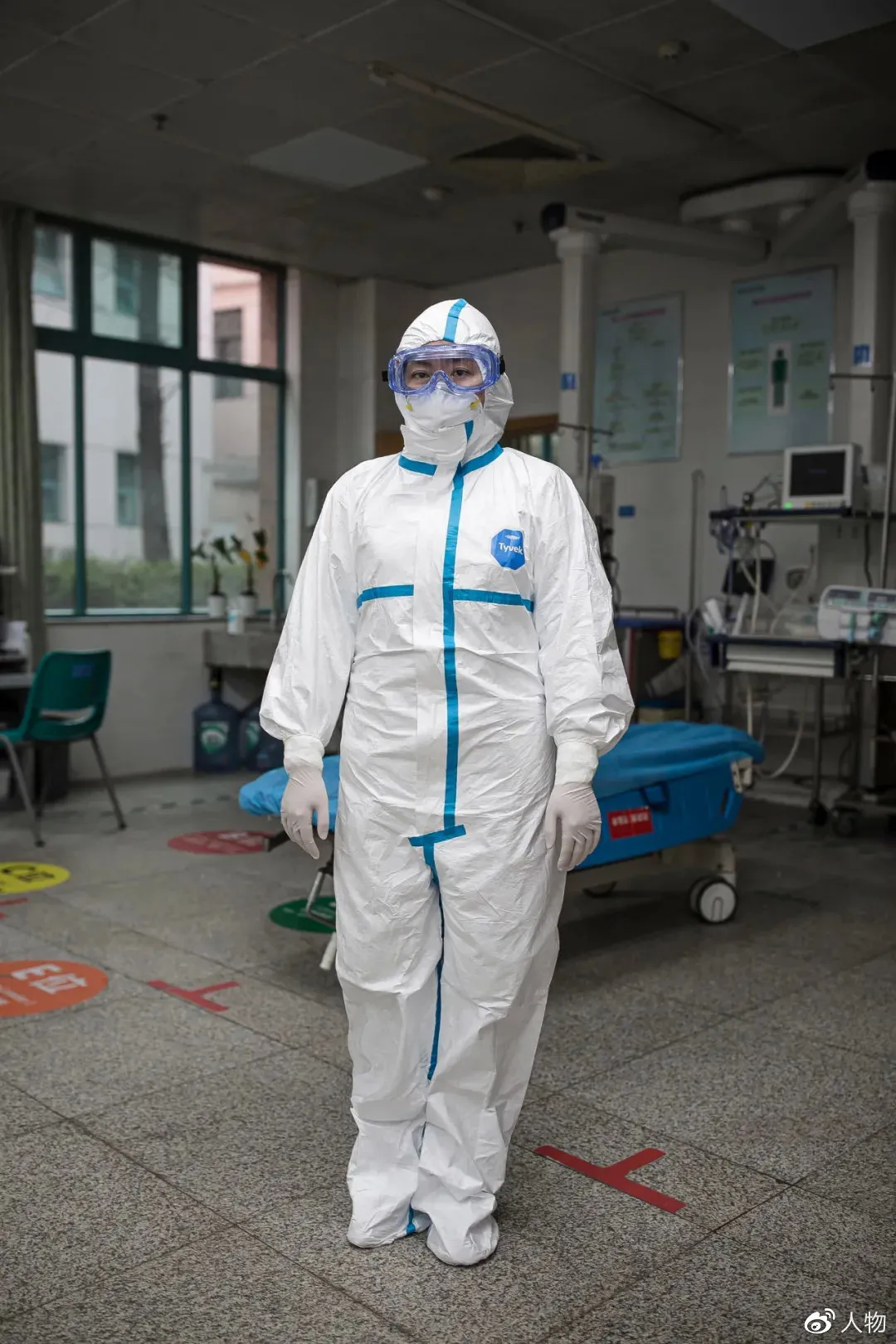
If this was a war, the emergency department was the front line. But the situation was: wards behind us were already saturated and basically didn’t accept patients. The ICU also refused, saying there were clean patients inside and letting people in would contaminate it. Patients kept flooding into the emergency department. The path forward was blocked. Everyone piled up in emergency. Patients lined up for hours. We couldn’t get off work at all. The fever clinic and emergency blurred together. The hall was full of patients. The resuscitation room and infusion room were full of patients.
Some family members came and said they needed a bed. “My dad is in the car and he can’t make it.” At that time the underground garage was sealed off; their car couldn’t get in, blocked by traffic. I had no choice: I took people and equipment and ran to the car. One look and the person was already dead. How does that feel? It hurts, it hurts a lot. He died in the car, without even a chance to get out.
There was another elderly woman: her spouse had just died at Jinyintan Hospital. Her son and daughter were infected and getting injections. Her son-in-law was taking care of her. As soon as I saw her, she was very sick, so I contacted Respiratory to admit her. The son-in-law looked educated and polite, came over and thanked the doctor and so on. My heart tightened. I urged: go quickly, there’s no time. But she still died after being sent in. The “thank you” only took a few seconds, but it still delayed a few seconds. That “thank you” weighed on me.
For many people, the moment they sent their loved one into the ICU was the last time they saw them. You would never see them again.
I remember on the morning of Lunar New Year’s Eve, I came to take over my shift. I said: let’s take a photo, to commemorate this New Year’s Eve, and posted it to my Moments. That day, no one said any greetings. In times like this, just being alive is good.
In the past, if you made a small mistake, like not giving an injection in time, patients might come to make trouble. Now there was no one. No one argued with you, no one made trouble. Everyone was crushed by the sudden blow, stunned.
When patients died, you rarely saw families crying their hearts out, because there were too many. Too many. Some family members wouldn’t say “doctor please save my family”; instead they’d say, “sigh, let them be relieved quickly; it’s come to this.” Because at that moment, everyone’s greatest fear was being infected themselves.
One day, the line outside the fever clinic took five hours. While waiting, a woman collapsed. She wore a leather jacket, carried a handbag, wore high heels, probably a carefully dressed middle-aged woman. But no one dared to step forward to help her. She lay on the ground for a long time. In the end I had to call nurses and doctors to help her up.
On the morning of January 30, I came to work and saw a white-haired elderly man whose 32-year-old son had died. He stared at the doctor writing the death certificate. There were no tears. How could he cry? He couldn’t. From his clothes, he was probably a migrant worker with no channel to complain. Without a confirmed diagnosis, his son became a death certificate.
This is also something I want to call for. People who died in the emergency department were cases with no diagnosis, cases that couldn’t be confirmed. After this epidemic is over, I hope we can give them an account, give their families some comfort. Our patients are pitiful. Very pitiful.
“Lucky”
After being a doctor for so many years, I’ve always felt that no difficulty could defeat me. That’s related to my experiences and personality.
My father died of stomach cancer when I was nine. At that time I thought: when I grow up, I want to be a doctor and save lives. Later, during the college entrance exam, all my choices were medical majors, and I was admitted to Tongji Medical College. I graduated in 1997 and went to Central Hospital. I used to work in cardiology. In 2010, I became director of the emergency department.
I feel the emergency department is like my child. I grew it to this size, brought people together, built this situation. It wasn’t easy. So I cherish this team, deeply.
A few days ago, a nurse posted on Moments: “I really miss the busy days of the old big emergency department. That kind of busy is completely different from this busy.”
Before this epidemic, heart attacks, strokes, GI bleeding, trauma, and so on were the emergency department’s scope. That kind of busy was fulfilling busy: clear goals, smooth and mature workflows for different patient types, knowing what to do next, how to do it, and who to find when something goes wrong. This time was different: so many critically ill patients, we couldn’t handle them, couldn’t admit them, and medical staff were exposed to risk. This kind of busy was helpless and heartbreaking.
One morning at 8, a young doctor in our department messaged me on WeChat. He had some personality. He said: I’m not coming to work today, I’m not feeling well. We have rules: if you’re unwell you should tell me ahead of time so I can arrange coverage. If you tell me at 8 a.m., where do I find someone? He got angry in WeChat and said: your emergency department leadership has sent a large number of highly suspected cases back into society; we are committing evil! I understood it came from a doctor’s conscience. But I also got anxious. I said: you can report me if you want. If you were the emergency department director, what would you do?
Later, after resting a few days, that doctor came back and kept working as usual. It wasn’t that he was afraid of death or tiredness. He was just overwhelmed, suddenly facing so many patients.
For doctors, especially those who later came to support, many couldn’t handle it psychologically. When they encountered this, they were stunned. Some doctors and nurses cried: crying for others, and also for themselves, because no one knew when it would be their turn to be infected.
Around mid-to-late January, hospital leaders also began to fall ill one after another, including our outpatient office director and three vice presidents. The medical affairs director’s daughter also got sick, and he rested at home. So for that period, basically no one managed you. You just fought there. That was the feeling.
People around me started falling one by one too. On January 18, at 8:30 a.m., the first doctor who fell told me: “Director, I got it.” No fever, only a CT: a big patch of ground-glass opacity in the lungs. Soon after, a nurse in charge of the isolation ward told me he also fell. At night, our head nurse fell too. My most honest first feeling was: “lucky” — because falling early meant you could leave the battlefield early.
I had close contact with all three. I worked every day fully believing I would fall too, but I never did. Everyone in the hospital thought I was a miracle. I analyzed it myself: maybe because I have asthma and was using inhaled steroids, which might inhibit the virus from depositing in the lungs.
I’ve always felt that people who work in emergency have a kind of idealism. In Chinese hospitals, the emergency department’s status is probably relatively low among all departments, because people see emergency as just a channel: take patients in, that’s it. During this epidemic response, that kind of neglect always existed.
Early on, supplies were insufficient. Sometimes the protective suits given to emergency were very poor quality. Seeing our nurses wearing that to work, I was furious. I vented in the weekly-meeting group chat. Later, many department directors gave me protective suits they had hidden in their own departments.
There were also food issues. When patient volume is high and management is chaotic, they simply don’t think about emergency staff needing food. Many departments had food and drinks after work, lined up. We had nothing. In the fever-clinic WeChat group, a doctor complained: “Our emergency department only has diapers…” We were fighting on the front line, and this was the situation. Sometimes it really made me angry.
Our team is truly good. Everyone only left the front line when they got sick. This time, more than 40 people in our emergency department were infected. I created a group chat for everyone who got sick. It was originally named “Emergency Sick Group”. The head nurse said it was unlucky, so it was changed to “Emergency Cheer Up Group”. Even people who were sick didn’t have the mindset of sadness, despair, or complaining. They were quite positive, helping each other and getting through it together.
These kids, these young people, are all very good. They just suffered grievances because they followed me. I also hope that after this epidemic, the country can increase investment in emergency departments. In many countries’ healthcare systems, emergency medicine is highly valued.
Happiness Out of Reach
On February 17, I received a WeChat message from that classmate at Tongji Hospital. He told me “sorry”. I said: fortunately you spread it, and warned some people in time. If he hadn’t spread it, there might not even have been those eight people like Li Wenliang, and even fewer would have known.
This time, three female doctors had their entire families infected. For two of them, their father-in-law, mother-in-law, and husband were infected. For another, her father, mother, sister, husband, plus herself — five people infected. Everyone felt that we found the virus so early, and yet it still ended up like this. The losses were enormous. The cost was too heavy.
That cost showed up everywhere. Not only those who died, but those who fell ill were also suffering.
In our “Emergency Cheer Up Group”, people often shared physical symptoms. Someone asked: my heart rate is always 120 beats per minute; is that serious? Of course it’s serious. With any movement you feel palpitations. It can affect them for life. When they’re older, will they have heart failure? Hard to say. Others might go hiking and travel, but they might not. That’s possible.
And Wuhan. Wuhan used to be such a lively place. Now the streets were silent, many things couldn’t be bought, and the whole country came to support us. A few days ago, a nurse from a Guangxi medical team suddenly fainted while working. They resuscitated her. Her heartbeat returned, but she was still in a coma. If she hadn’t come, she could have lived well at home and wouldn’t have had this accident. So I feel we owe everyone a debt. Truly.
After this epidemic, the blow to many people in the hospital was huge. Several medical staff under me had thoughts of resigning, including some key backbones. People’s previous beliefs and common sense about this profession inevitably shook. Is it right to work so hard? Take Jiang Xueqing: he worked too earnestly, treated patients too well; every New Year and holiday he was in surgery. Today someone forwarded a WeChat post written by Jiang Xueqing’s daughter, saying her father’s time was all given to patients.
I myself had countless thoughts too: should I go home and be a housewife? After the epidemic, I basically didn’t go home. My husband and I lived outside. My sister stayed at home to help look after my child. My second child didn’t recognize me anymore. When he watched videos, he felt nothing toward me. I felt very sad. It wasn’t easy for me to have this second child. He weighed 10 jin at birth. I also had gestational diabetes. I had been breastfeeding. This time I weaned — making that decision made me sad. My husband told me: in a person’s life, to encounter something like this, and not only participate but lead a team to fight this war, is also meaningful. When everything returns to normal and people look back, it will be a precious experience.
On the morning of February 21, leaders talked with me. I actually wanted to ask a few questions: did they think the criticism that day was wrong? I wanted an apology. But I didn’t dare ask. No one, in any setting, ever said “sorry” to me. Still, I feel this incident shows even more that each person must坚持 independent thinking. Someone must stand up and speak the truth. There must be someone. The world must have different voices, right?
As a Wuhan person, who doesn’t love our city? When we look back at the most ordinary life we used to live, it was such a luxurious happiness. Now I feel that holding my baby, taking him out to play on a slide, or going to a movie with my husband — things that used to be the most normal — have become a kind of happiness, a happiness out of reach.
Comments